
February Mushroom of the Month: Schizophyllum commune
The February mushroom of the month is Schizophyllum commune, the splitgill mushroom.
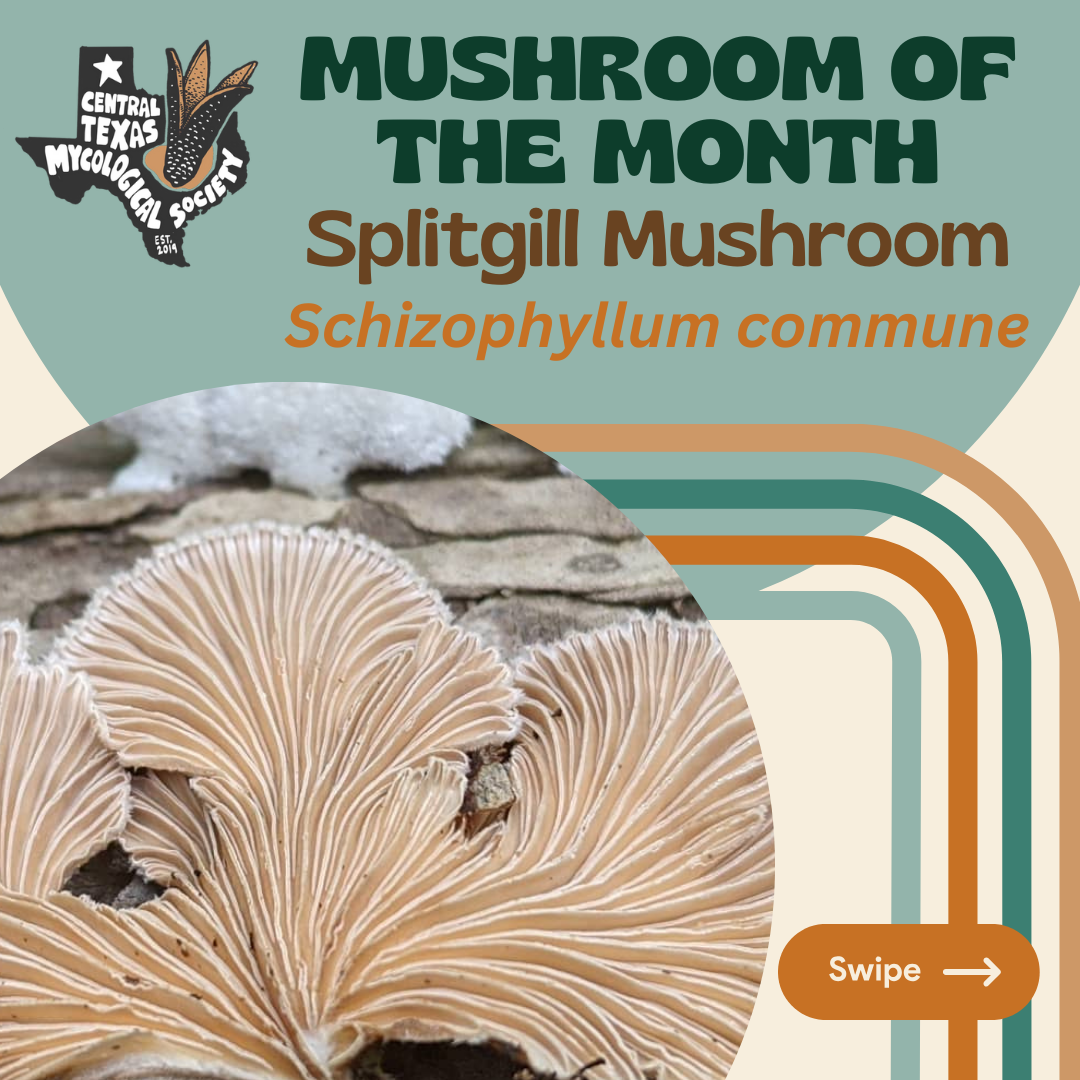

The February mushroom of the month is Schizophyllum commune, the splitgill mushroom.
🙌 to @elizabethoh for naming that mushroom correctly and becoming the 1,274th member of Central Texas Mycology! Become a supporting member to stay dialed-in with events & discover next month’s mystery mushroom.
What IS it?
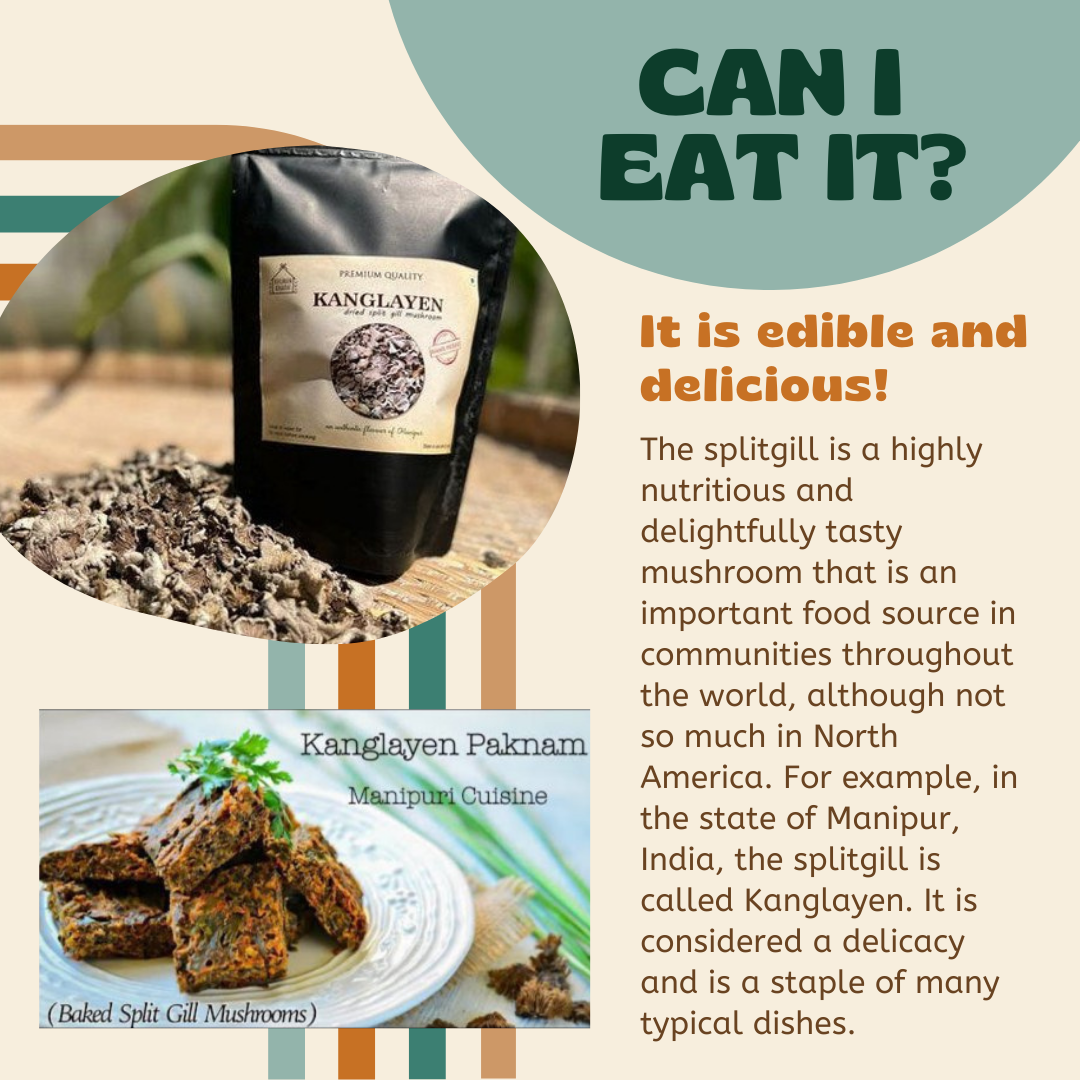
It is edible and delicious!
The splitgill is a highly nutritious and delightfully tasty mushroom that is an important food source in communities throughout the world, although not so much in North America. For example, in the state of Manipur, India, the splitgill is called Kanglayen. It is considered a delicacy and is a staple of many typical dishes.
WHERE DOES IT GROW?
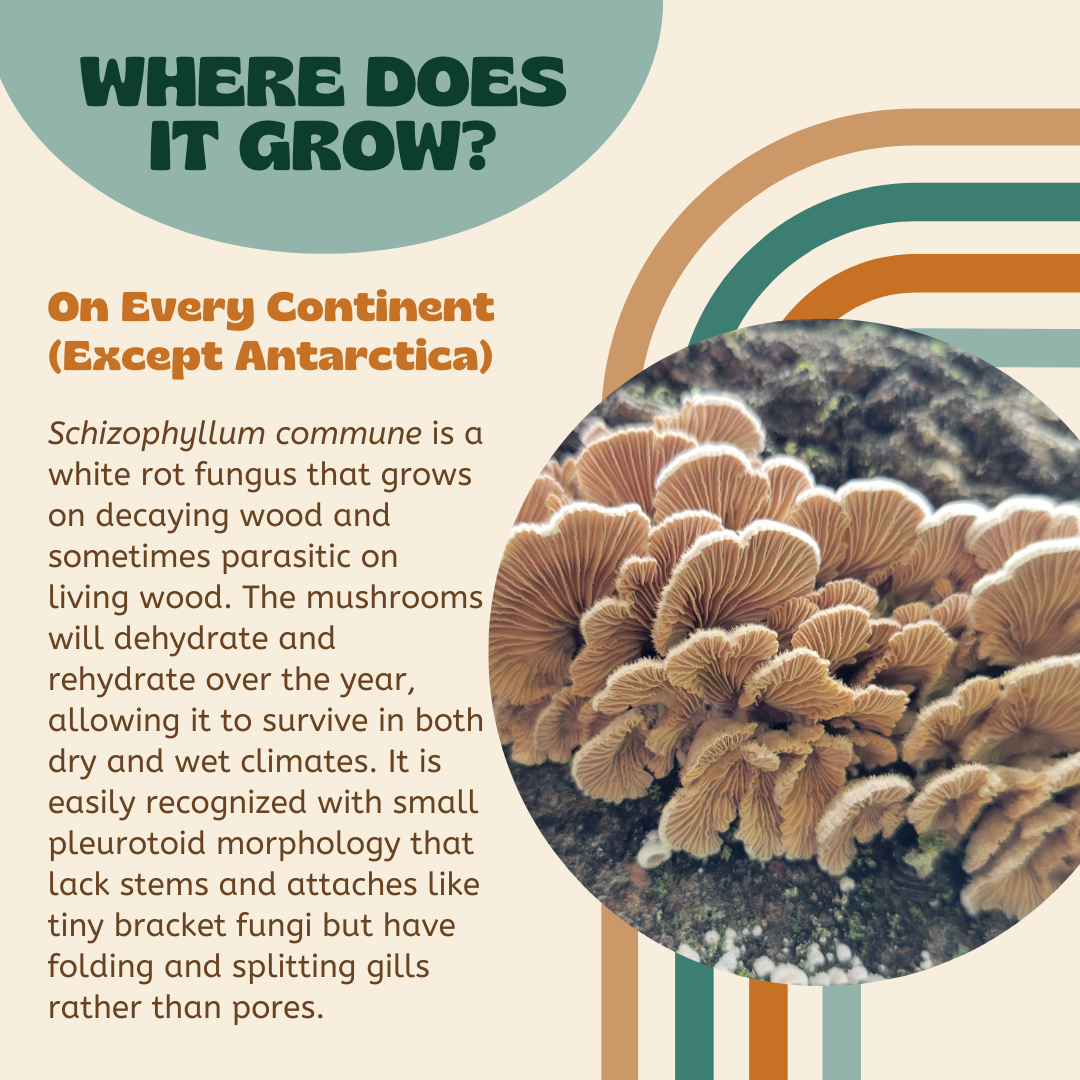
On Every Continent (Except Antarctica)
Schizophyllum commune is a white rot fungus that grows on decaying wood and sometimes parasitic on living wood. The mushrooms will dehydrate and rehydrate over the year, allowing it to survive in both dry and wet climates. It is easily recognized with small pleurotoid morphology that lack stems and attaches like tiny bracket fungi but have folding and splitting gills rather than pores.
Other Cool FACTS
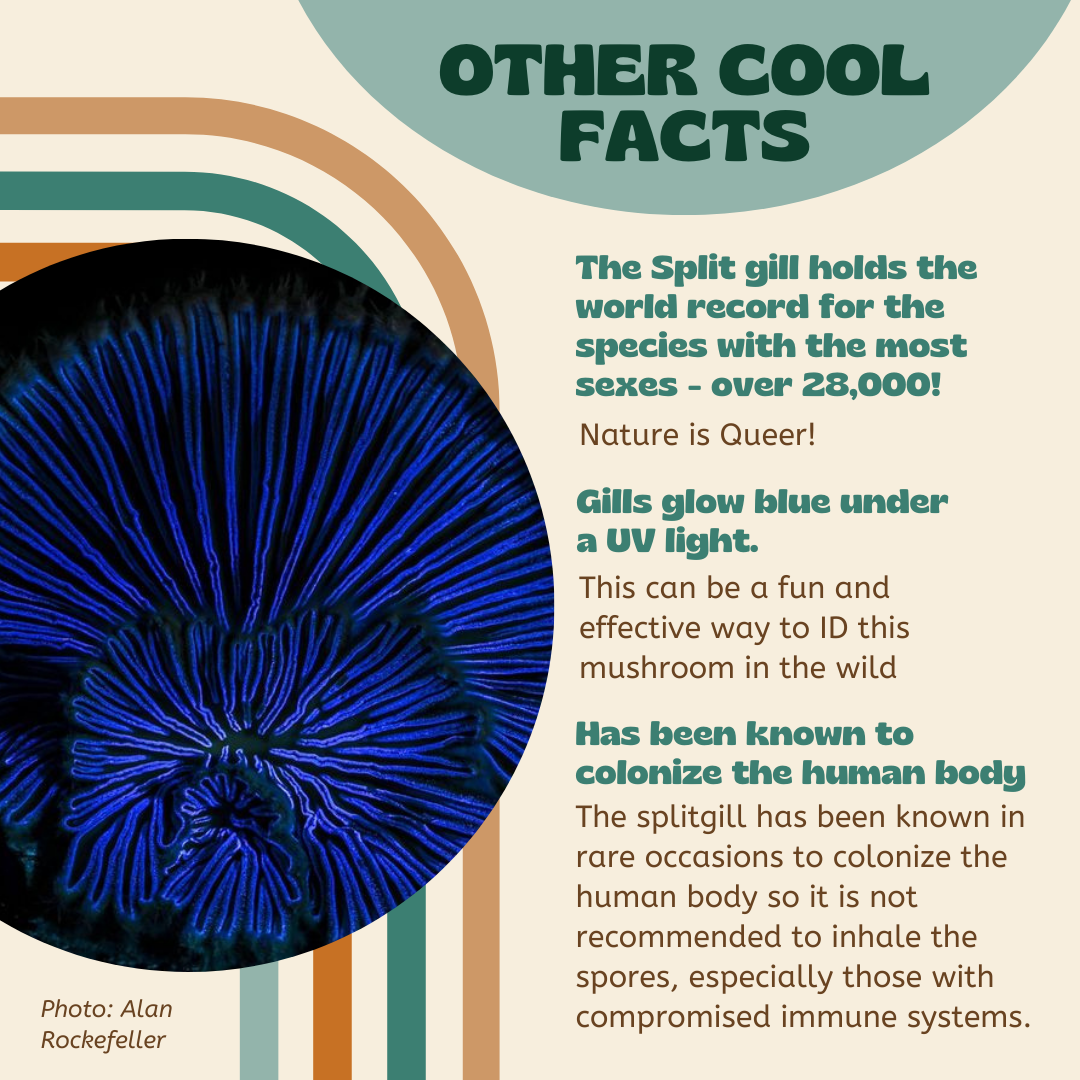
The Split gill holds the world record for the species with the most sexes - over 28,000! Nature is Queer!
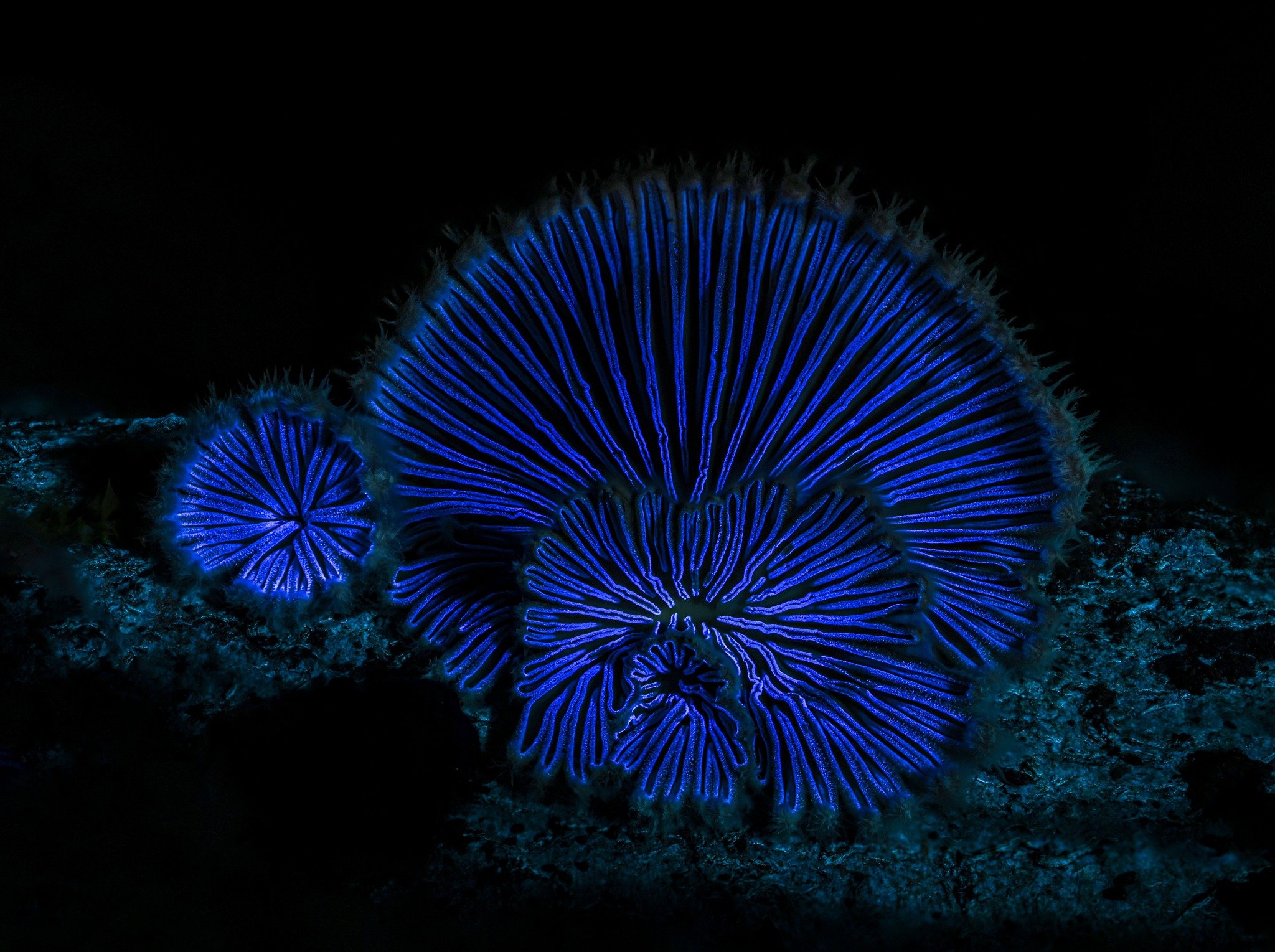
Gills glow blue under a UV light. This can be a fun and effective way to ID this mushroom in the wild
Has been known to colonize the human body. The splitgill has been known in rare occasions to colonize the human body so it is not recommended to inhale the spores, especially those with compromised immune systems.
BECOME A SUPPORTING MEMBER & stay Dialed in with events & discover next month’s mystery mushroom
📸 Alan Rockefeller @forage.atx @inaturalistorg

February Foraging Forecast
Learn wild, edible mushrooms fruiting in Central Texas after rain.
Learn wild, edible mushrooms fruiting in Central Texas after rain.
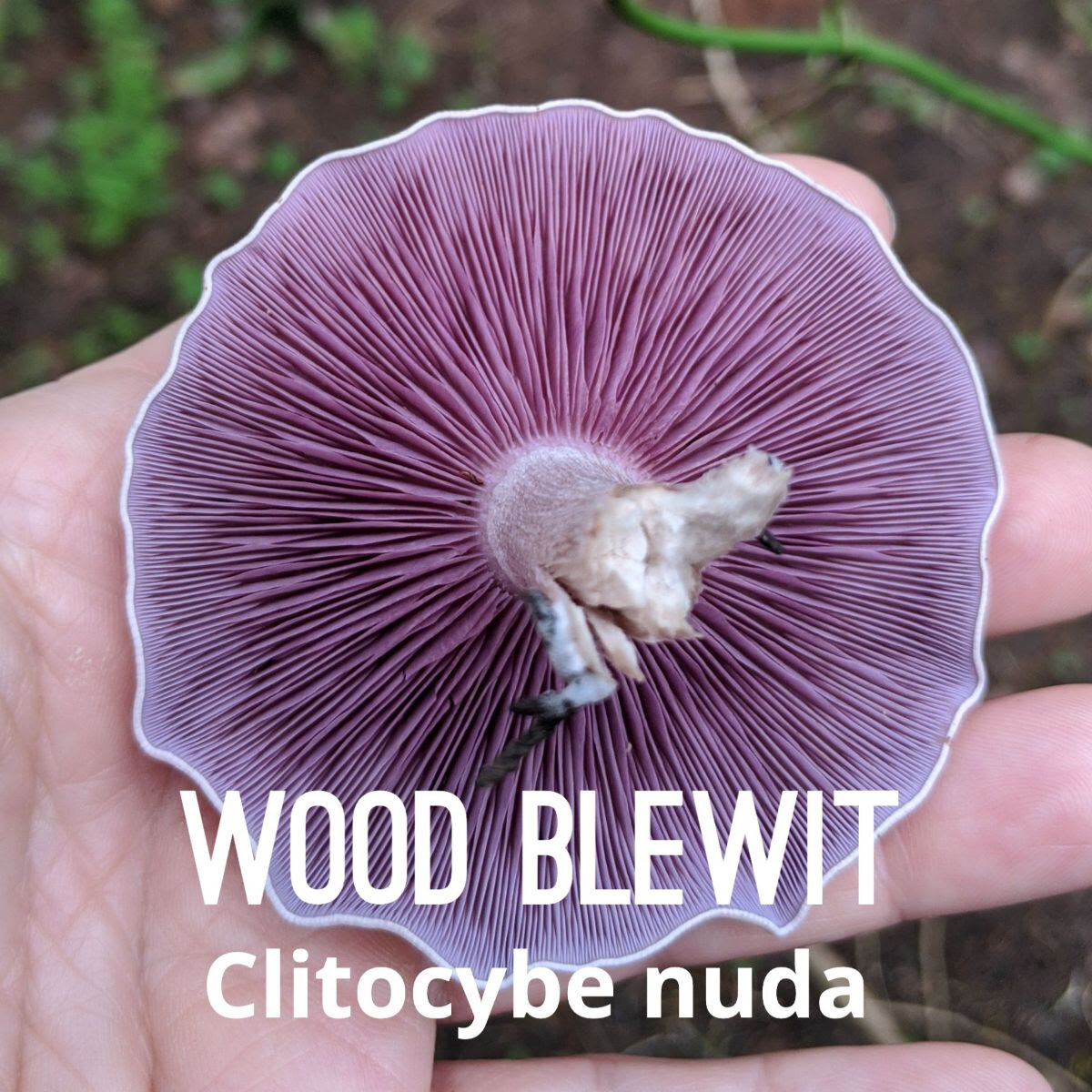
WOOD BLEWIT Collybia species, formerly Lepista, Clitocybe
Distinct lilac to purple-pink color
Grows in and decomposes leaf duff
Light pink to white spores
Great in breakfast tacos
As the weather stays cool, look out for the edible Wood Blewit, Collybia nuda or tarda species (formerly Lepista and Clitocybe.) This distinct lavender-colored mushroom is found from fall through spring and fruiting in hardwood leaf duff which is decomposes. Fresh wood blewits are great with eggs in breakfast tacos. As they get older they become more tan and iridescent colored on the cap and taste bitter. I throw the older wood blewits my compost leaf pile because they are such great decomposers and will colonize and grow in hardwood leaf litter.
Look-alikes: Be warned because there are deadly, poisonous look-alikes in the Cortinarius or webcap family that grow in similar conditions. It's important to do a spore print AND also confirm the ID with an expert. The spores of the wood blewit are light pink to white and the spores of Cortinarius mushrooms are rust colored. See our blog post with lots of photos and details to help you identify this mushroom.

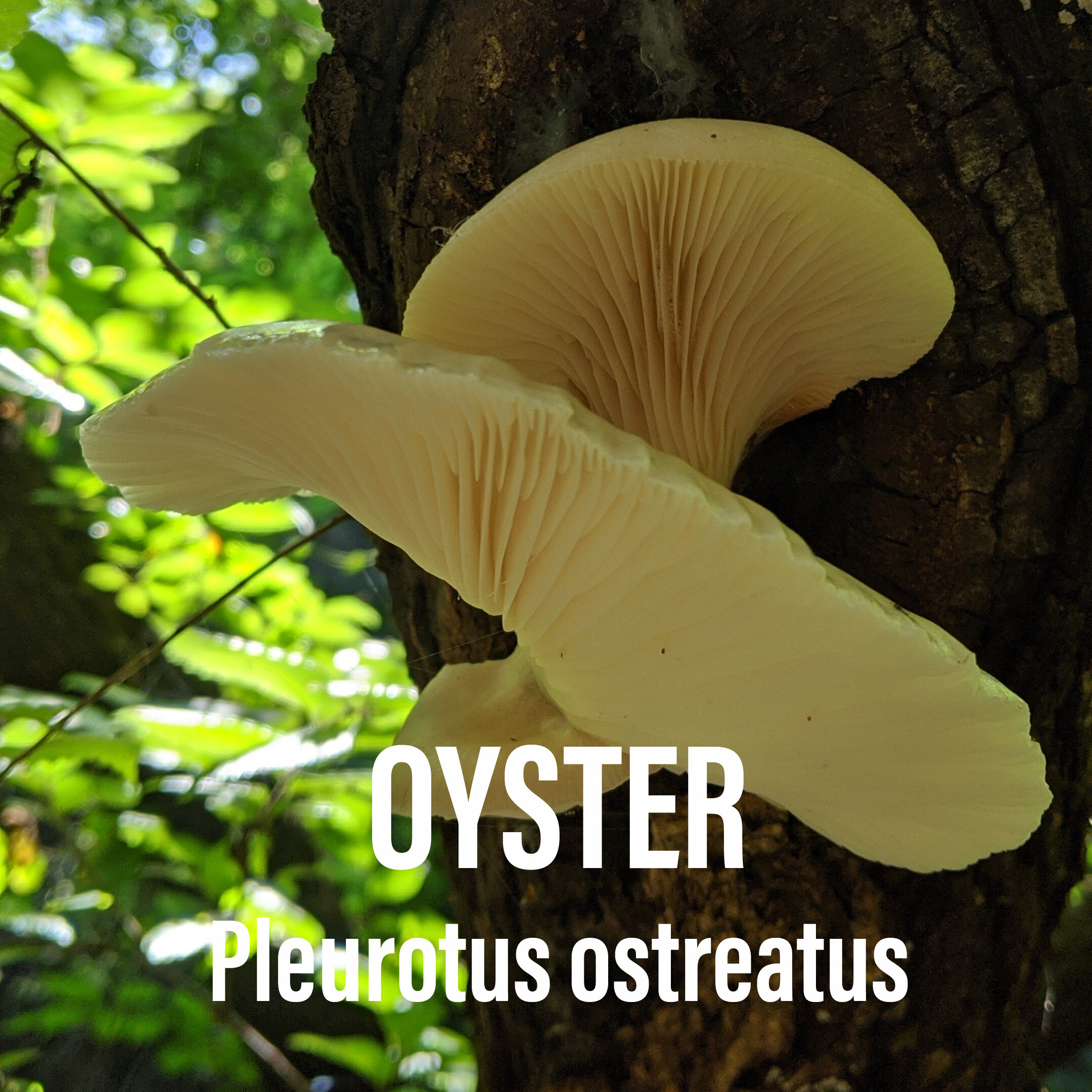
OYSTER Pleurotus ostreatus
Color can vary white, tan and gray
White to cream gills, run down stem
Cap fan shaped, 2"-8" across, white spores
Grows in clusters and decomposes hardwood
Delicious meat replacement in all types of cuisines
Look-alikes: Southern Jack-o-lantern, Omphalotus subilludens which is toxic and orange to brown in color.
WOOD EAR: Auricularia species
Grows in clusters on decaying hardwood after rain
Cap is wavy, ear-shaped to irregular, 1-4" and > 1/4" thick
Jelly texture and lacks gills or pores
Produces white spores
Absorbs flavors, great in soups, contains protein, iron, calcium and phosphorus
Edibility: Wood ear mushrooms are a popular ingredient in many Chinese dishes, such as hot and sour soup, and also used in Chinese medicine. It is also used in Ghana, as a blood tonic. Modern research into possible medical applications has variously concluded that wood ear has anti-tumor, hypoglycemic, anticoagulant and cholesterol-lowering properties.
Look-alikes: Amber Jelly, Exidia recisa which is also edible.
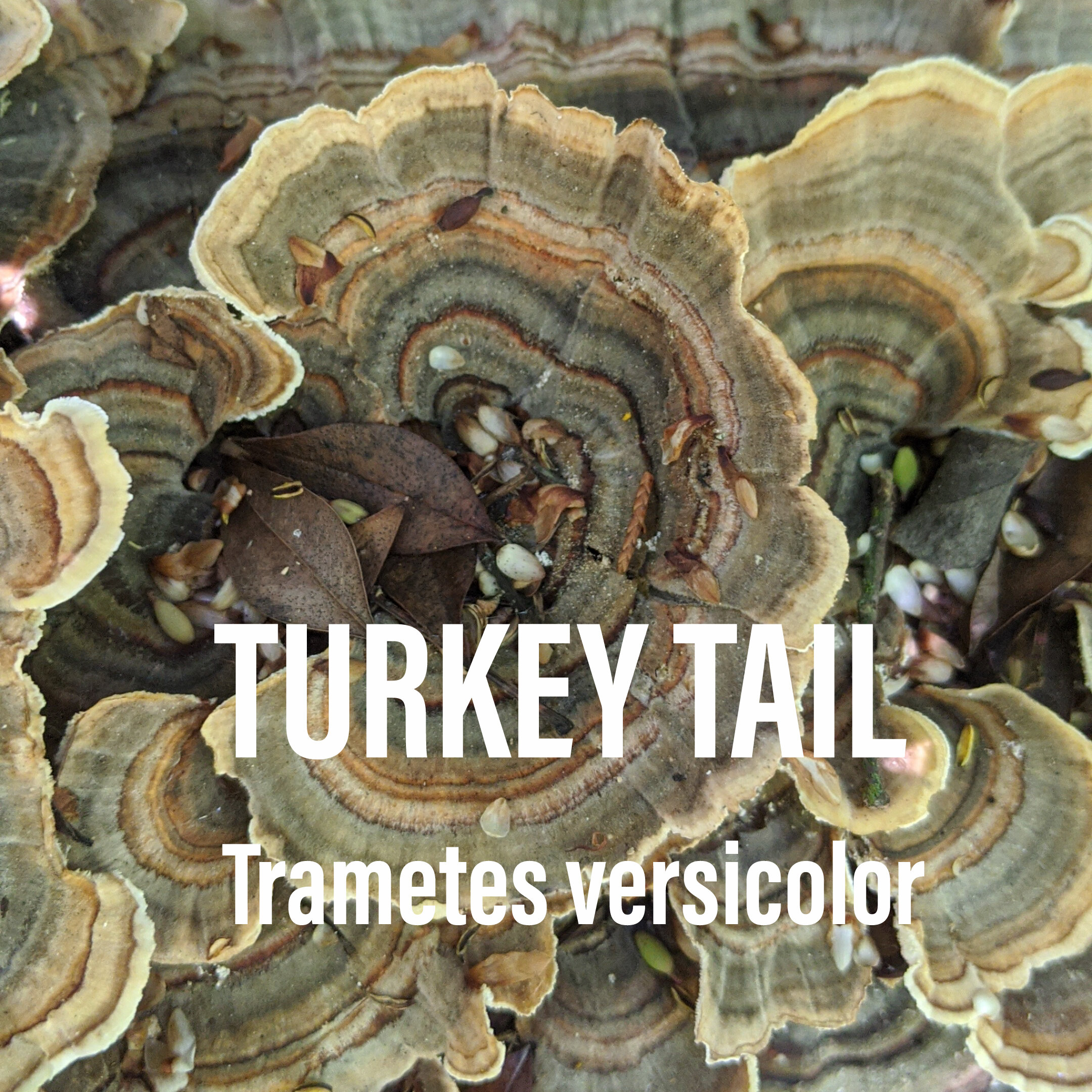
TURKEY TAIL Trametes versicolor
Variable coloration, distinct striping pattern
Grows in overlapping clusters on logs and stumps
No gills, pores are small and round, white to light brown
Tough, leathery flesh
Medicinal and can be brewed into a tea, broth, or extracted into a tincture.
Look-alikes: False turkey tail. or Stereum ostrea and is non-toxic. Mushroom Expert has a useful check list to determine if it is true medicinal turkey tail.
Become a member and learn more about wild mushroom foraging in Texas!
Membership benefits include early access and discounts to walks, workshops, and more. Your membership helps support the larger community! Tag us to get help with ID and add your observations to iNaturalist.org. If you are trying a new mushroom, confirm the ID with an expert, then try a small amount to make sure you don't have an allergic reaction. Texas Mushroom Identification Facebook group is great for quick responses and ID help. Also, don't forget to add your finds on the Mushrooms of Texas project on iNaturalist.
Follow my adventures @forage.atx.

Identifying Wood Blewits from Cortinarius Look-a-likes
Yesterday, I checked a few spots for the distinct, lavender colored Wood Blewit, Clitocybe Nuda, which are an good edible mushroom. Wood blewits can be confused with a purple species of the genus Cortinarius, which includes several poisonous species that grow in the same habitat. Just yesterday I found the two mushrooms growing in same habitat. Here’s a few tips for distinguishing the two.
Yesterday, I checked a few spots for the distinct, lavender colored Wood Blewit, Clitocybe nuda, which are an good edible mushroom. Wood blewits can be confused with a purple species of the genus Cortinarius, which includes several poisonous species that grow in the same habitat. Just yesterday I found the two mushrooms growing in same habitat. Here’s a few tips for distinguishing the two.
identifying EDIBLE WOOD BLEWITS
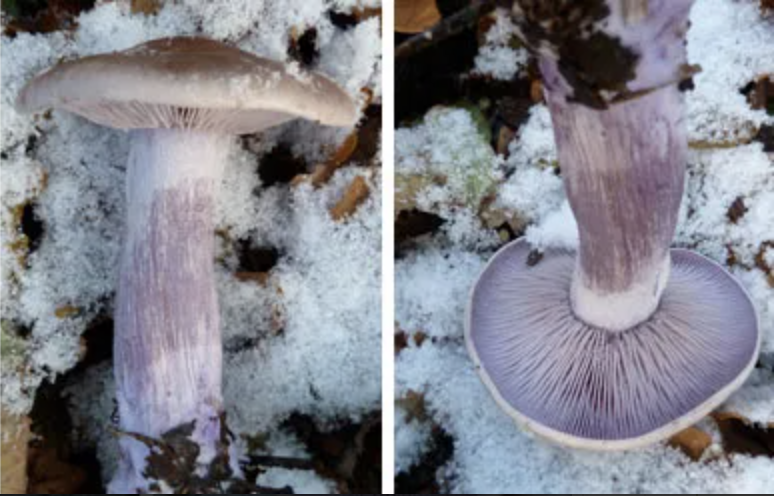
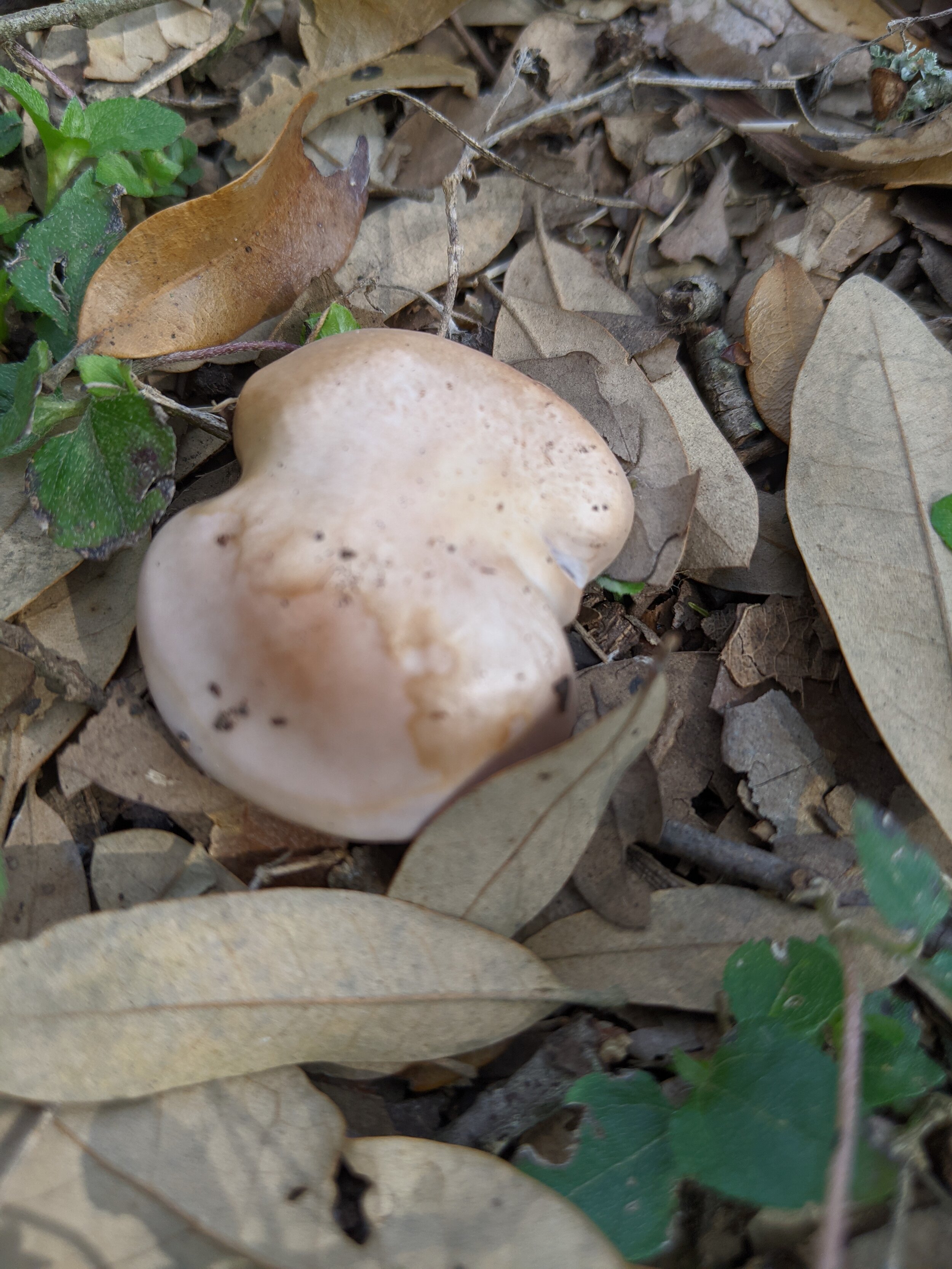
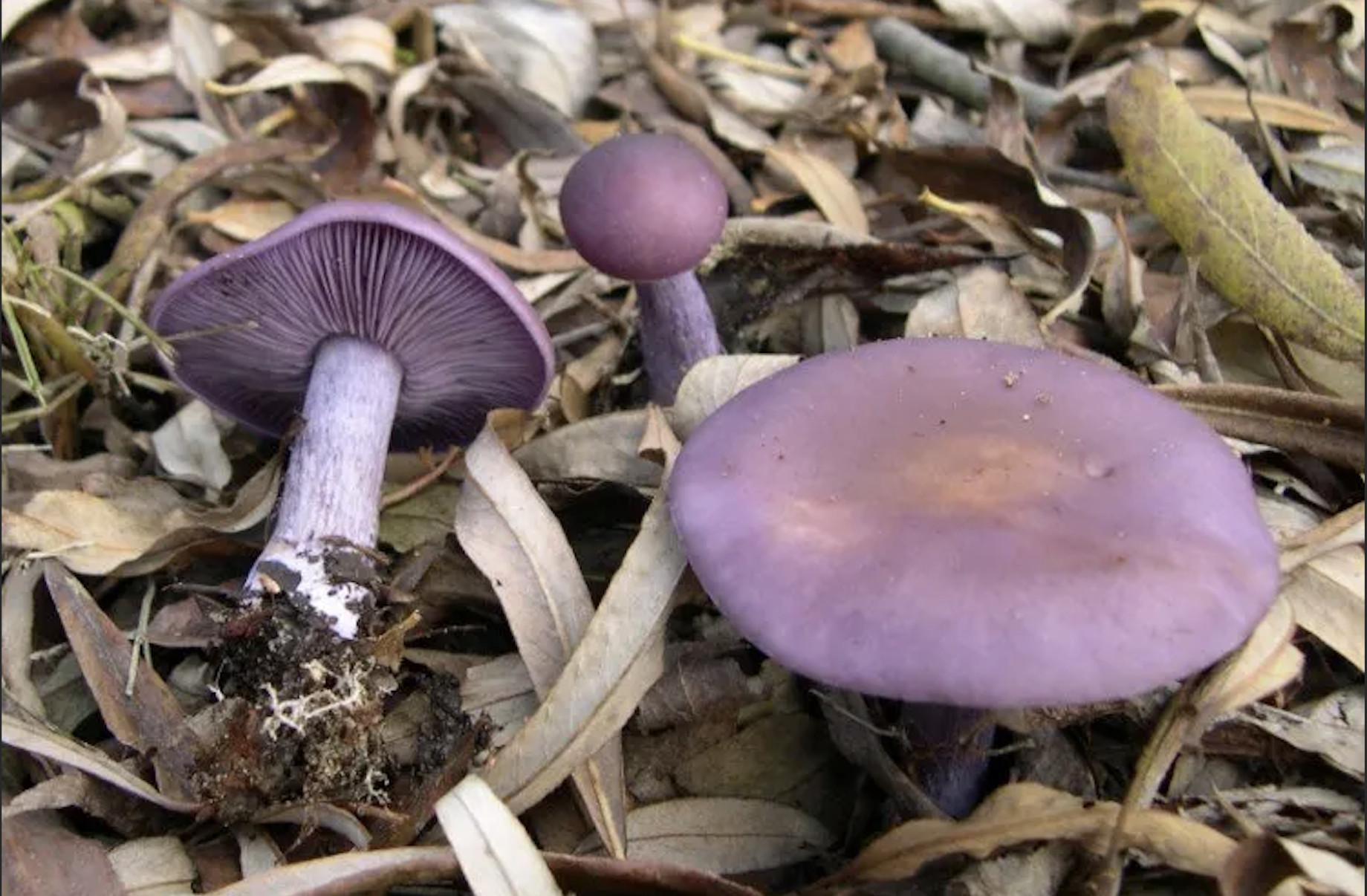
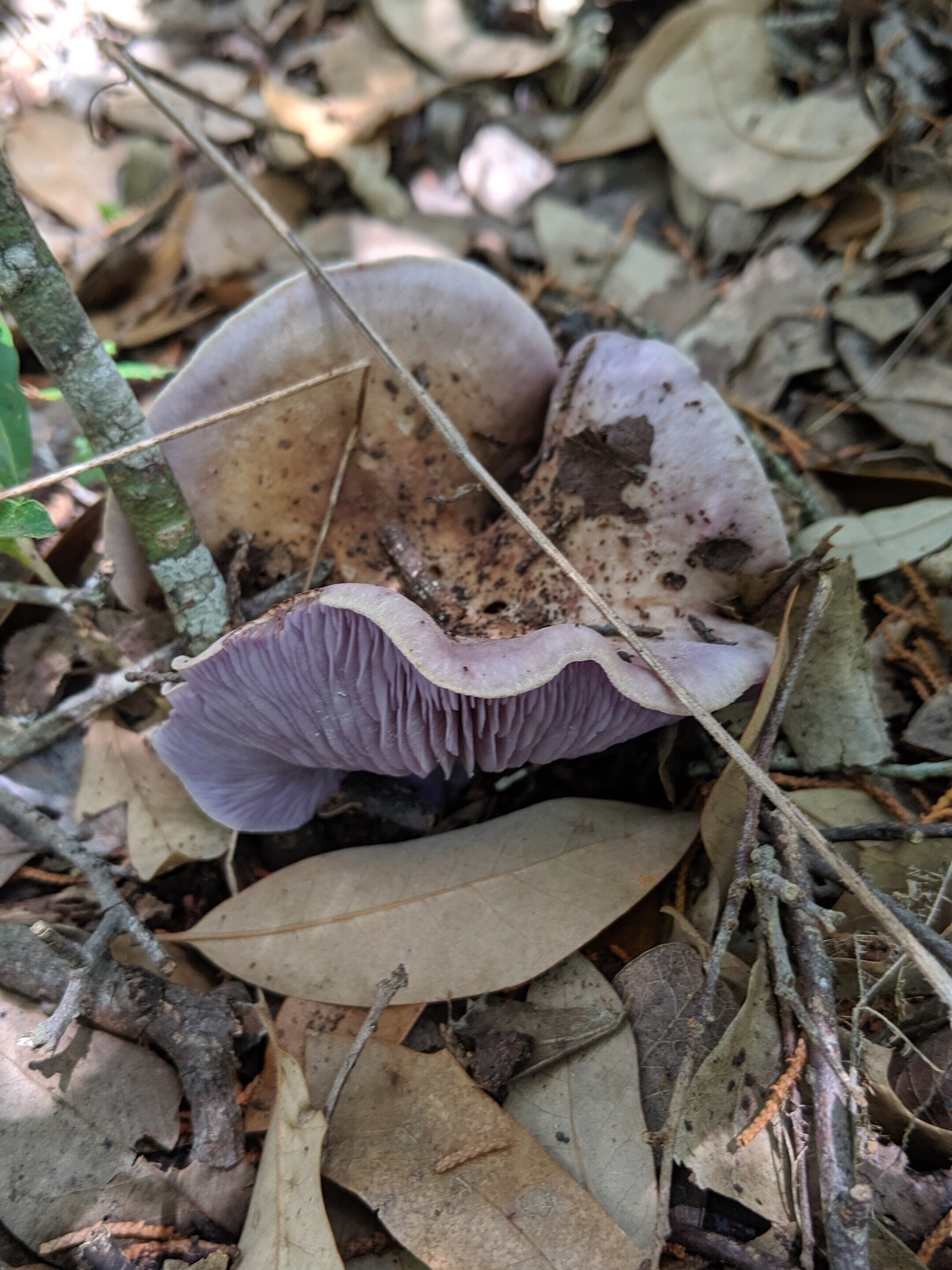
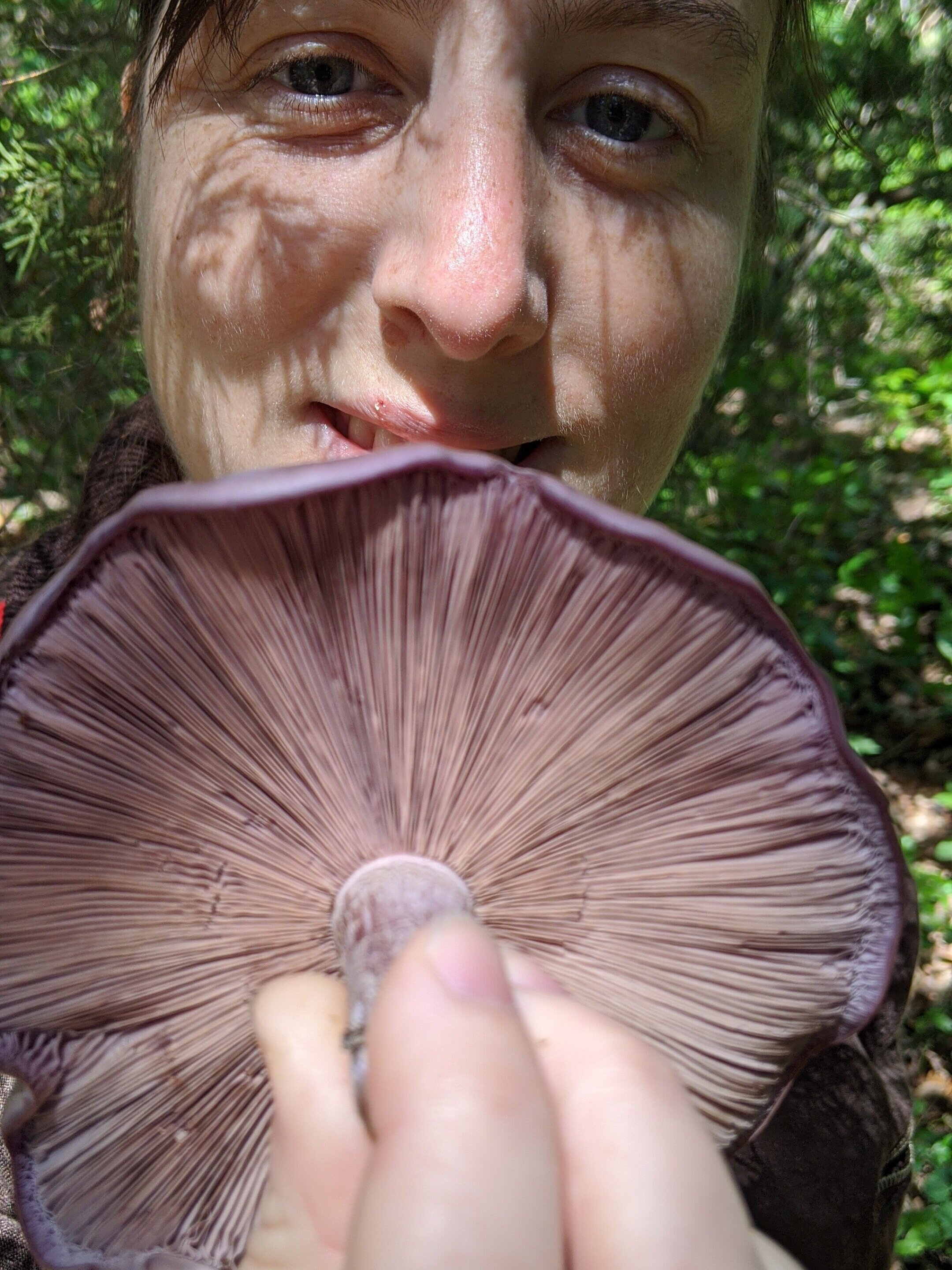
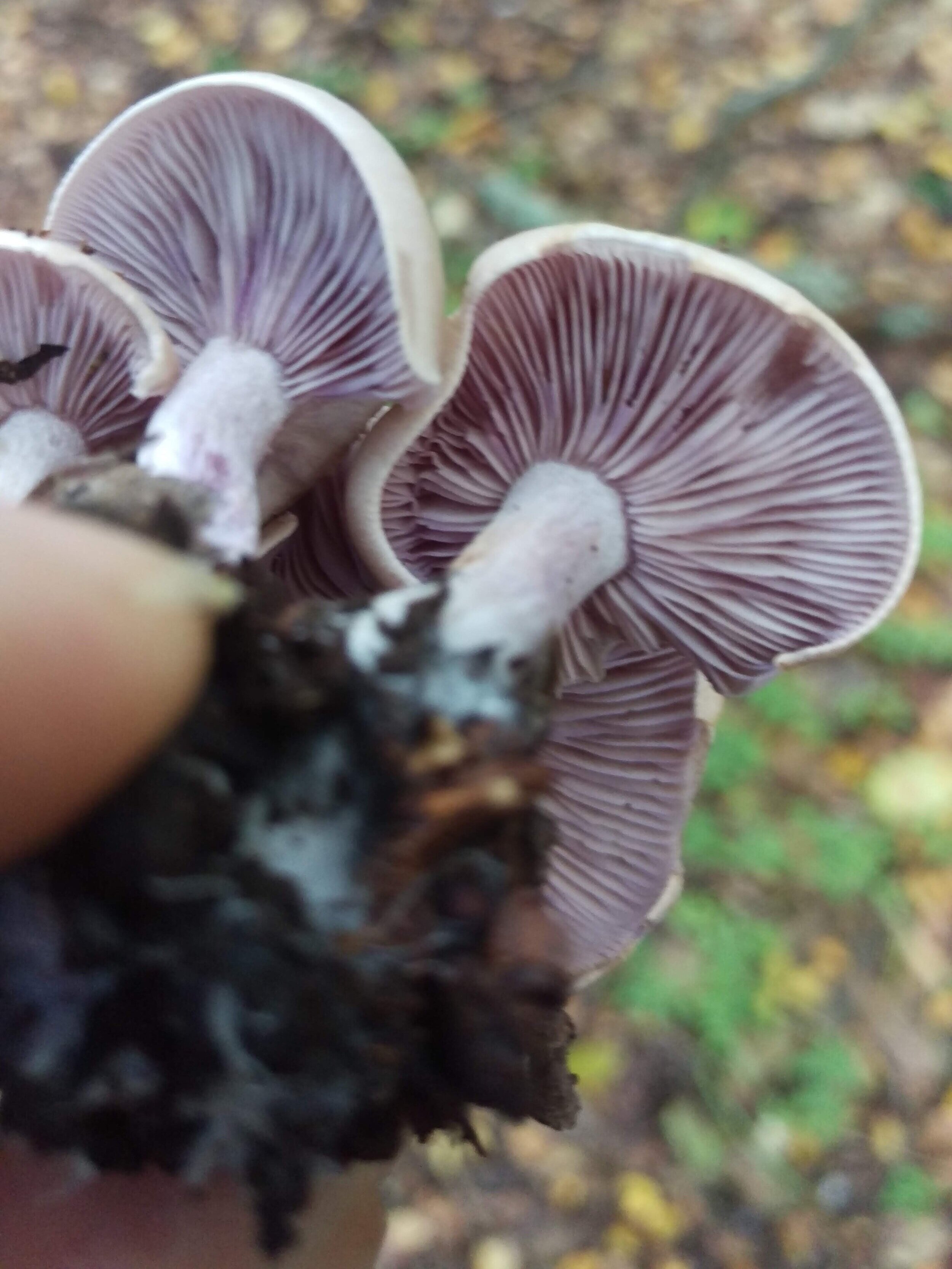
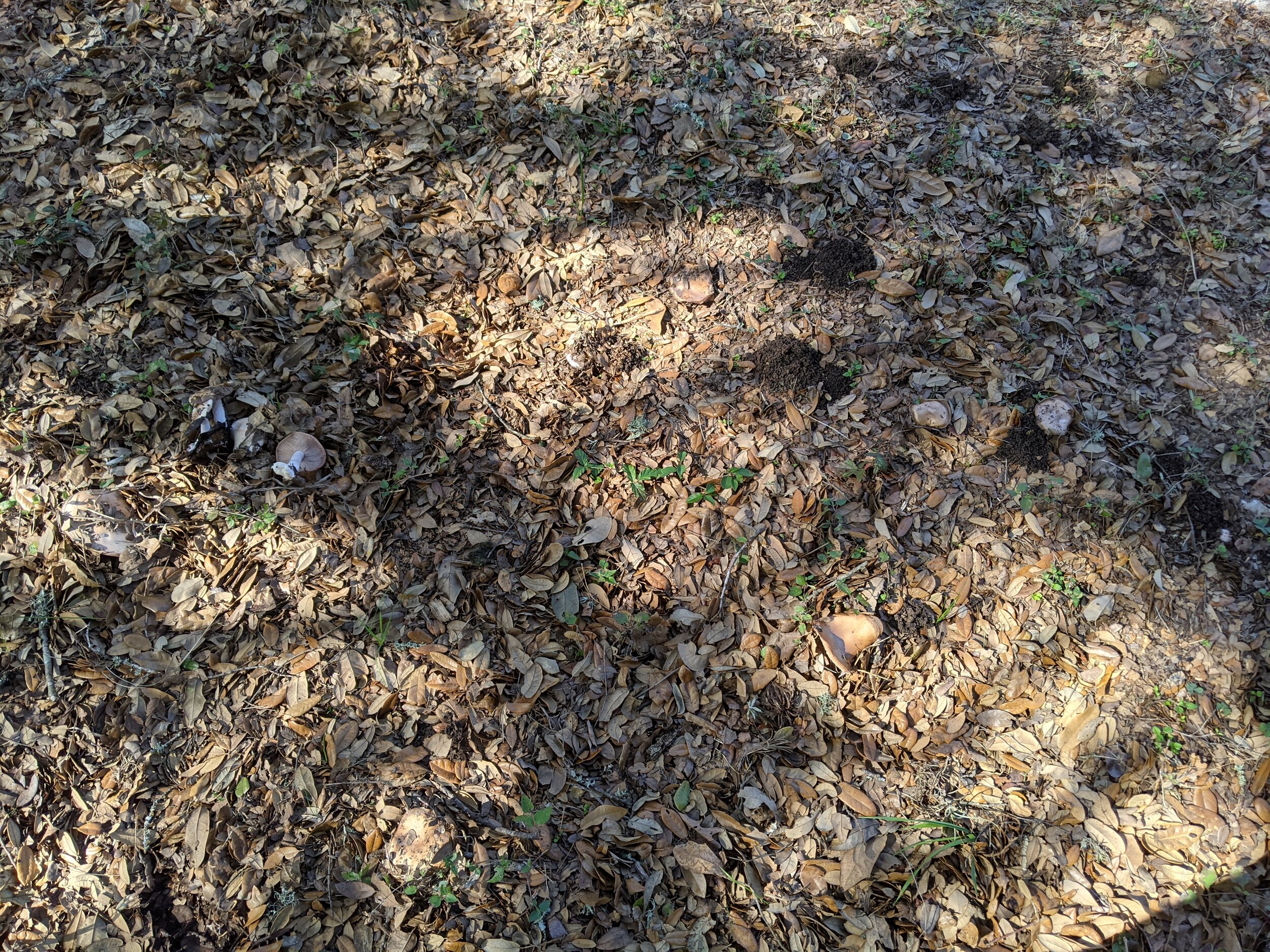
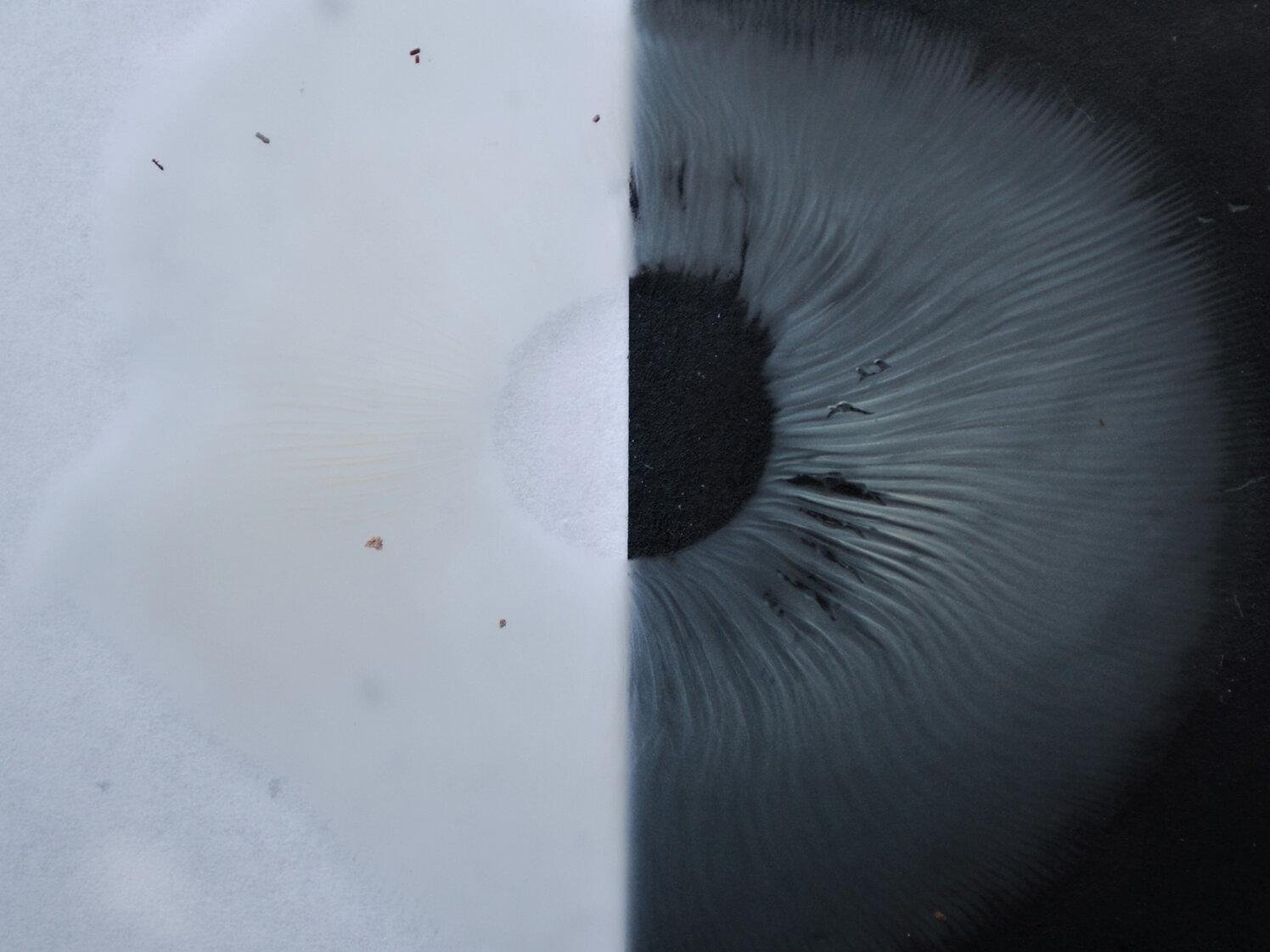
Blewits can be found naturally fruiting during the fall and winter months in Central Texas. I have found them as late as June when we have a rainy year like 2019. They need a heavy frost or freeze to initiate fruiting, so Blewits will not fruit in tropical climates below Central Texas.
The mushroom fruits in hardwood leaf litter under Live Oak trees and near Cedar/Juniper Ash trees in Central Texas. These mushrooms are a saprotrophic species, growing on leaf litter, recycling nutrients back to the soil.
Blewits have a standard “mushroom” shape: simple cap, a thick, stocky stalk, tight gills. There will be no ring or veil around the stalk.
The cap is smooth, almost suede-like appearing lavender purple if there is humidity. It will have leaf litter stuck to it from time to time, but it will NEVER be slimy or viscid. Blewit caps are often beige to mauve. As the mushroom ages, the edges of the cap will get wavy and appear shiny and iridescent when light hits it.
The lavender color on a blewit is concentrated underneath on the gills, although the cap and stalk will be a little purple, too. The gills are close together.
The stalk or stem of the mushroom is bulbous at the bottom and usually has leaves stuck to it when plucked from the ground.
It is rare to find just one blewit and they will often pop up in loose arcs or rings. Blewits do not grow in bunches or on dead wood.
The spore print is one way to be confident with your ID. When you do a spore print — cut the cap off a mushroom and place it, gills down, on a white piece of paper — the spores should light in color, a whitish dull pink to pinkish beige. Their poisonous lookalike, the Cortinarius, has darker, rusty-colored spores.
identifying POISINOUS Cortinarius
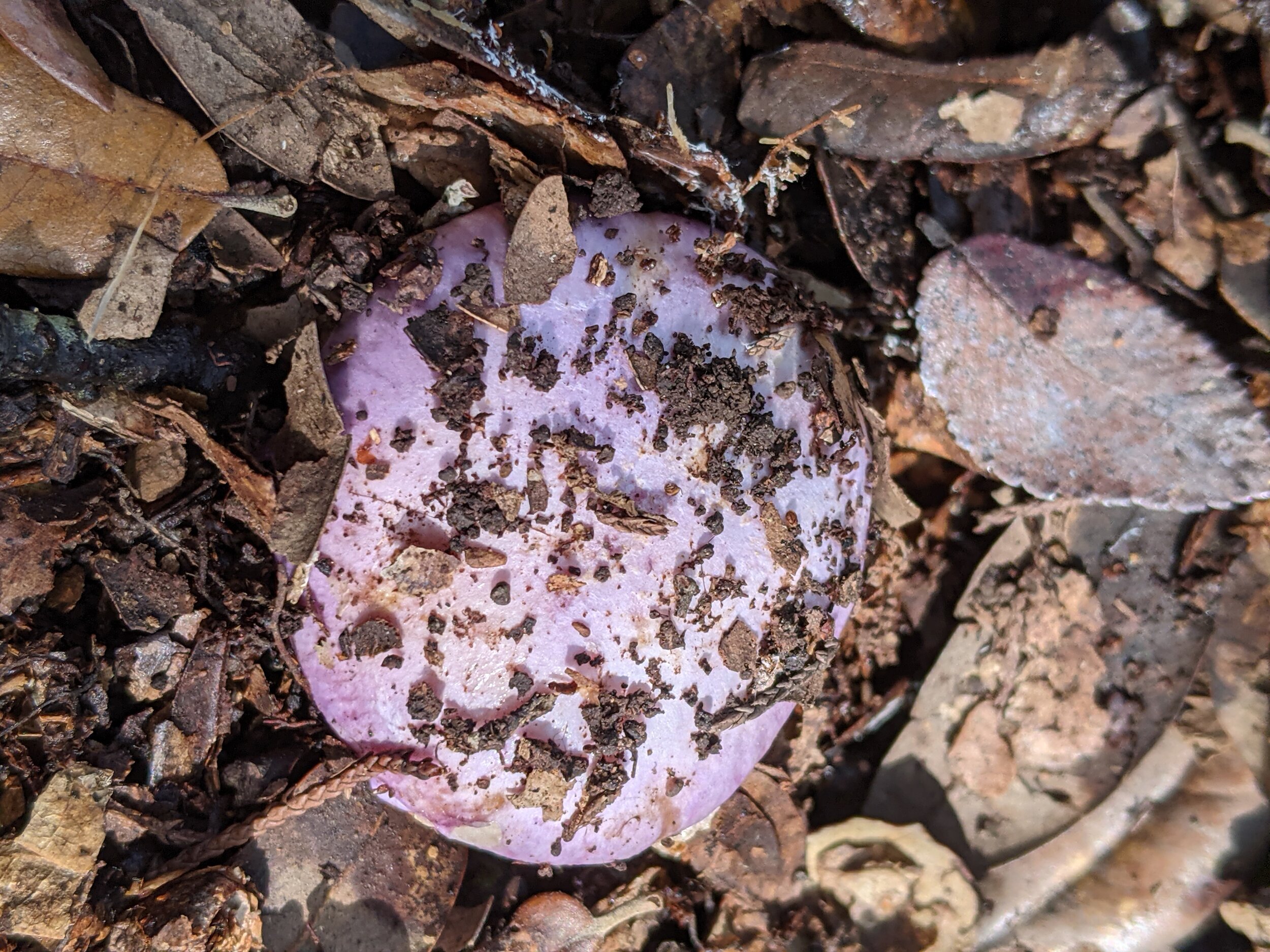
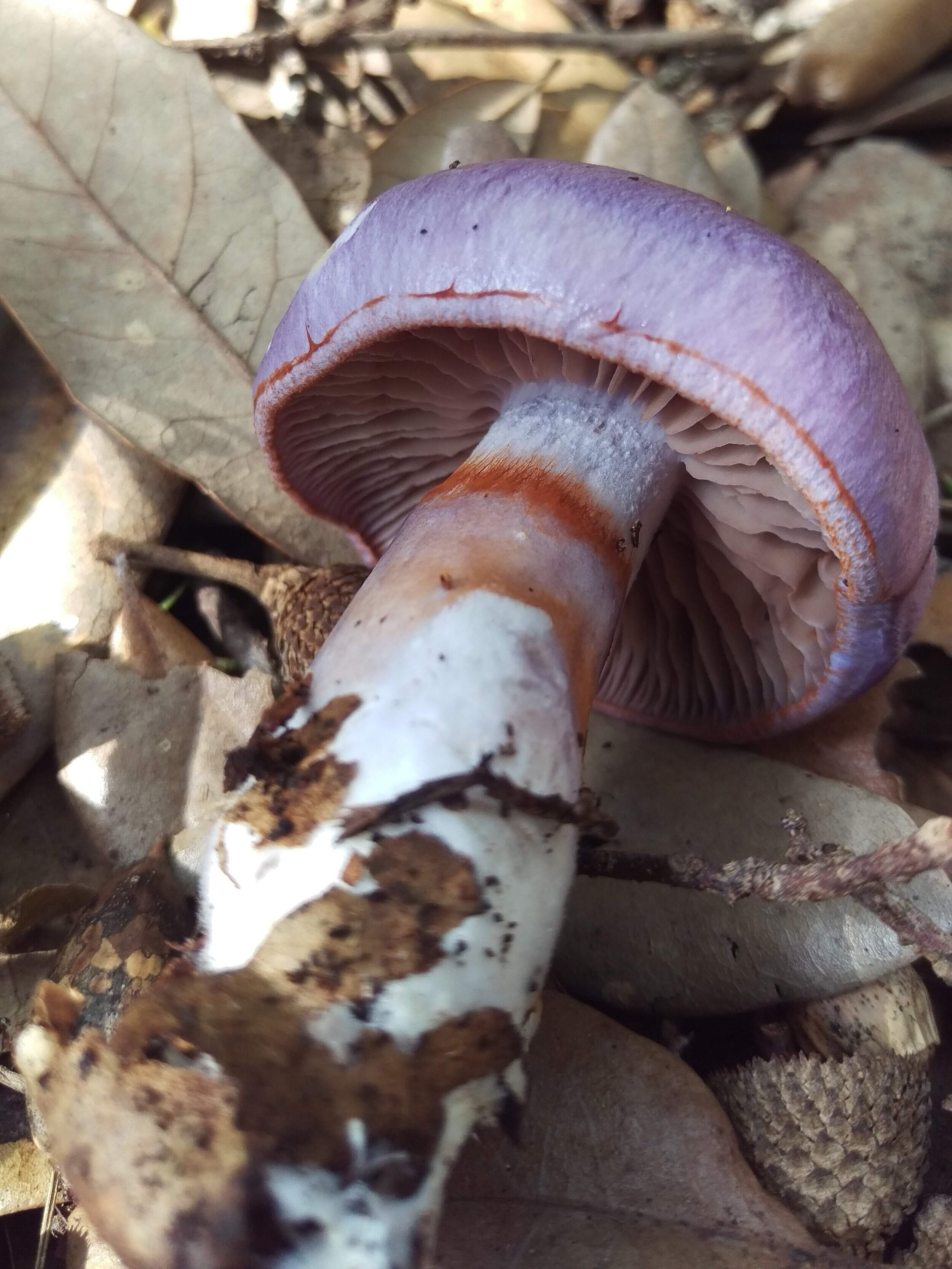
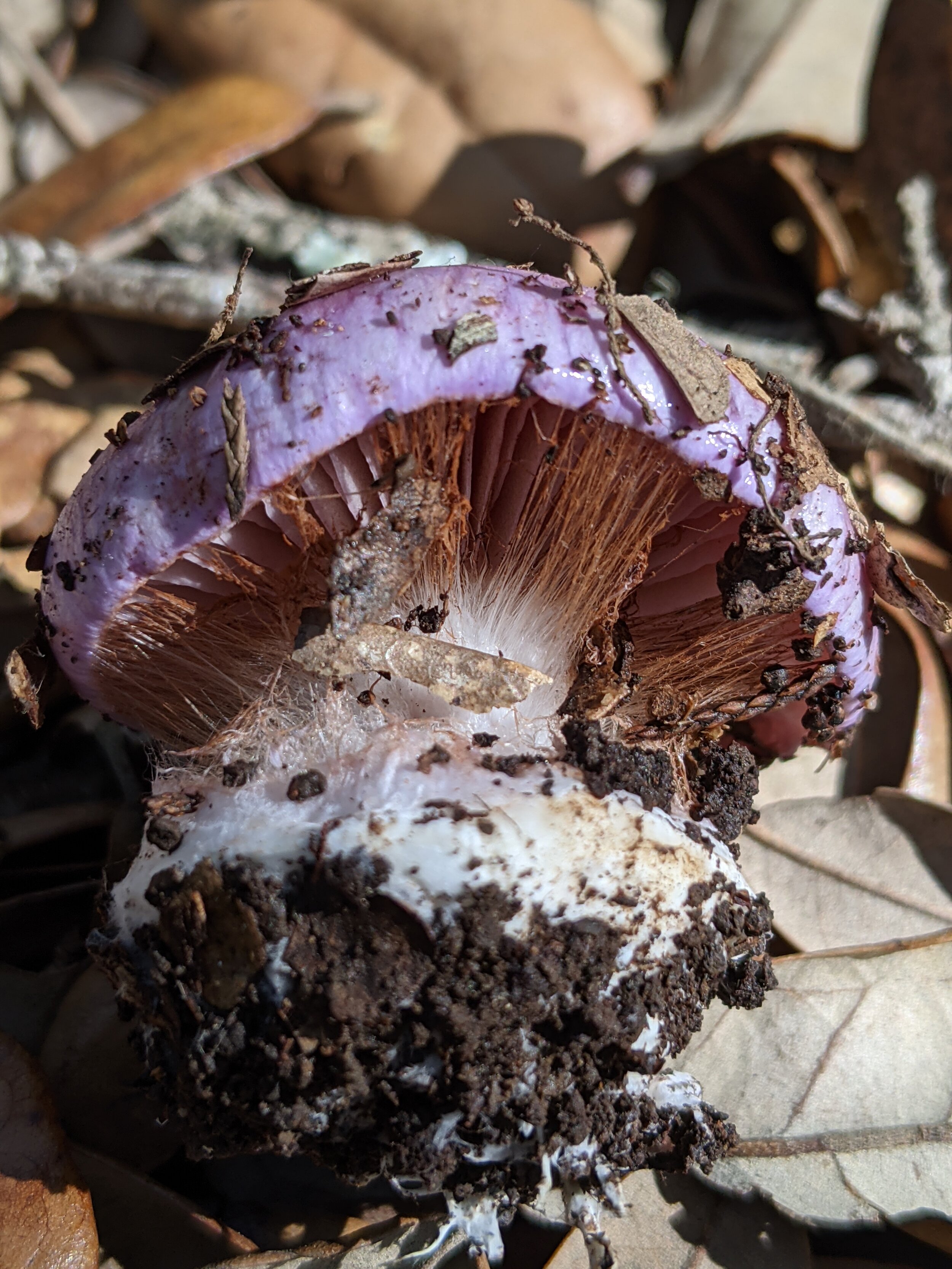
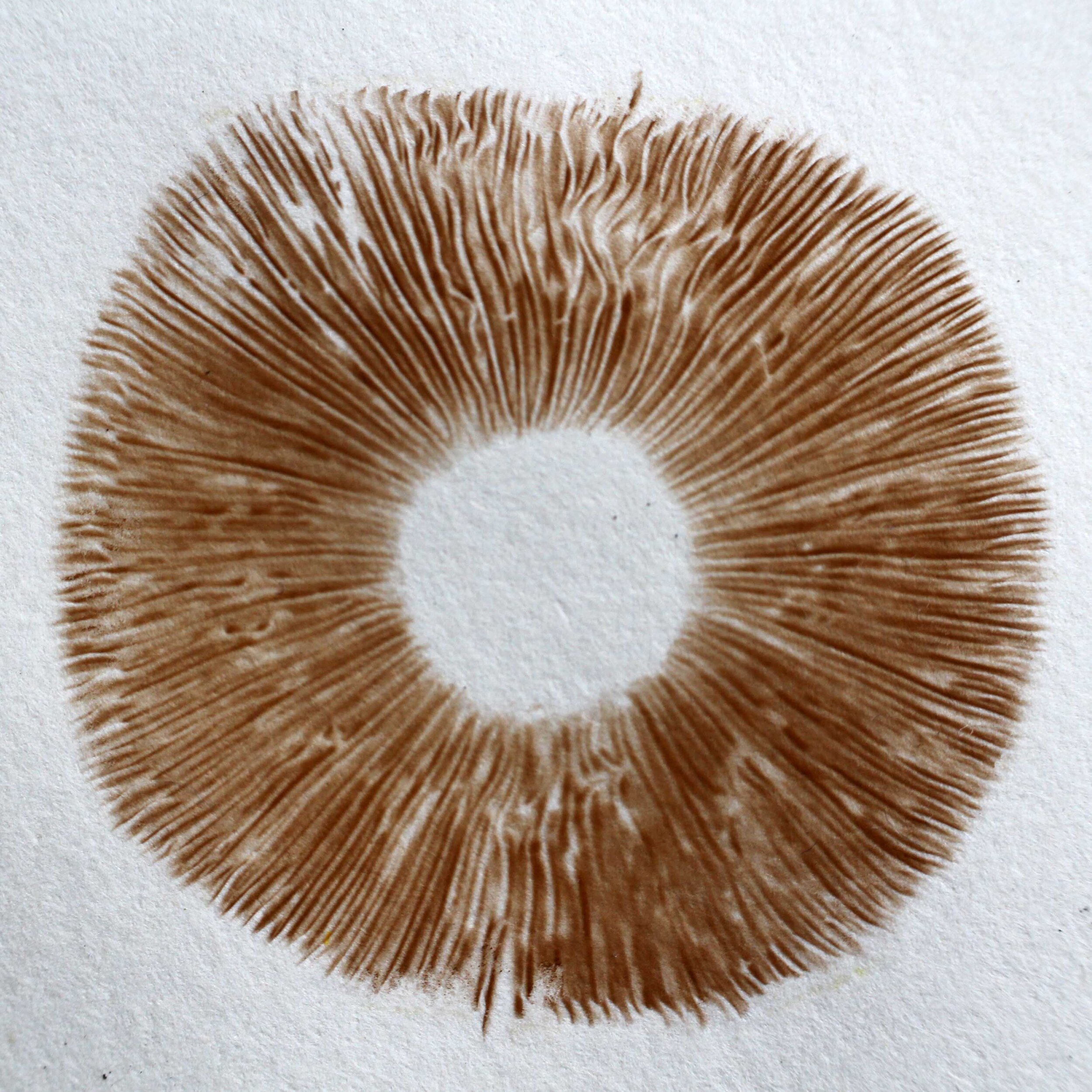
Cortinarius mushrooms will have a slimy, more purple cap.
Around the the stem you will see rusty color that match the color of the visible rusty spores.
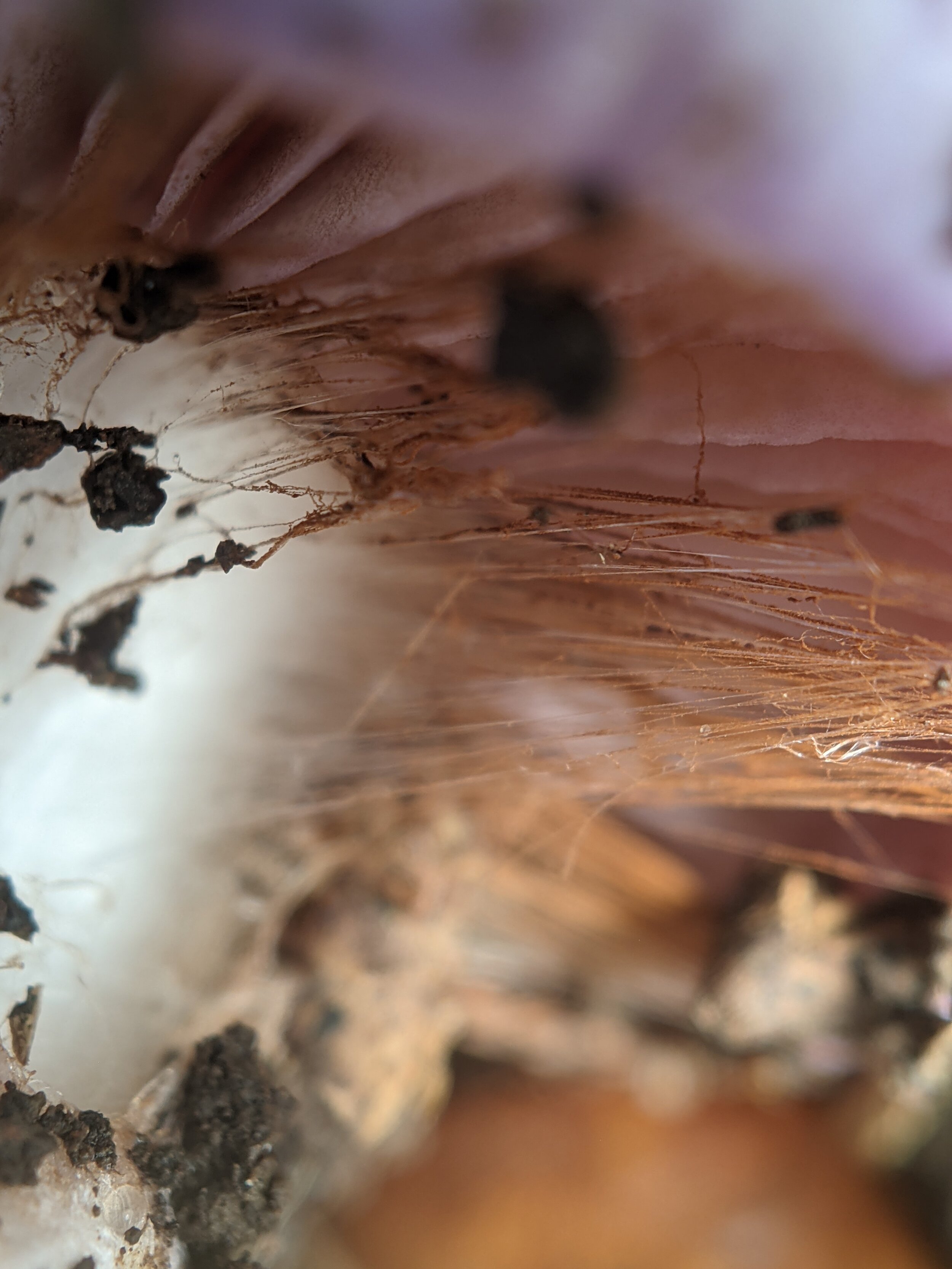
Underneath you will find a “cobwebs” around the veil of the cap — those are Cortinarius or webcaps, which include several toxic species.
It's important to do a spore print AND also confirm the ID with an expert. The spores of the wood blewit are light pink to white and the spores of mushrooms are rust colored.
CULTIVATING WOOD BLEWITS
The wood blewit has been cultivated in Britain, the Netherlands and France. Cultivated wood blewits are said not to taste as good as wild wood blewits. I throw the older, bitter wood blewits in my compost pile. I gave a few to Carter from the Myco Research Station at Circle Acres to experiment with.
COOKING WOOD BLEWITS
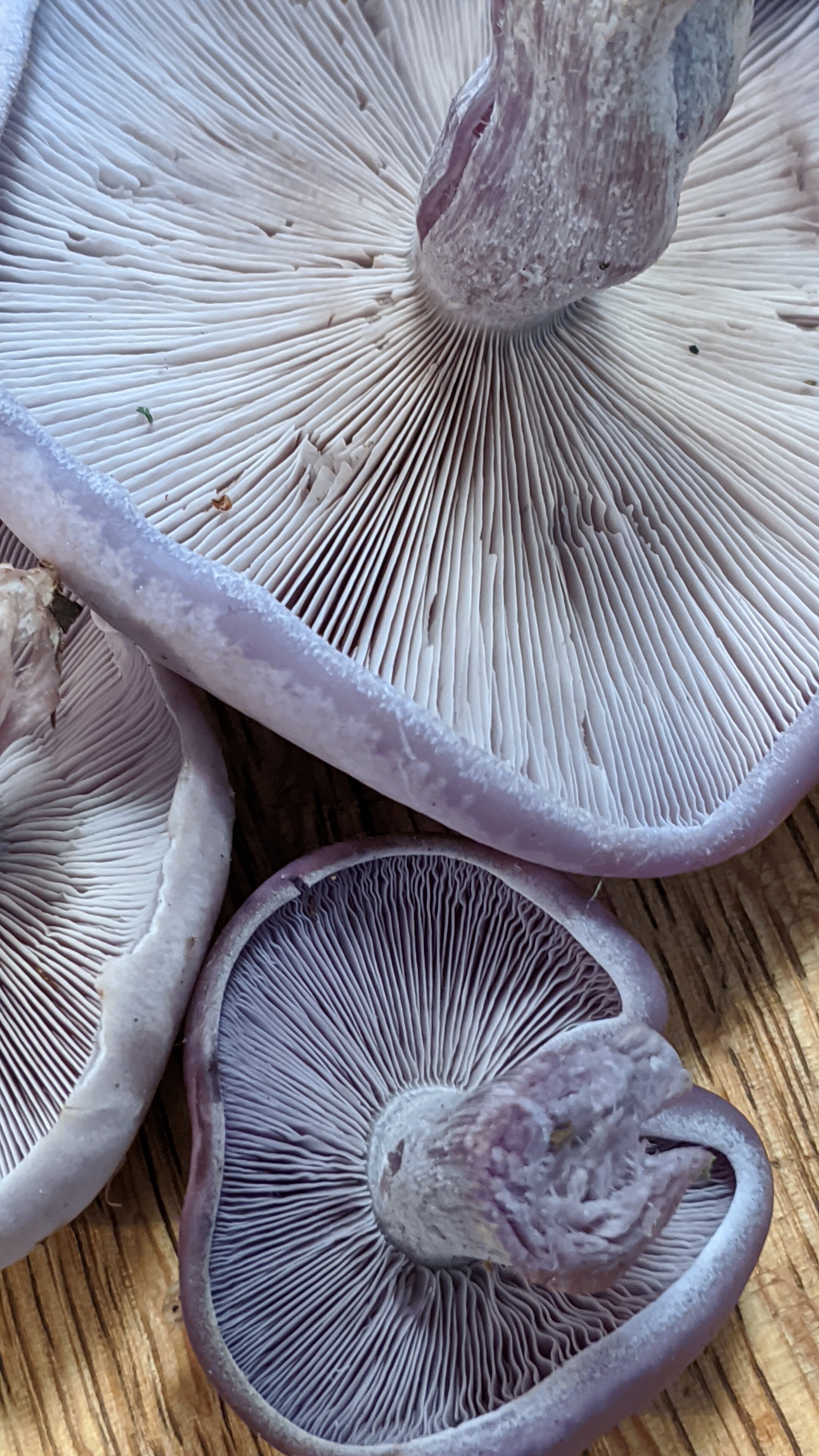
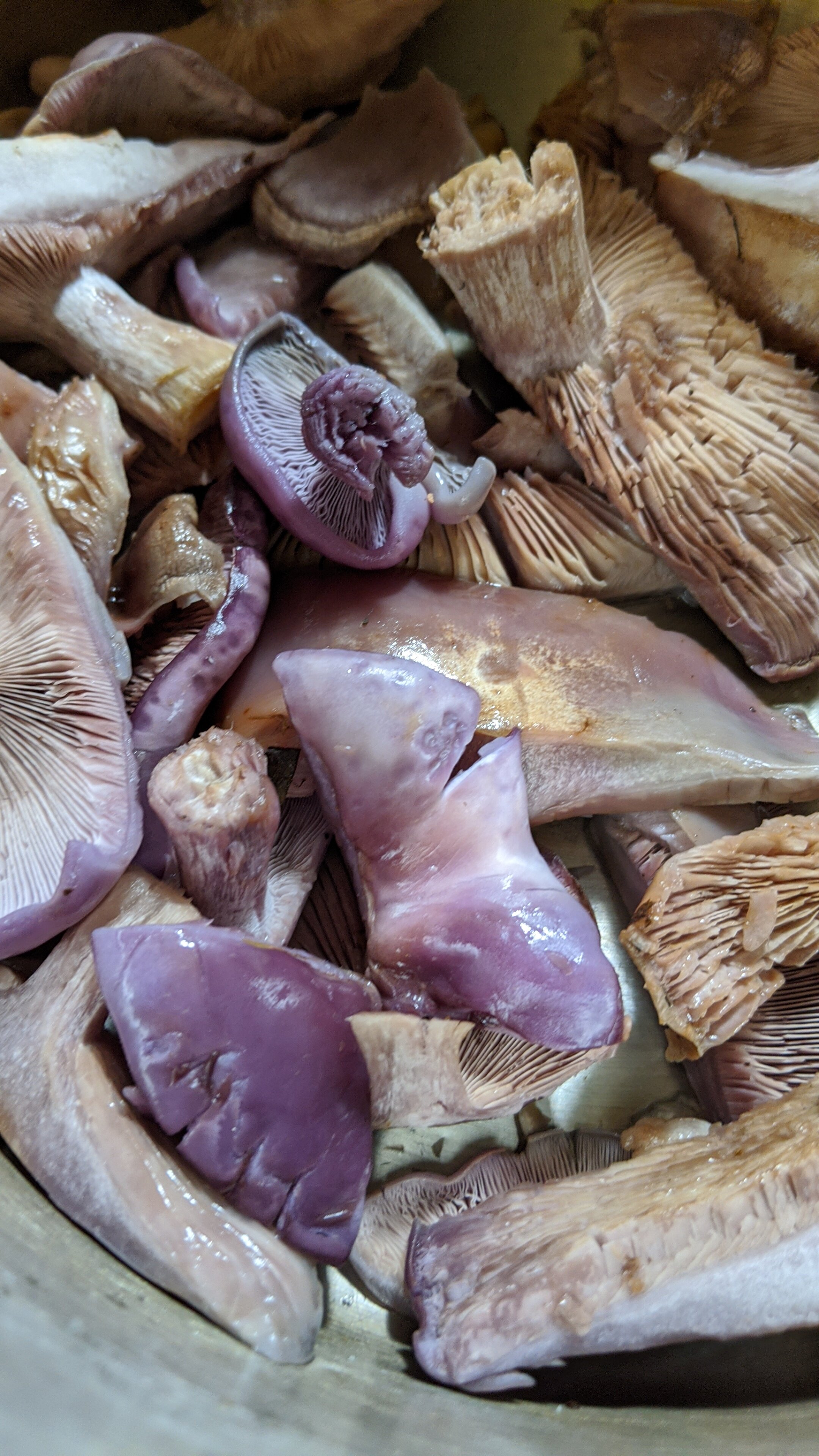

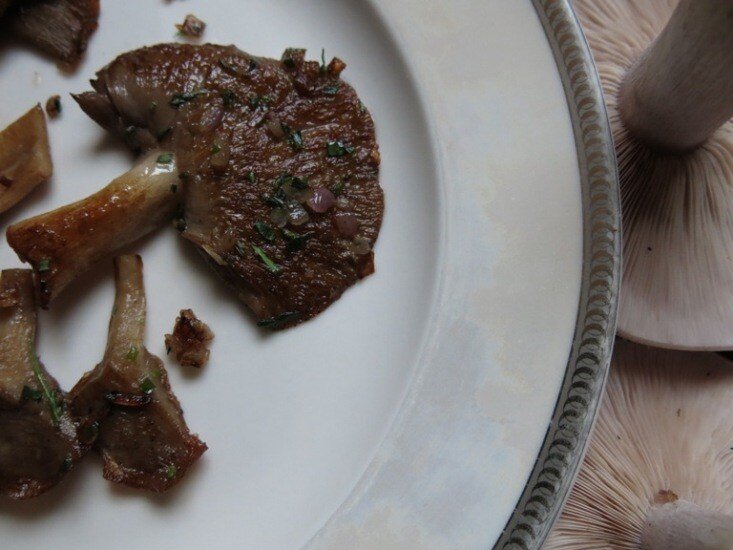
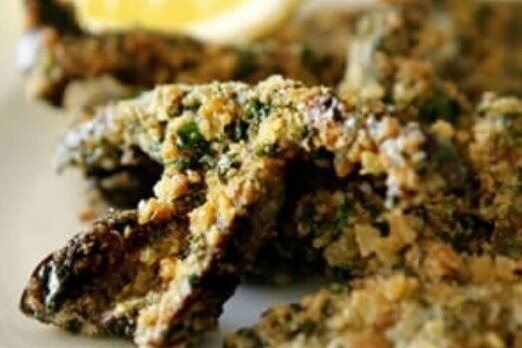
Wood blewits are a good edible, but don’t have the distict flavor of choice edible mushrooms like chanterelles, morels, and porcini. Wood blewits contain the sugar trehalose, which is edible for most people. Blewits can be eaten as a cream sauce or sautéed in butter are great with eggs in breakfast tacos. They have a strong flavor, so they combine well with garlic, leeks or onions. Wood blewits can be preserved in olive oil or white vinegar after blanching. It is always important to cook mushrooms before eating, to break down the chitin. Uncooked mushrooms can cause allergic reactions in sensitive individuals.
RECIPES LINKS
Wood Blewits, Purple Potatoes and Steamed Hake
Dry Sauteed Blewits with Shallots and Tarragon
Bonus Fact from WIkipedia
In Australia, male satin bowerbirds collect blue objects to decorate their bowers with. A young male was reported to have collected wood blewits to this end near Braidwood in southern New South Wales.

By Angel Schatz
Angel Schatz is a resident in Austin, TX, originally from St. Louis area. She worked in digital design and animation for about 15 years. More recently her work has moved to the analog world where I focus on digital content and leadership around food systems, in helping others build resilience in everything from foraging, urban gardening, and doing art.
My interest in mushrooms started at a young age when hunting for morels in the midwest with my granddad. It was rekindled when I found that morels grow in Texas. I found my first Texas Morel this past year!
Follow my adventures @forage.atx.





January Mushroom of the Month: Arthrophaga myriapodina
The January mushroom of the month is Arthrophaga myriapodina, another Zombie Fungus!


The January mushroom of the month is Arthrophaga myriapodina, another Zombie Fungus!
🙌 to Leigh for naming that mushroom correctly and becoming the 1,259th member of Central Texas Mycology! Become a supporting member to stay dialed-in with events & discover next month’s mystery mushroom.
What IS it?
It’s Another Zombie Fungus!
A new species and genus of fungus, Arthrophaga myriapodina kills flat backed millipedes. This species was first seen over a century ago but never described until 2017. Similar to the zombie ant fungus, this one also induces pre-death climbing behavior in its hosts and once it reaches a high vantage point, the millipede makes a death grip and the fungus forcibly-discharges spores.
WHERE CAN I FIND IT?
They are in Texas!
iNaturalist and Mushroom Observer observations and study of fungarium specimens suggest the fungus occurs widely in eastern North America with the furthest west occurring in Central Texas then several in northern California. Using a 365nm UV Flashlight, they can be easily found at night after several days of rain. Look for glowing millipedes holding on for dear life at high vantage points like tall grasses.
Can i get InFECted with this Fungus?
While zombie fungi are real and numerous, Mycologists aren’t worried about these types of fungus infecting people. “They’re super species-specific,” said Charissa de Bekker, an assistant professor in the biology department at Utrecht University in the Netherlands. “They have very refined machinery to interact with their hosts and do these really interesting things like changing behavior, but they can’t even jump from one species to the next,” let alone to an organism as distantly related as a human.
Source: CNN
📸 @swamppenwolf @forage.atx @damontighe @inaturalistorg

January Foraging Forecast
As the weather continues to cool, look out for the edible Wood Blewit, Clitocybe Nuda. This distinct lavender-colored mushroom is found in hardwood leaf litter and is a great decomposer.
BLEWIT: As the weather continues to cool, look out for the edible Wood Blewit, Clitocybe nuda. This distinct lavender-colored mushroom is found in hardwood leaf litter and is a great decomposer. Be warned because there are deadly, poisonous look-alikes in the Cortinarius family that grow in similar conditions. It's important to do a spore print AND also confirm the ID with an expert. The spores of the wood blewit are light pink to white and the spores of Cortinarius mushrooms are rust colored. Check out this blog post with lots of photos to help you with the correct ID.
Fresh wood blewits are great with eggs in breakfast tacos. As they get older they become more tan and iridescent colored on the cap and taste bitter. I throw the older wood blewits my compost leaf pile because they are such great decomposers and will colonize and grow in hardwood leaf litter.
OYSTER: Continue to keep an eye out for Oyster Mushrooms, Pleurotus ostreatus grows on dead black willows and oaks. There have been several observed along creeks and rivers recently.
TURKEY TAIL: The medicinal mushroom Turkey Tail, Trametes versicolor will also flush after rain on downed hardwood logs, stumps and, occasionally, on conifer wood. Make sure the underside is porous and white because it can look a lot like False turkey tail. Mushroom Expert has a useful check list to determine if it is true medicinal turkey tail.
As always, if you are trying a new mushroom, confirm the ID with an expert, then try a small amount to make sure you don't have an allergic reaction. Texas Mushroom Identification Facebook group is great for quick responses and ID help. Also, don't forget to add your finds on the Mushrooms of Texas project on iNaturalist.
Follow my adventures @forage.atx.
Grow your own Myco skull for spooky season!