How to ♼ Mushroom Blocks: FAQ's & Growing Tips
Learn how to use and grow mushrooms from recycled or “spent” mushroom blocks.
Frequently Asked Questions
What are mushroom blocks?
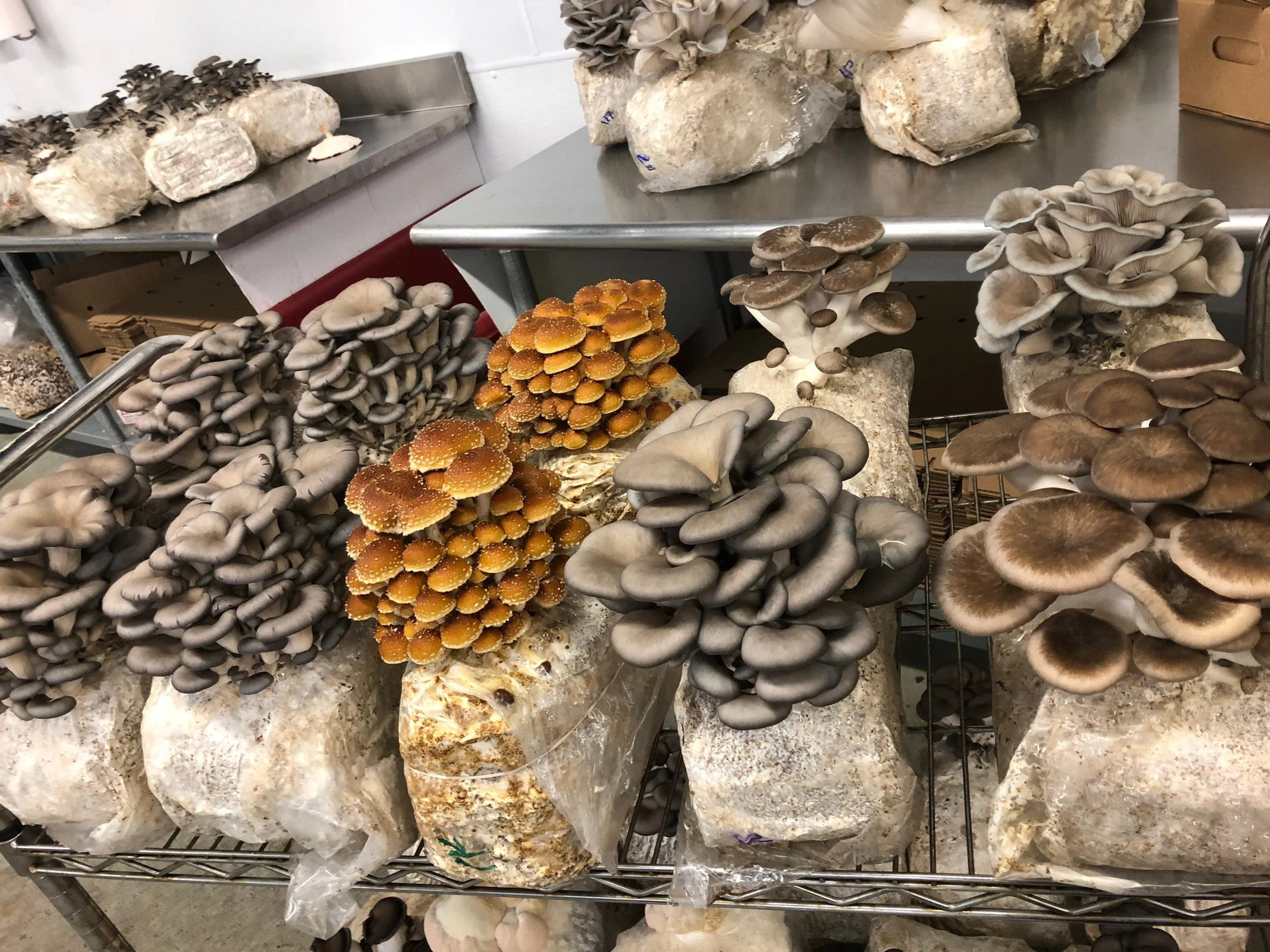
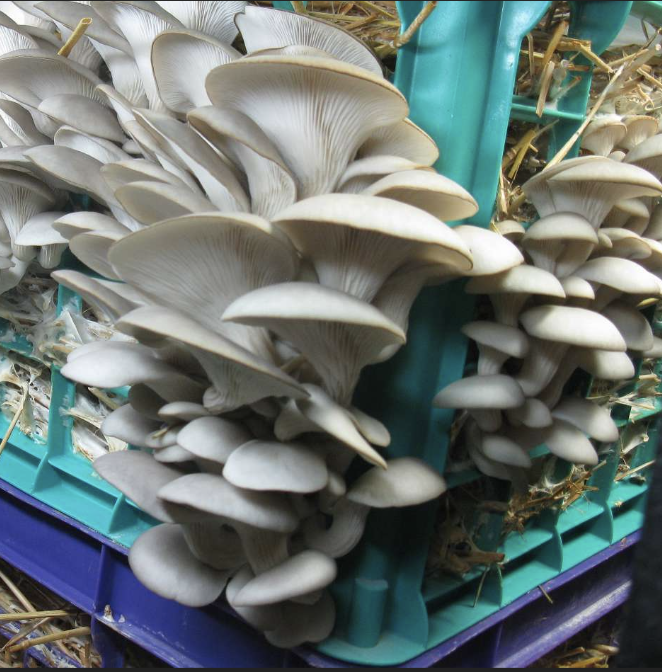
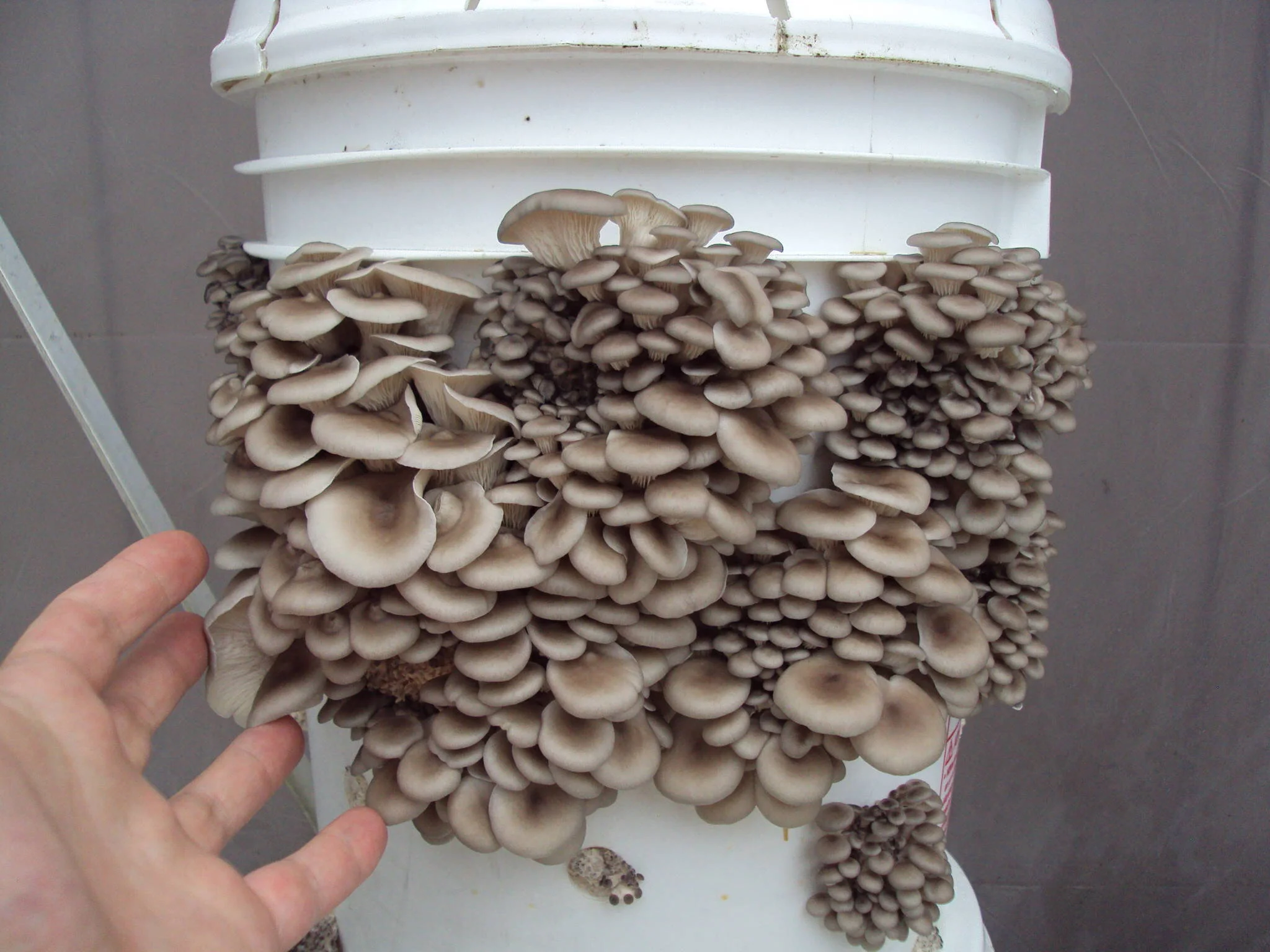
Commercial farmers grow culinary mushrooms in plastic grow bags filled with a sterilized, organic blend of sawdust, grains, and nutrients that feed the mycelium (white stuff). NO SALTS USED The bags are kept on shelves in a controlled environment that simulates the temperture (65-75°F) and humidity (80-90%) that is ideal for the mushrooms. Once the block is fully colonized and covered with mycelium, it is ready to fruit. The bags are cut open to allow in enough oxygen for the mushroom to fruit. After 3-7 days, the mushrooms are ready to harvest. The blocks are donated to be composted or to grow more mushrooms. This is why the bags are already open.
Where do they come from
From commercial mushroom farms in central Texas. Many times mushroom farms grow mushrooms once, and then end up getting tossed in the waste. In Austin, we are collaborating with a local mushroom farms to help keep used mushroom blocks out of the waste to give people the opportunity to grow them using various methods.
If you don’t live in Austin contact your local mushroom farm to see if you can take mushroom blocks to compost. Visit our map of Texas Mushroom Companies.
How do I grow another fruiting of mushrooms?
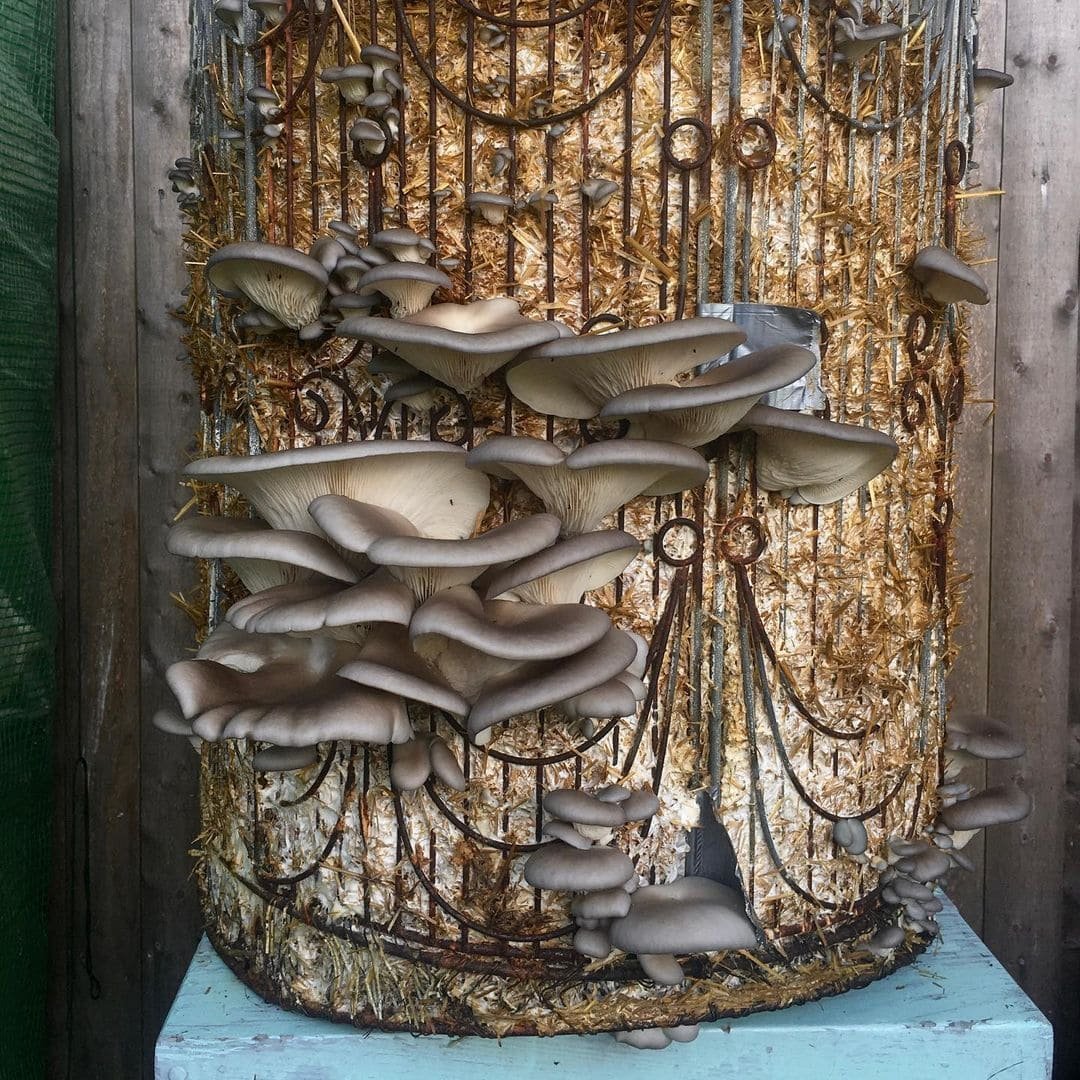
Keep mushroom block in the existing plastic bag and place out of direct light in a cool environment at 65-75°. A Martha Tent or Shotgun Fruiting Chamber is a great idea to contain the spores and helps create a humid environment when temperatures are too hot outdoors.
Spritz with water 2-3x per day
After about 2-3 weeks, the mycelium (white stuff) will start to develop “pins” or baby mushrooms.
Water more frequently and in 2-5 days a “flush” of mushrooms will be ready. Harvest with a knife before the caps curl up!
Compost after harvest.
Will mushroom blocks grow another mushroom that is poisonous?
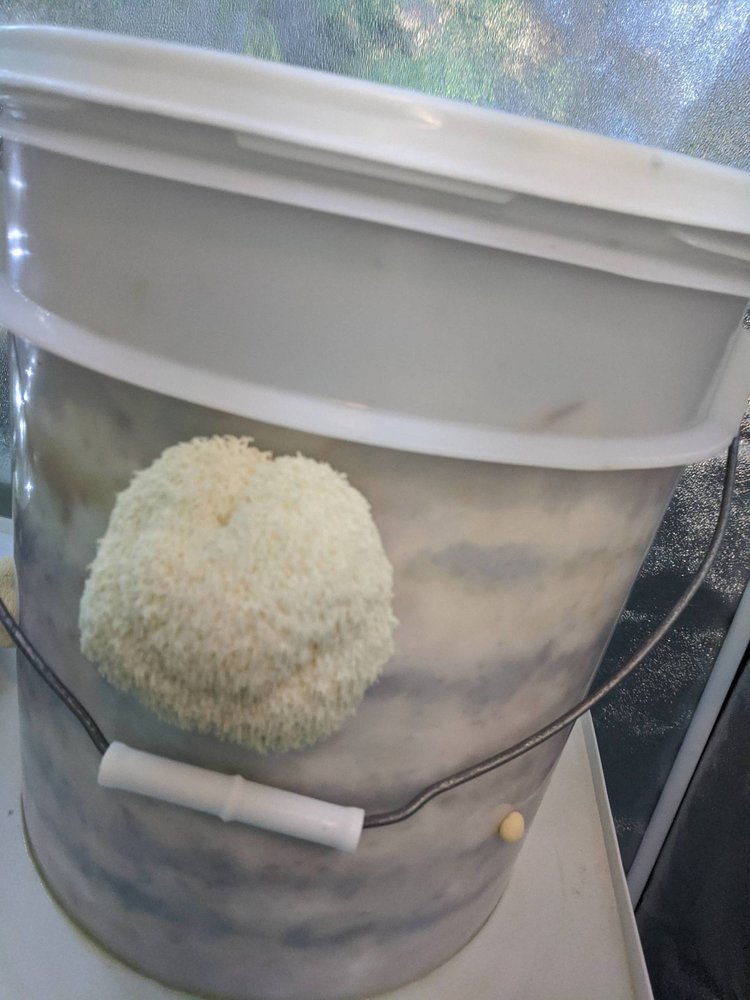
No, a mushroom grow block will not randomly grow a poisonous mushroom. The block is inoculated with a specific fungal species, and unless contaminated by another fungus, it will only produce the intended mushroom. However, if once opened and exposed to wild spores, other fungi like green mold or trichoderma will colonize it. This fungus is really beneficial to plants and actual prevent other fungal pathogens. Learn more about benefits. Always have an expert identify any unexpected growth before consuming!
How to Use as Compost
Remove from plastic bag and dispose of plastic bag in the trash.
Break up the block and sprinkle it on your garden bed, mix it with mulch or wood chips, or add it to compost.
What are the benefits of using mushroom blocks in my garden?
Great for soil health
Supports the ecosystem
Keeps methane out of landfills (good for climate!)
Fill your belly with delicious and nutritious organic mushrooms for free
Support your local mush community!
Does the mushroom blocks contain salts that will hurt my plants?
NO! Many studies on mushroom compost like this one advise against using a lot of mushroom compost because they contain high salts. NO SALTS are used in the process of growing gourmet, culinary mushrooms like oysters and lions mane. These are WOOD-LOVING mushrooms and they grow on sawdust, grains and nutrients.
Mushroom farm such as Kitchen Pride (which we don’t work with) produce white button mushrooms such as cremini and portobello. These are DUNG-LOVING or mushrooms that grow on manure and have soluble salts used in the process. This type of compost contains high levels soluble salts that can harm young seedlings and kill germinating seeds. Since these are a very common mushroom grown and there are a lot of research and content about spent mushroom compost it appears at the top of search results.
When should I harvest?
Harvest mushrooms from a grow block when their caps start to flatten or their edges curl up, before they drop significant spores (oysters) or spines elongate too much (Lion's Mane), usually 3-7 days after pinning; the key is texture (firm, moist) and shape, not just size, and always pick the whole cluster at once for best quality.
If you harvest too late, they are still good for soups, oyster mushroom jerky and dehydrating and powdering. They flavor can be a little more bitter and texture more fibrous.

What kind of mushrooms are they?
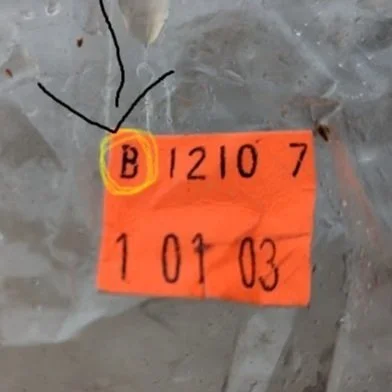
Look for a tag with a code on the bag and also look at the hole in the bag to determine variety.

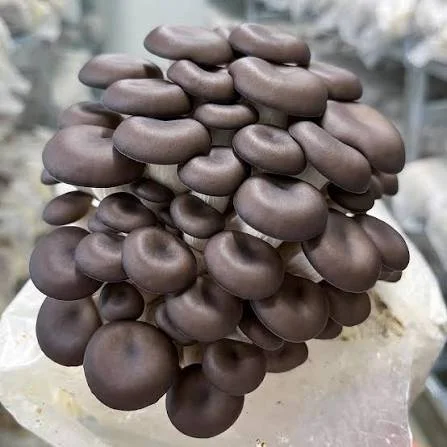


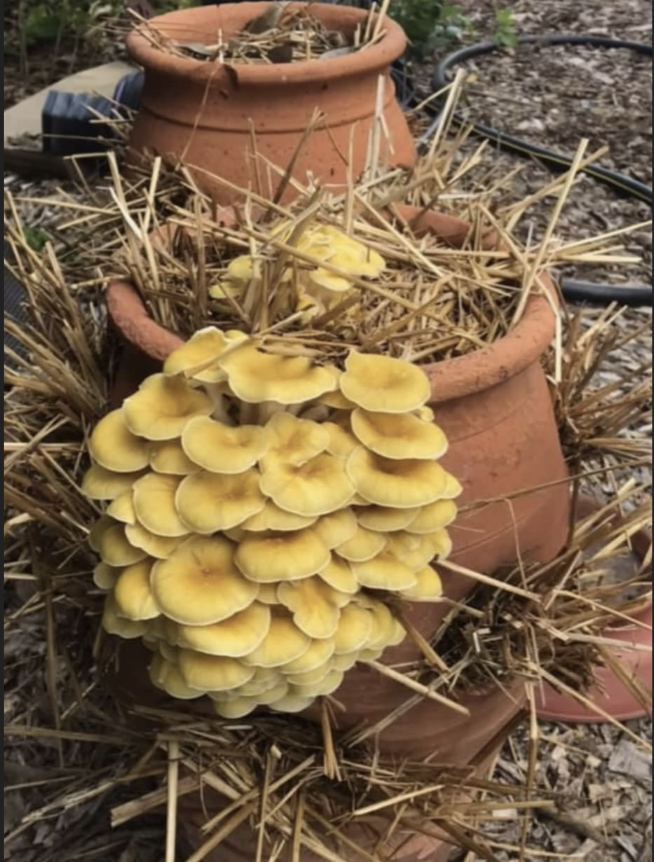
Less Common Variety Codes: Y: Yellow Oyster P: Pink Oyster, MA: Maitake, SH: Shiitake E: Enoki
Growing Tips
Indoors: (Anytime)
Leave in the bag and put in moist area like a kitchen or in bathroom. A Martha Tent or Shotgun Fruiting Chamber is a great idea to contain the spores and helps create a humid environment when temperatures are too hot outdoors. Growing mushrooms indoors is not recommended at scale unless you can contain the spores in a fruiting chamber. Growing a few blocks indoors and under supervision is safe. (See allergy precaution below.)
Air circulation is important. Turn on overhead fan or place fan facing away from mushrooms.
Keep Moist: Spritz with water on slit daily. Keep an eye out for pins (tiny mushies), water 2 - 3x a day.
Harvest after 3 - 5 days before the caps start to curl up and spores drop.
Compost or use as mulch in garden.
Outdoors: (Late Fall-Early Spring)
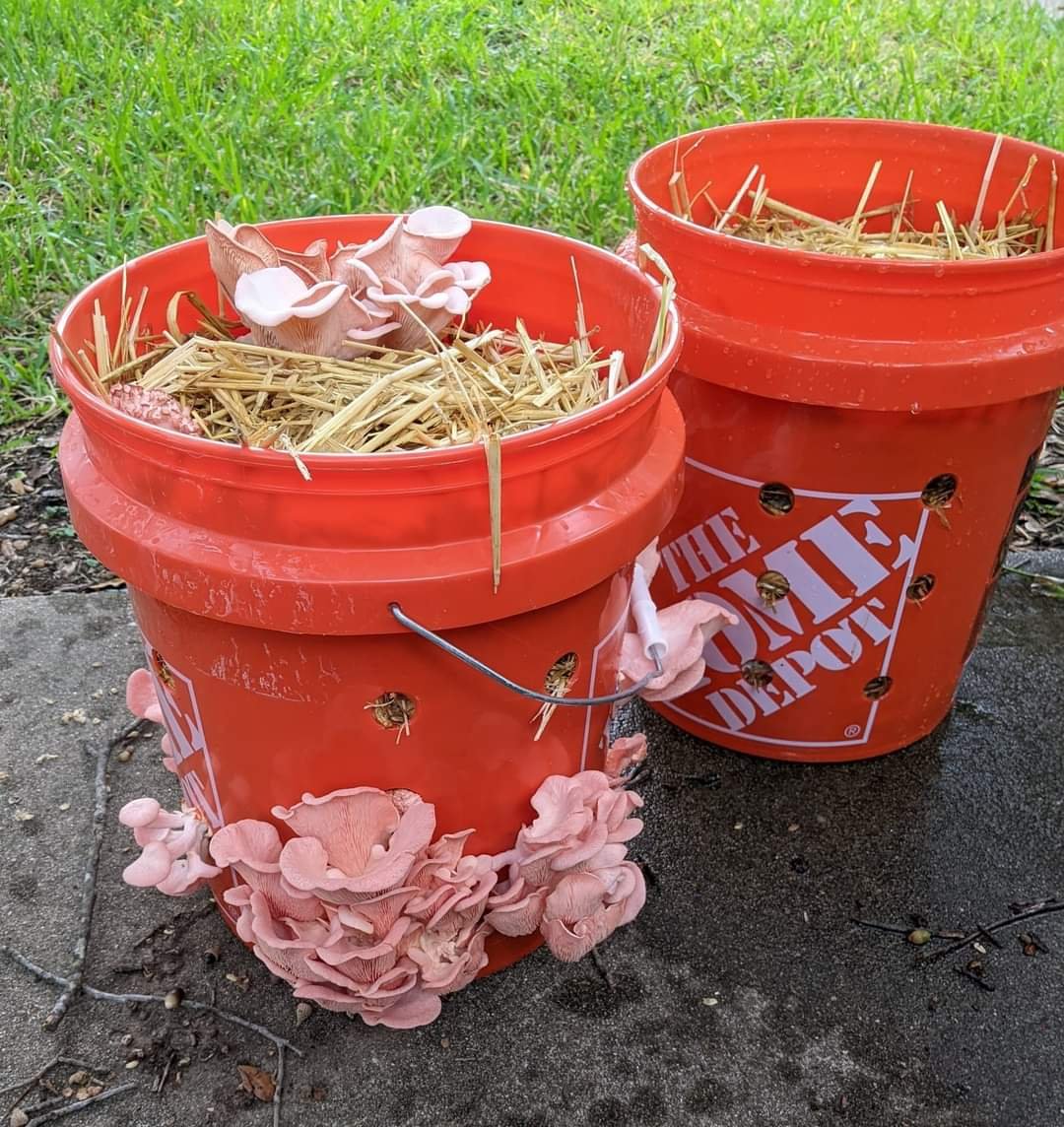
Once temps are below 80 degrees you can leave the block in the existing bag and place it in a shady spot under a tree or shrub, on your porch.
Keep it moist, water daily. They love rain water so make sure they can get exposed.
Keep an eye out for pins (tiny mushies), water 2-3x a day.
Harvest after 3 - 5 days before the caps start to curl up.
Compost or use as mulch in garden.
Key Elements for a Successful Grow
Humidity
Ideal humidity is 80-90% so spray with filtered water 2-3 times a day and keep in a humid area. Try putting them inside a cardboard box or container to contain humidity. Just remember air flow and light are also important.
Air Circulation
Mushrooms give off carbon dioxide and intake oxygen so give them a space for air circulation.
If you see green, black, or orange moldy spots, then feed the block to your compost. Green mold is great for plant growth.
Light
During the colonizing stage (3+ weeks), keep your mushrooms in a cool, dark place below 80°. Once you see “pins” aka baby mushrooms, give your mushroom more light and oxygen. UV light is how mushrooms create vitamin D.
More Growing Tips
Fold the bag over the slit to retain moisture until you see tiny mushrooms. If possible, keep the square white filter patch directly accessible for airflow.
Spritz water around the mushrooms (not directly) for best results.
Mushroom blocks make liquid over time! Just pour it out!
After a few times fruiting, the block will be done. Unbag, smash, and compost!
Important Allergy Precaution
Spores can cause problems indoors for people with allergies. Keeping them in sight is important. If you are going out of town for an extended period put them outside because mushrooms can grow and spread spores in 5-7 days. If you see any mold forming on your block, use a spoon to break it off and dispose of it immediately outdoors. Mold spores, like mushroom spores, are not good to inhale in large quantities.
How to support this program:
Help us continue to keep 10,000+ blocks out the waste by leaving us a donation. (Suggestion is $5 per block).
Tag us online with pics of your mushroom growing experiments OR share your story here.
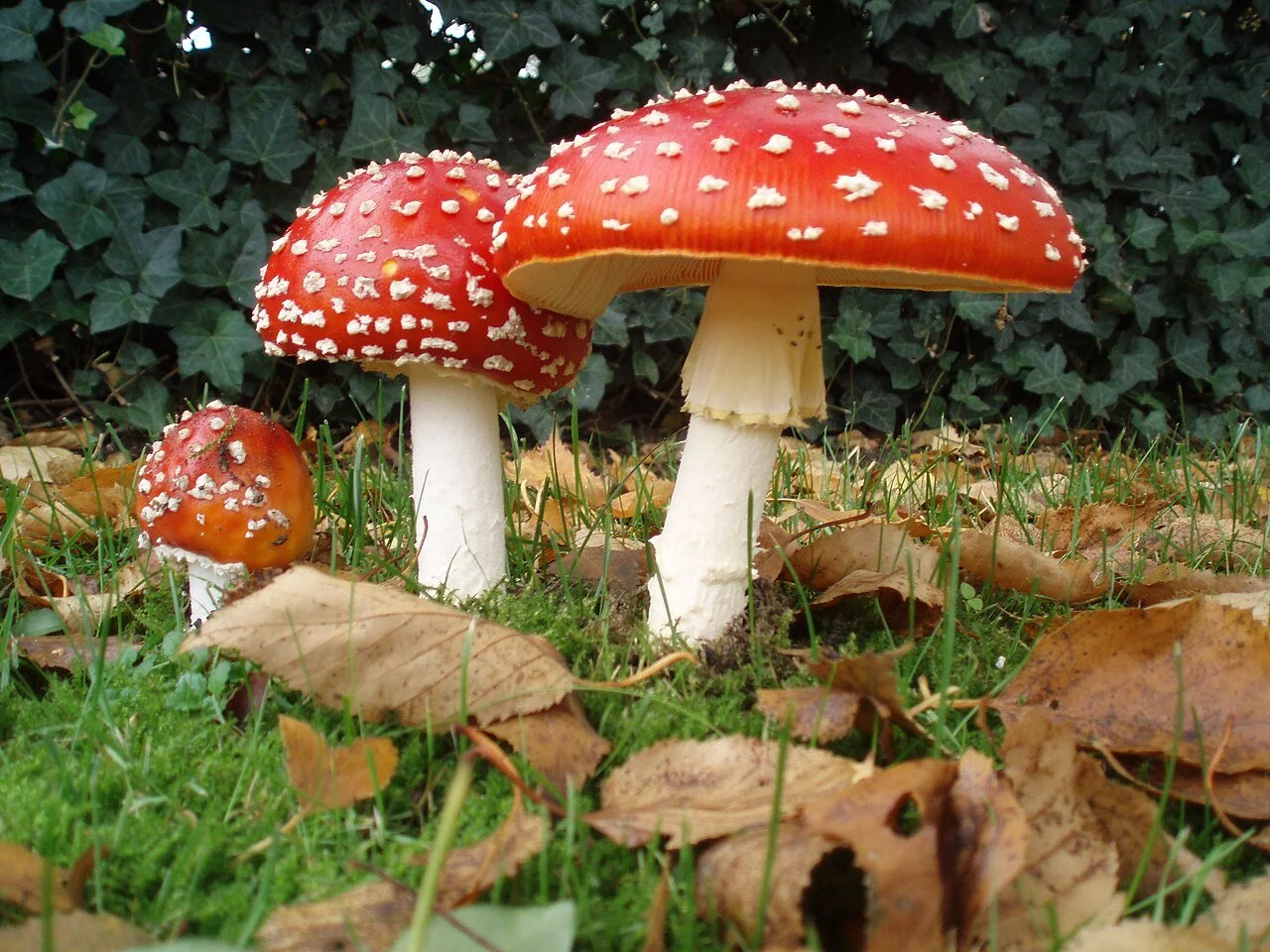
December Mushroom of the Month: Fly Agaric, Amanita muscaria
The December Mushroom of the Month is the Fly Agaric, Amanita muscaria.
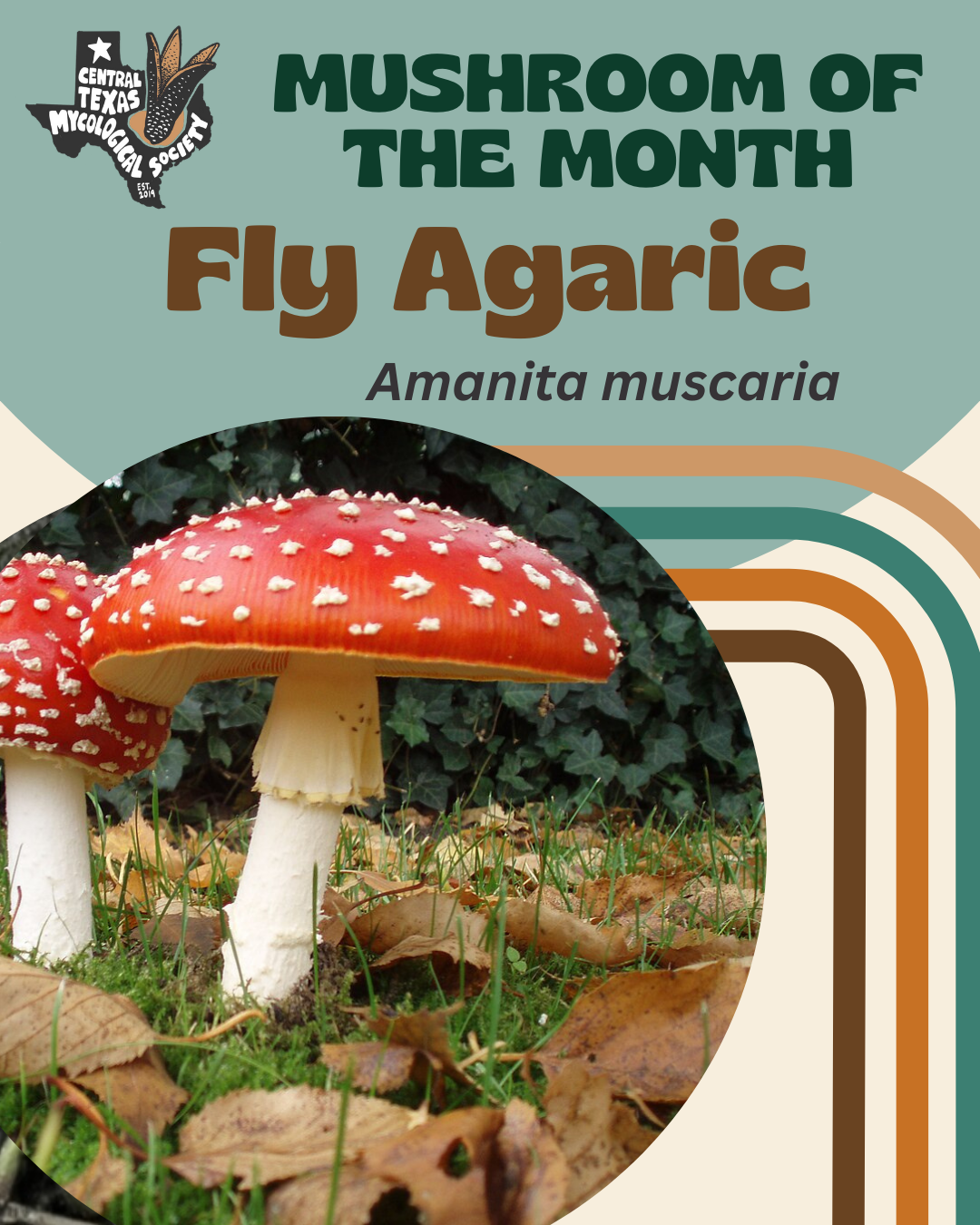
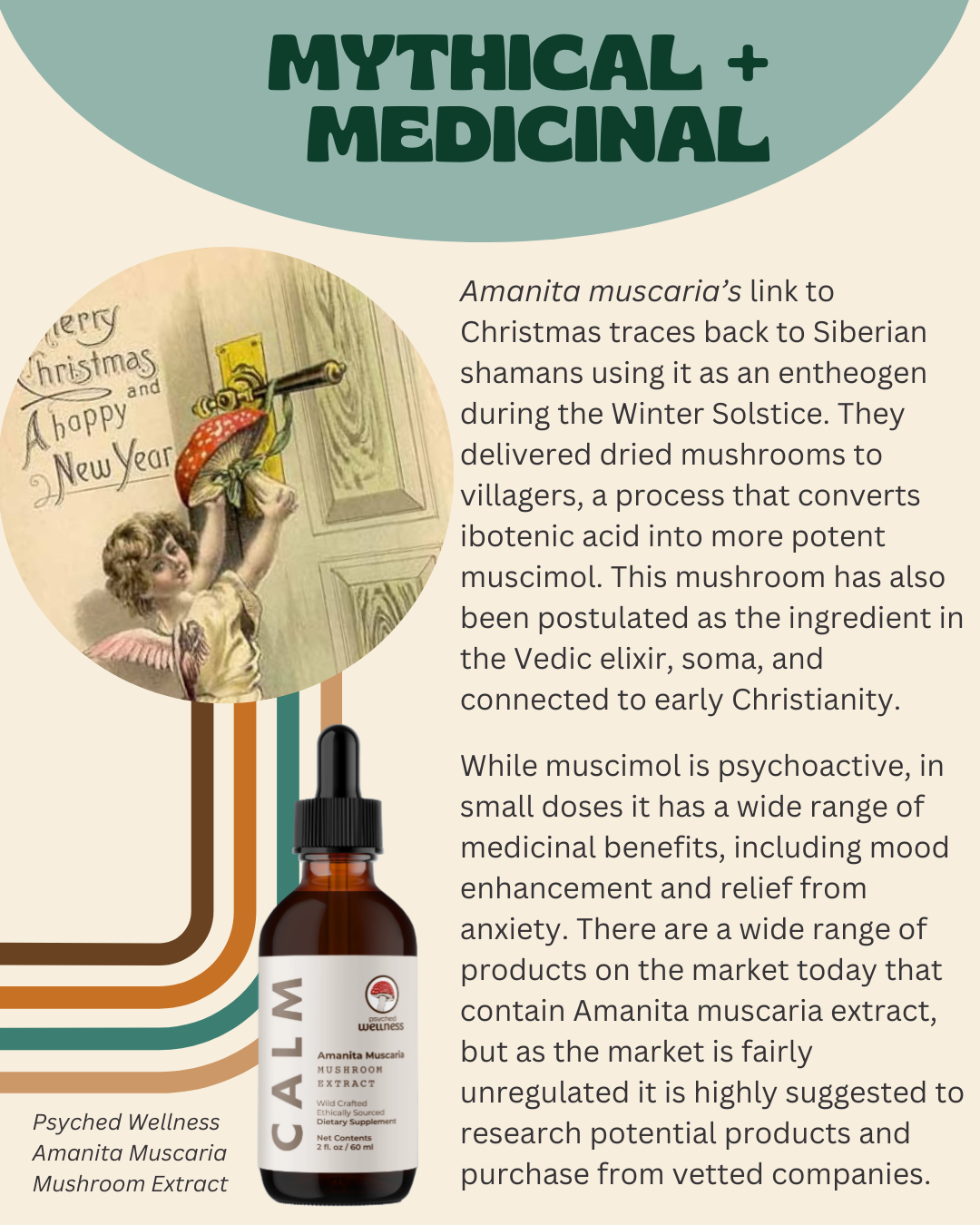
🍄⭐The December mushroom of the month is the Fly Agaric, Amanita muscaria
👏 Congrats to Candice for guessing it right and winning a membership to the society! 🎉
You can also be a supporting member to stay dialed-in with events & discover next month’s mystery mushroom.
Cultural Icon
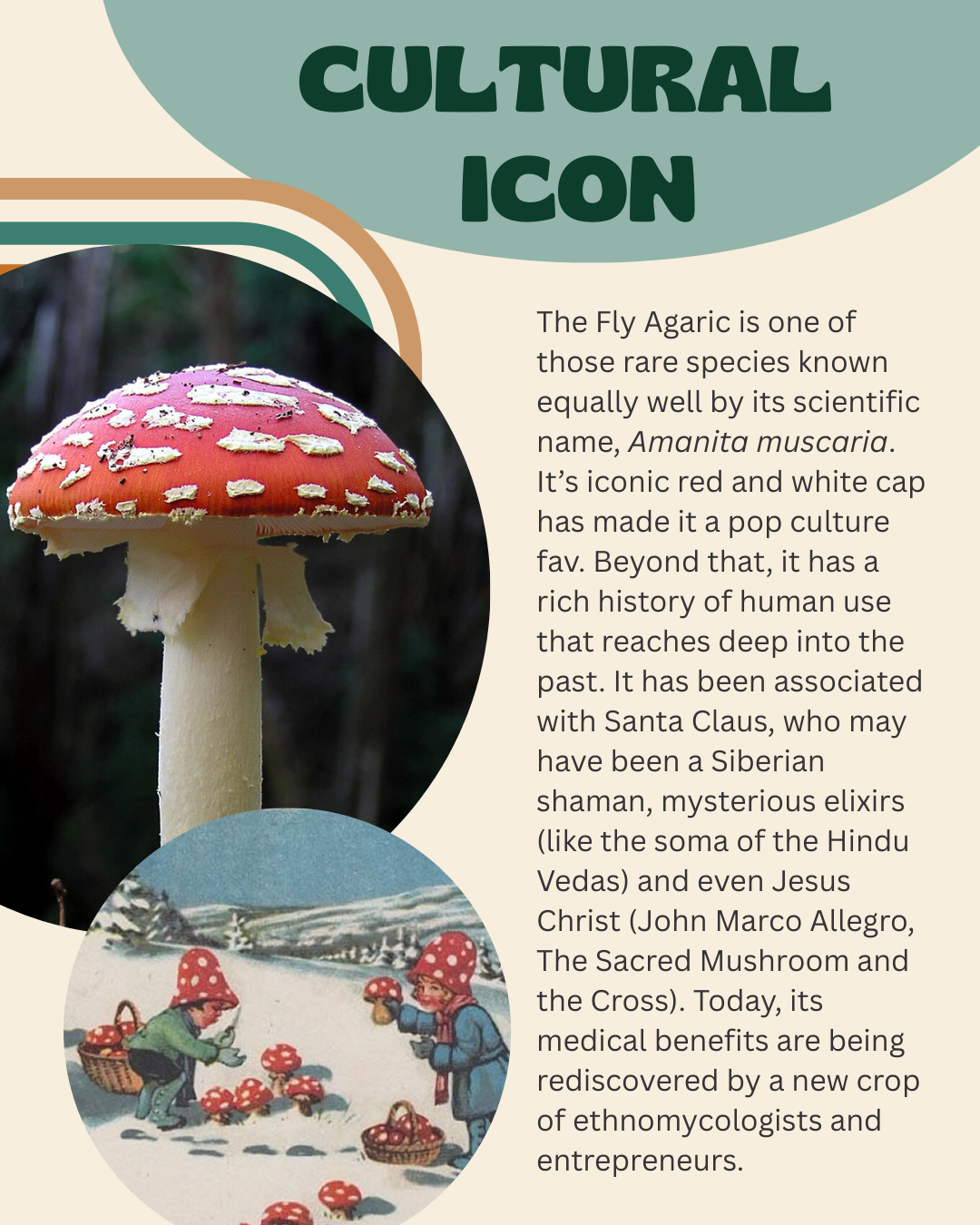
The Fly Agaric is one of those rare species known equally well by its scientific name, Amanita muscaria. It’s iconic red and white cap has made it a pop culture fav. Beyond that, it has a rich history of human use that reaches deep into the past. It has been associated with Santa Claus, who may have been a Siberian shaman, mysterious elixirs (like the soma of the Hindu Vedas) and even Jesus Christ (John Marco Allegro, The Sacred Mushroom and the Cross). Today, its medical benefits are being rediscovered by a new crop of ethnomycologists and entrepreneurs.
Taxonomy + ID
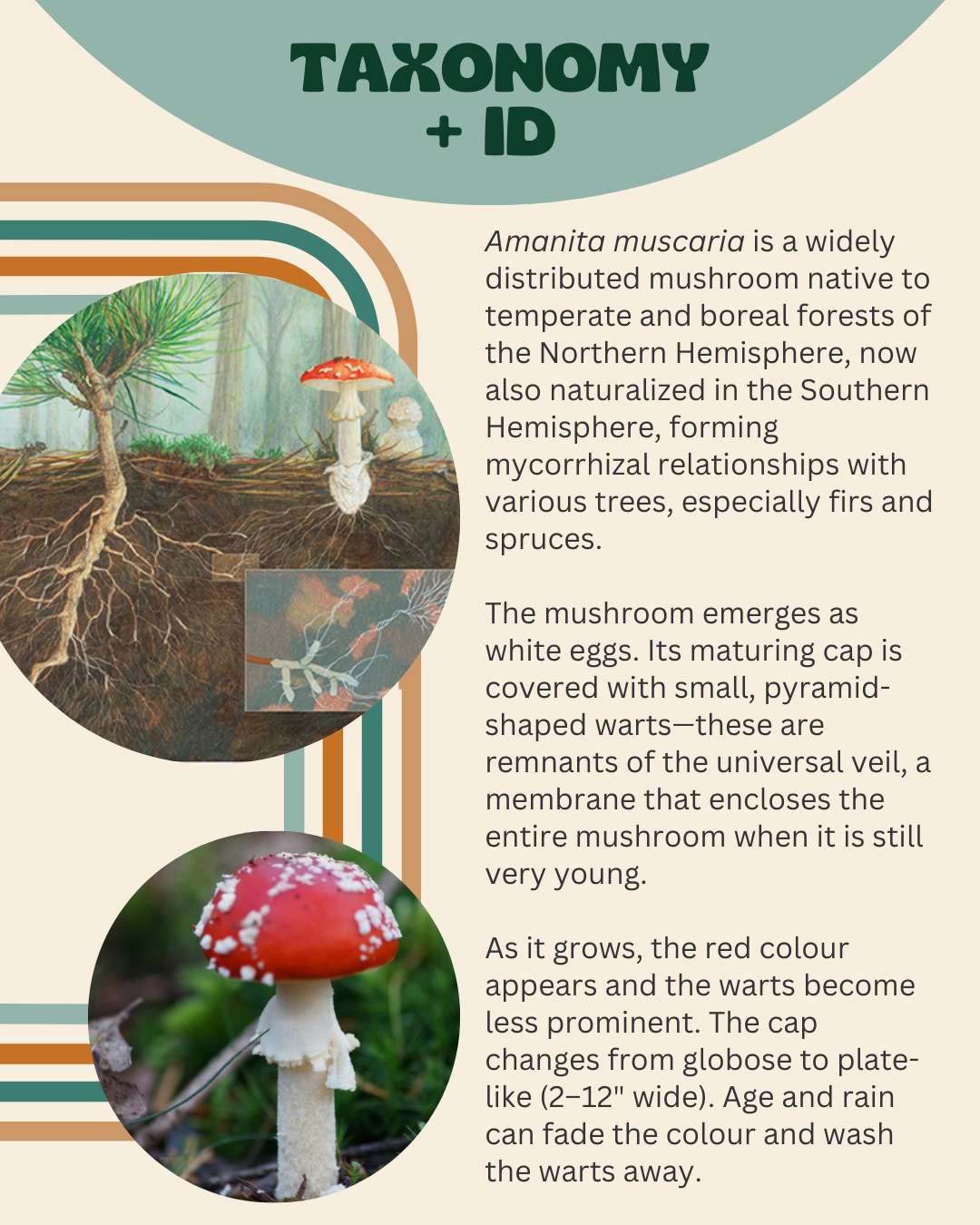
Amanita muscaria is a widely distributed mushroom native to temperate and boreal forests of the Northern Hemisphere, now also naturalized in the Southern Hemisphere, forming mycorrhizal relationships with various trees, especially firs and spruces.
The mushroom emerges as white eggs. Its maturing cap is covered with small, pyramid-shaped warts—these are remnants of the universal veil, a membrane that encloses the entire mushroom when it is still very young.
As it grows, the red colour appears and the warts become less prominent. The cap changes from globose to plate-like (2–12" wide). Age and rain can fade the colour and wash the warts away.
Mythical + Medicinal
Amanita muscaria’s link to Christmas traces back to Siberian shamans using it as an entheogen during the Winter Solstice. They delivered dried mushrooms to villagers, a process that converts ibotenic acid into more potent muscimol. This mushroom has also been postulated as the ingredient in the Vedic elixir, soma, and connected to early Christianity.
While muscimol is psychoactive, in small doses it has a wide range of medicinal benefits, including mood enhancement and relief from anxiety. There are a wide range of products on the market today that contain Amanita muscaria extract, but as the market is fairly unregulated it is highly suggested to research potential products and purchase from vetted companies.
Become a Supporting Member and stay dialed in with events & discover next month’s mystery mushroom.
How to Make Paper from a Spent Mushroom Block
This guide walks you through the simple process of turning what could have been organic waste “spent mushroom substrate”, into beautiful, textured paper for art, journaling, or gifts.
Introduction
We’re always looking for creative ways to close the loop in our fungal lifecycle. One of our favorite projects is transforming spent mushroom blocks into unique, fibrous handmade paper. Spent substrate—the leftover sawdust or straw after mushrooms have fruited—is often rich in mycelium and cellulose, making it a perfect, sustainable base for papermaking.
Mushroom paper, also known as mycelium paper or fungal paper, is an innovative, sustainable material made from the root-like structure of mushrooms (mycelium). It’s biodegradable, surprisingly durable, and has a unique, organic texture.
This guide walks you through the simple process of turning what could have been organic waste “spent mushroom substrate”, into beautiful, textured paper for art, journaling, or gifts.
Why Make Paper from Spent Substrate?
Zero Waste: Repurpose your spent blocks from our Community Supported Mushroom Block Rescue into something new.
Eco-Friendly: Reduce your footprint by avoiding new paper pulp.
Unique Texture: The mycelium and organic matter create beautifully textured, speckled paper with a story.
Educational Fun: A perfect activity —combining mycology, art, and hands-on science.
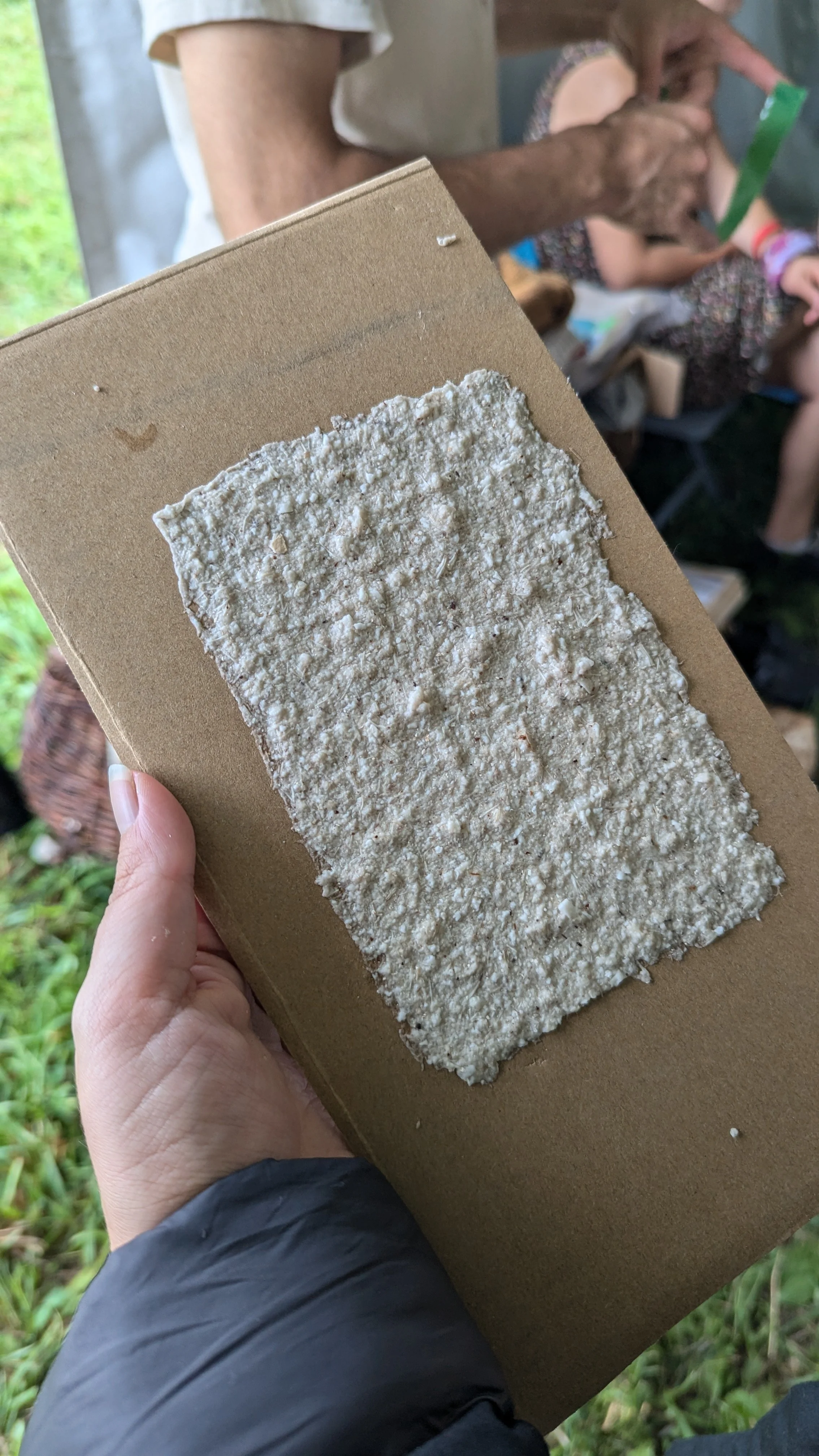
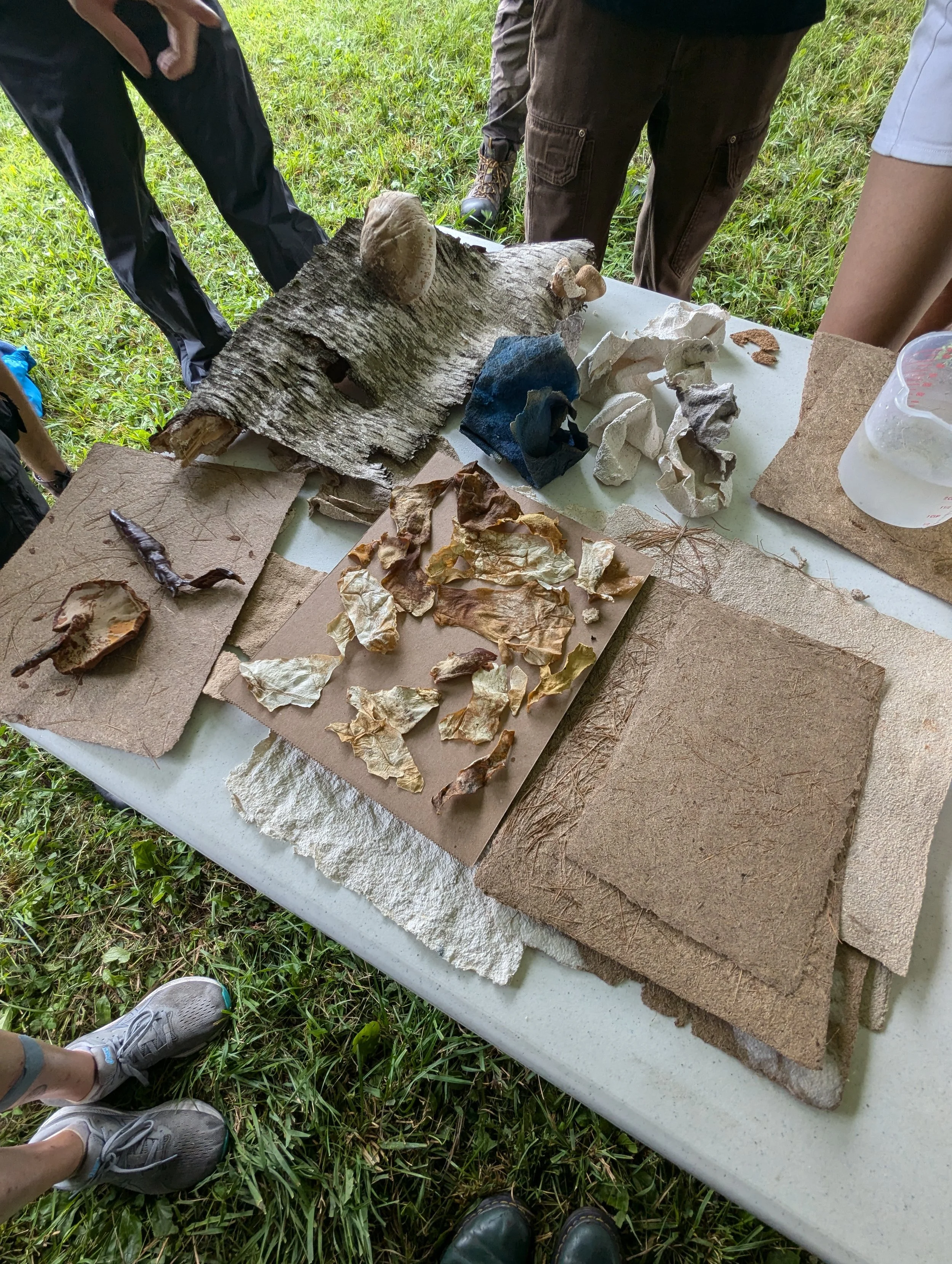
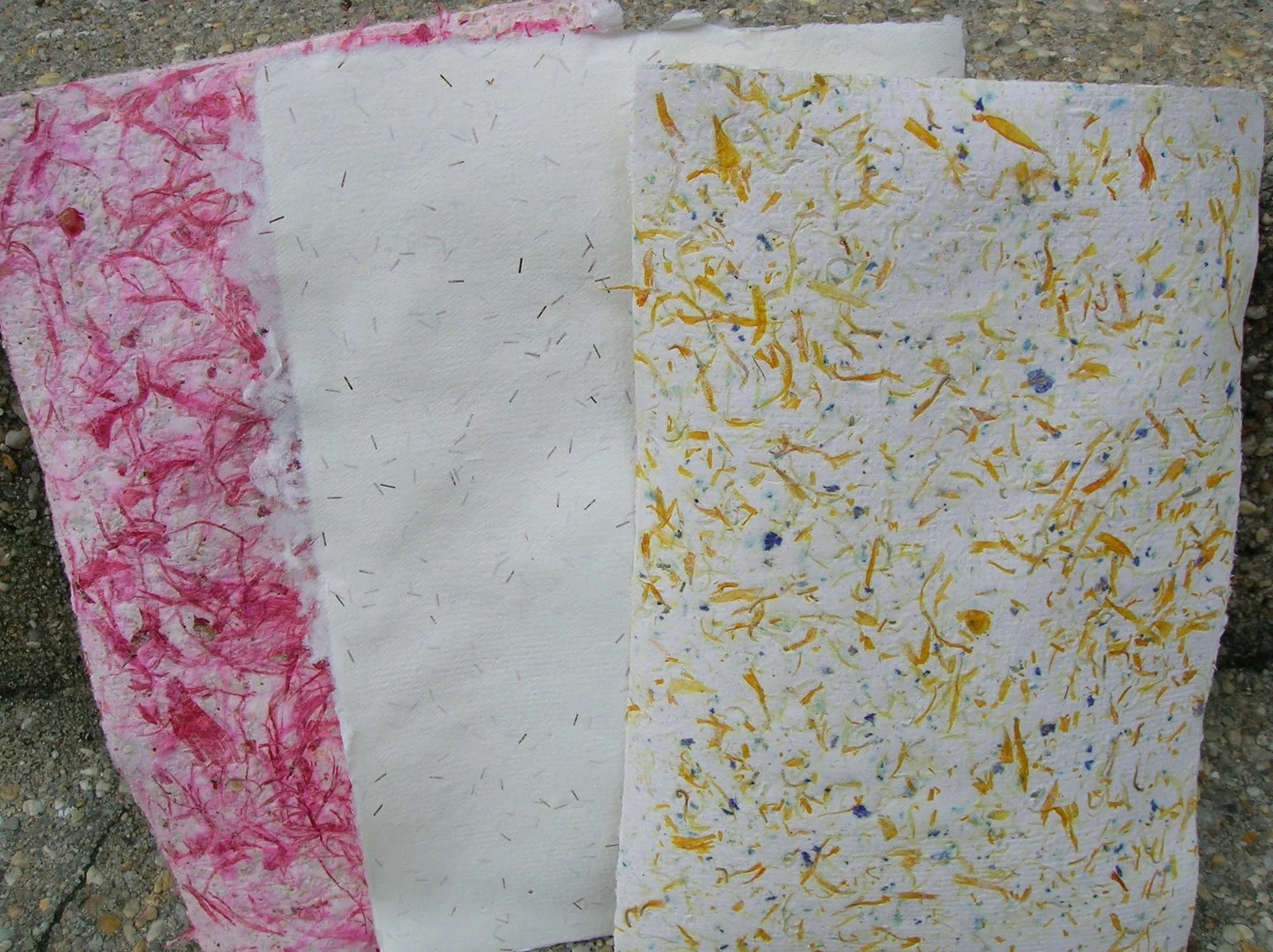
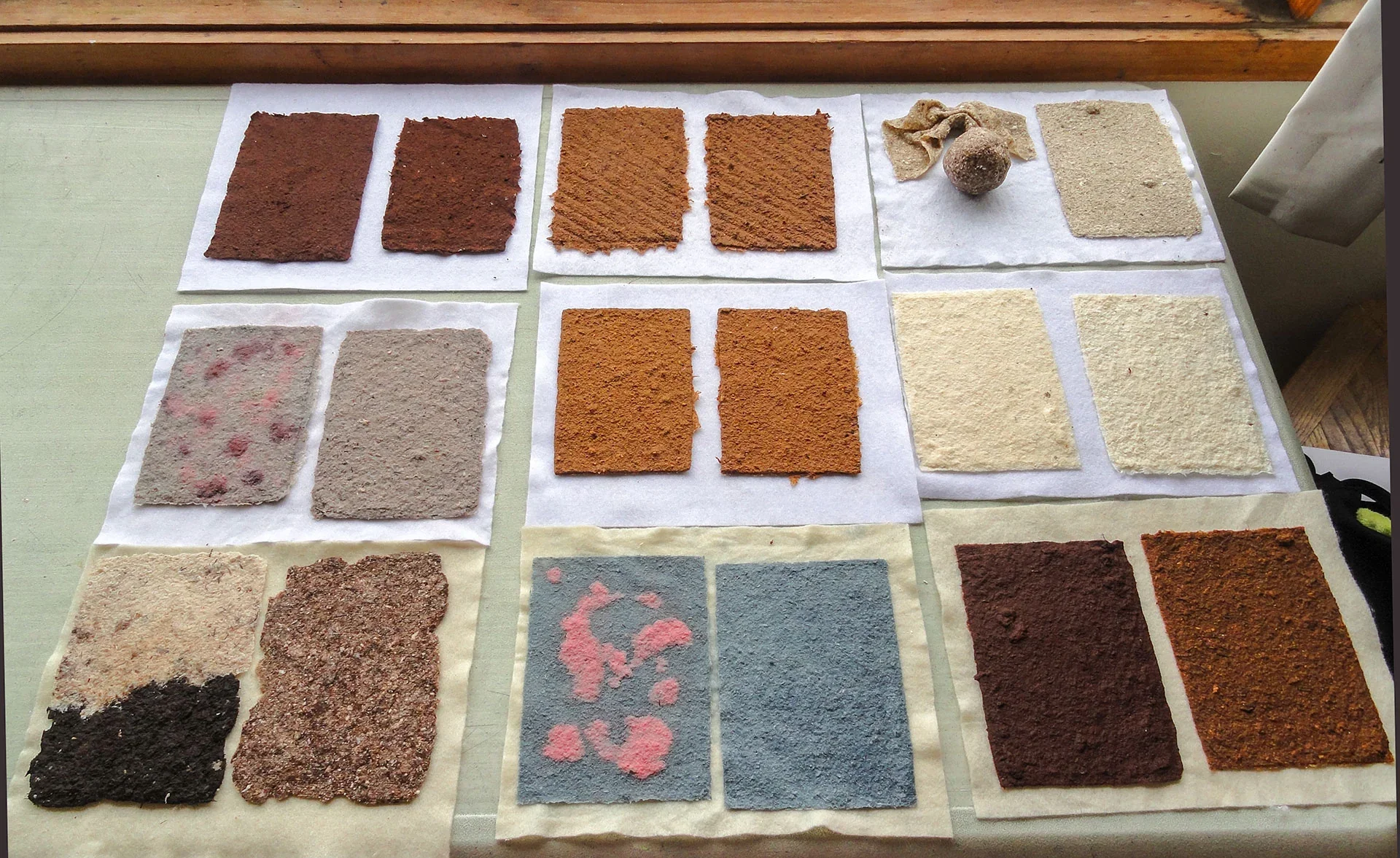

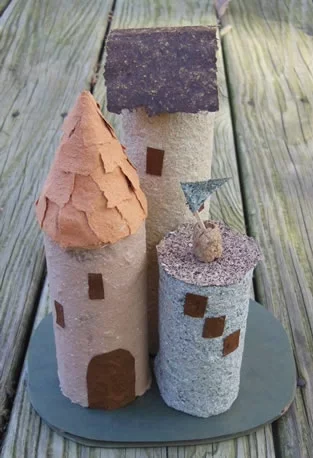
What You’ll Need
Most of these supplies can be found around the house or at local Austin shops like Austin Creative Reuse.
Materials:
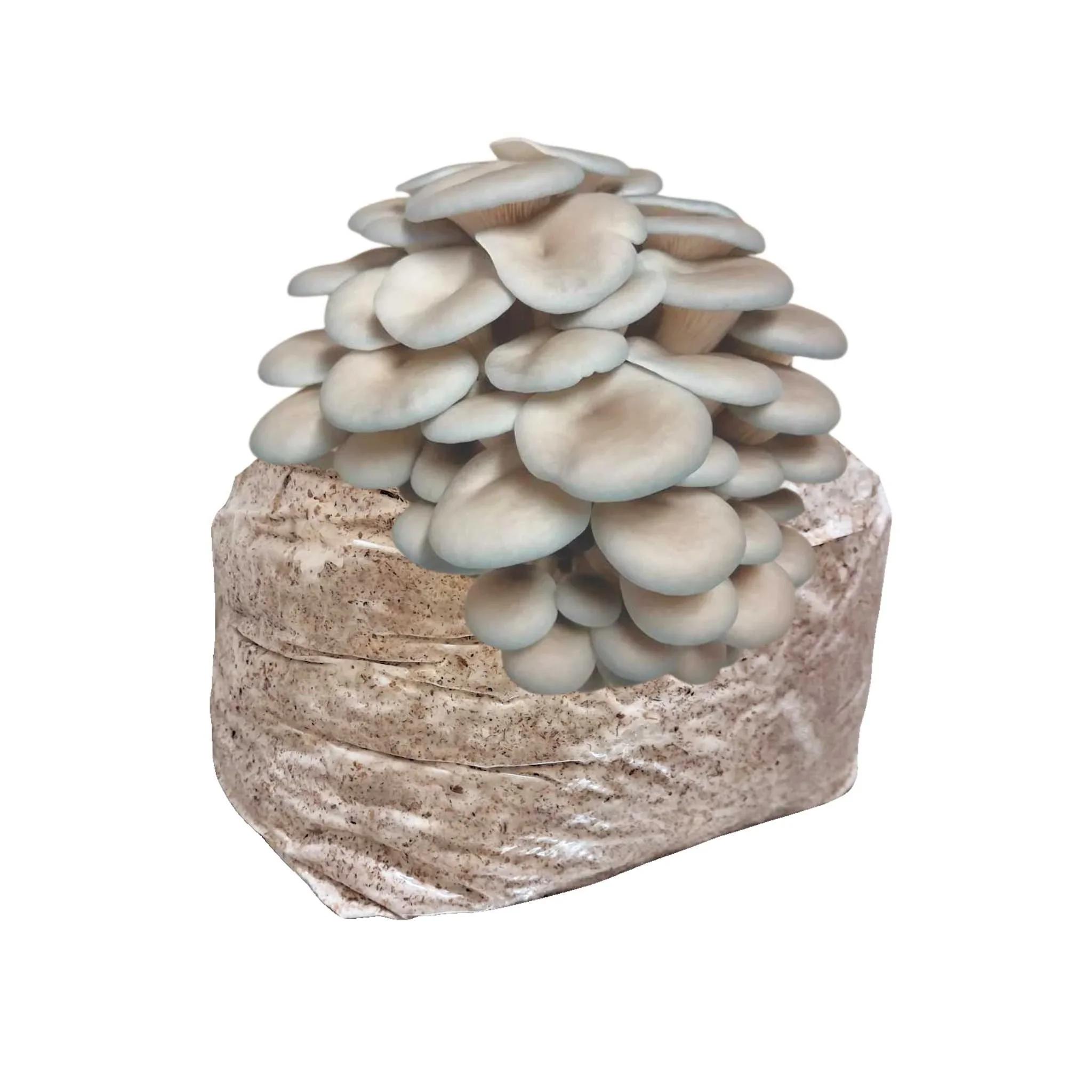
Spent mushroom substrate – from your own grows or rescued via our Block Rescue Program. Oysters are the most common and best variety to use.
Blender or food processor (dedicated to crafting)
Large plastic tub or basin
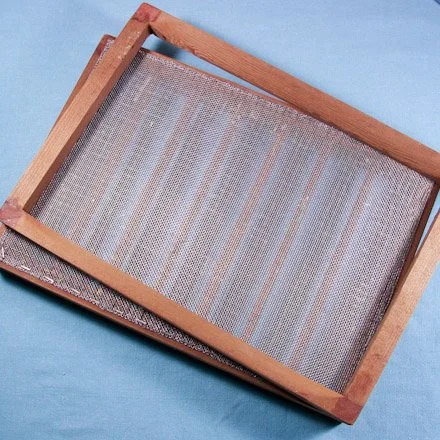
Mold and deckle – the classic papermaking screen set. You can make one by stretching fine mesh (like window screen) over two wooden frames of identical size.
Couching cloths – felt, smooth towels, or pillowcases
Sponges
Pressing boards or heavy books
Optional add-ins: recycled paper scraps, dried flowers, native seeds, or natural dyes made from foraged plants
Step-by-Step Process
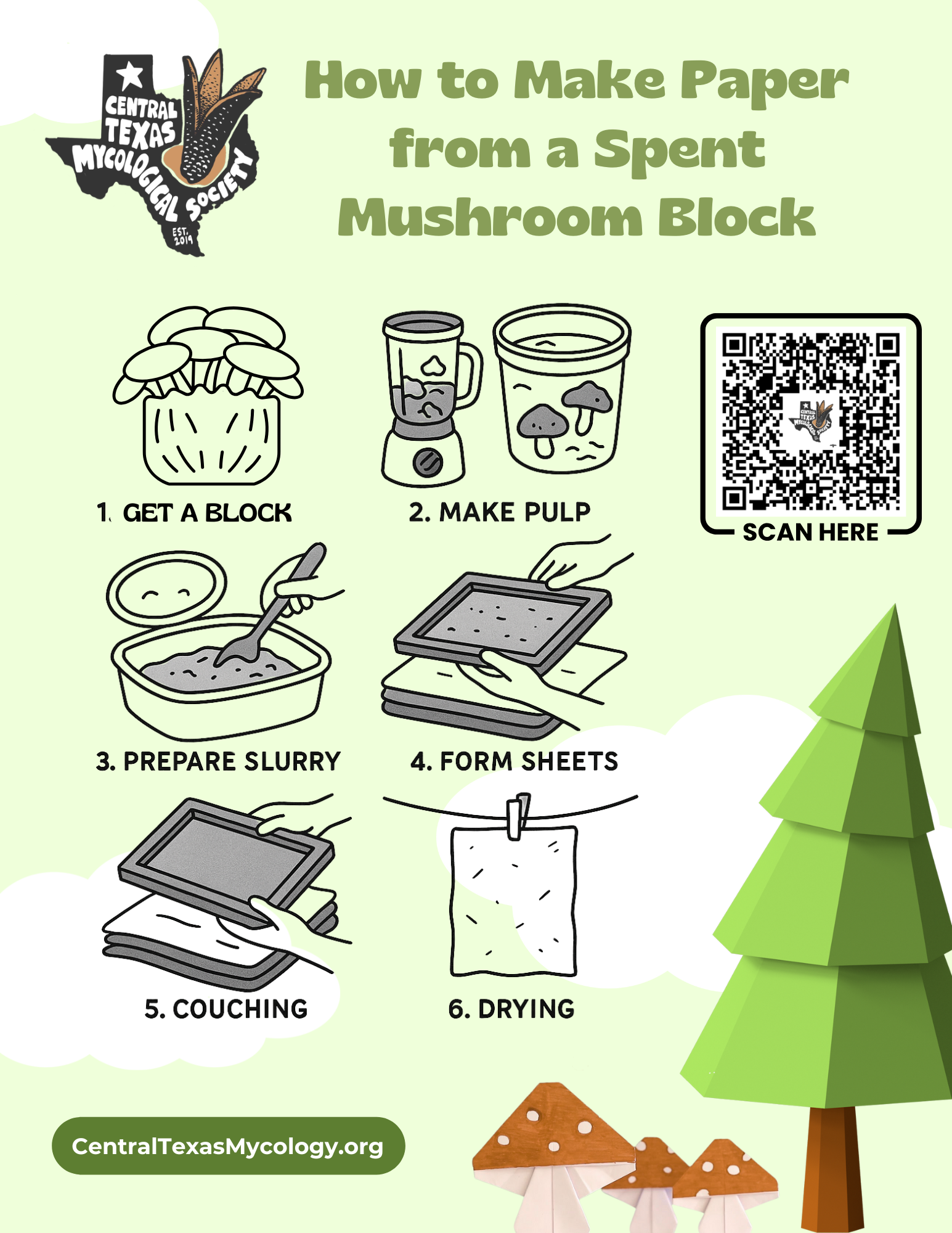
Step 1: Get a Mushroom Block
Break up your spent oyster mushroom block. Remove any large chunks of undecomposed wood or moldy parts. This material is great for the compost.
Soak the substrate in warm water for a few hours to soften the mycelium and fibers.
Step 2: Make Pulp
Drain the substrate and add it to your blender in small batches.
Cover with clean water and blend until you achieve a slurry with a fine, fibrous consistency. Think “fungal smoothie.”
Step 3: Prepare Slurry
Pour the pulp into your large tub and mix with more water. The more pulp you add, the thicker your paper will be.
Step 4: Form Sheets
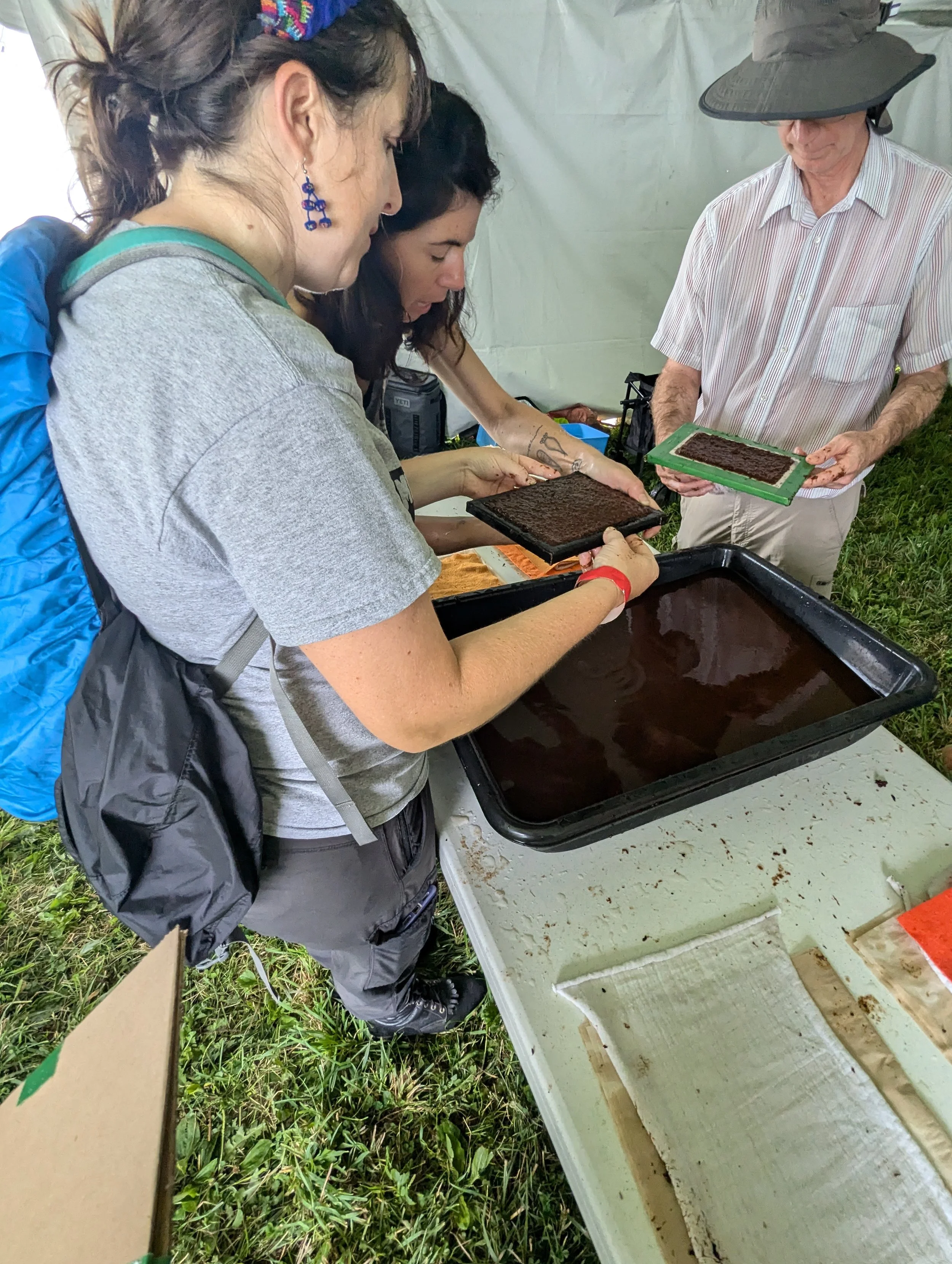
Submerge your mold and deckle into the pulp mixture, then lift it level while letting the water drain.
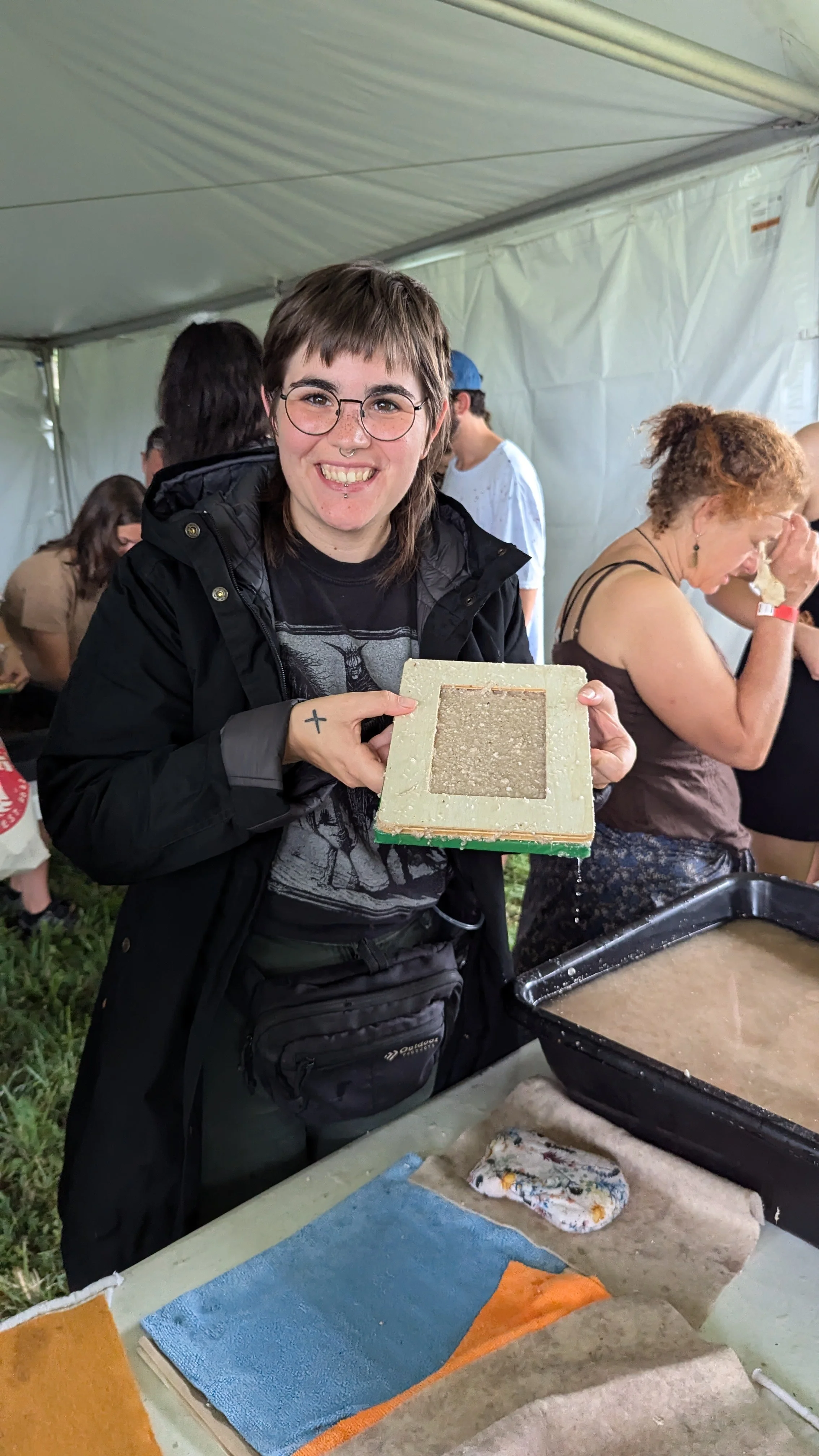
You should see a thin, even layer of pulp on the screen. If it’s too thin, add more pulp to the vat; if too thick, add more water and stir.
Carefully remove the deckle and gently press a couching cloth onto the wet sheet. Use a sponge to absorb excess water through the screen.
Step 5: Couching
Flip the mold onto a flat surface and peel the screen away, leaving the wet paper on the cloth.
Layer another cloth on top if making multiple sheets.
Place the stack between boards and apply weight (books work great). Press for 12–24 hours.
Step 6: Drying
Gently peel your paper from the cloth and air-dry on a rack or clothesline.
For flat paper, you can iron on low heat between parchment paper once it’s mostly dry.
Tips for Success
Experimentation is key: Try different mushroom species, substrates, and pulp blending times to vary texture, strength, and color. Ganoderma or Reishi which grows in the wild and is common in Texas is really great for paper making.
Thinner sheets dry faster and are more flexible; thicker sheets are sturdier but may take longer to dry evenly.
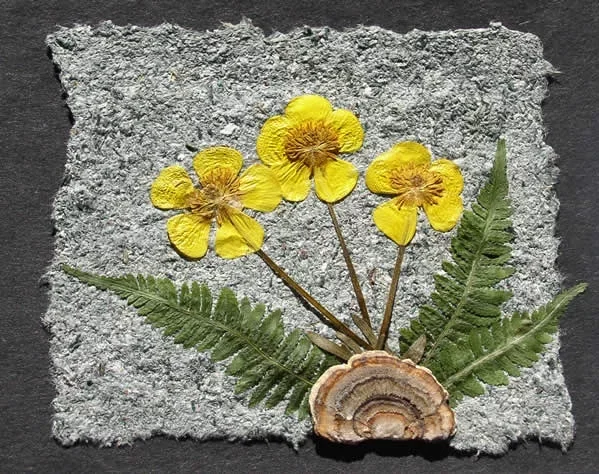
Add inclusions: Blend in recycled paper, plant fibers, or dried flowers for unique effects. You even can mix in plants like grass and flowers like marigolds to achieve different colors. You can even add dried plants and mushrooms at Step 4 for adding more artful textures and collages.
Safety Notes
Use a blender dedicated to crafts, not food.
Work in a well-ventilated area when handling dry substrates.
Some people may be sensitive to fungal spores; wear a mask if concerned.
Never consume the mycelium or paper unless you are using a known edible species and have not added any non-food materials.
Troubleshooting
Mold contamination (green/black spots): Sometimes mushroom blocks have contamination of green mold. Compost these and find a block that is white with healthy mycelium.
Mycelium won’t form a mat: The substrate may be too wet/dry, or temperature is off.
Paper tears easily: The pulp may be too fine, or the sheet was too thin. Try a longer fiber blend or a thicker pour.
Paper is too thick/c lumpy: Blend longer, use more water in the vat, or stir more vigorously before pulling a sheet.
Creating paper from mushrooms is a fascinating blend of mycology and traditional craft. Each batch is unique, reflecting the natural variability of fungal growth. Enjoy the process and the beautiful, earth-friendly material you create!

Giving Tuesday: 5 Ways to Support Mycology Education
There are so many different ways to show generosity on #GivingTuesday and support mycology education.
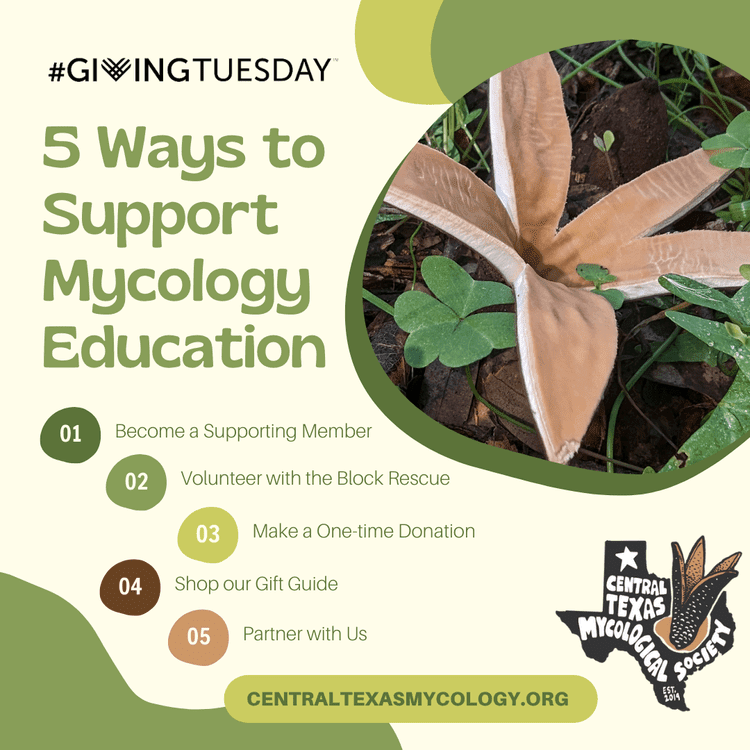
Here are 5 ways you can support our mission to spread fungal knowledge:
✦ GIVING TUESDAY ✦
There are so many different ways to show generosity on #GivingTuesday and support mycology education.
Here are 5 ways you can support our mission to spread fungal knowledge:
Become a Supporting Member – Join our community and grow with us!
Volunteer with the Block Rescue – Help us rescue mushroom blocks and keep them out of landfills.
Make a One-time Donation – Every contribution helps fund our programs and outreach. Choose our non-profit for a corporate gift matching.
Shop our Gift Guide – Support small business and spread myco love
Partner with Us – We would love to partner with you in myco education. Reach out to us for your next event!
We are a community powered non-profit and all we do is because of you! Thank you for your support today and every day!
November Mushroom of the Month: Icing Sugar Fungus, Beauveria bassiana
The November Mushroom of the Month is the Icing Sugar Fungus, Beauveria bassiana


🍄⭐The November mushroom of the month is the Icing Sugar Fungus, Beauveria bassiana
👏 Congrats to James for guessing it right and winning a membership to the society! 🎉
You can also be a supporting member to stay dialed-in with events & discover next month’s mystery mushroom.
A Microscopic Menance
Beauveria bassiana is a white mold fungus that grows in soils around the world. It is parasitic on various arthropod species, causing causing white muscardine disease, making it an entomo-pathogenic fungus. The species is named after the Italian entomologist Agostino Bassi, who discovered it in 1835 in silkworms. Bassi performed the first infection experi-ments, and determined the fungus to be the cause of the muscardine disease, which then led to carriers transmitting it by airborne means.
Taxonomy
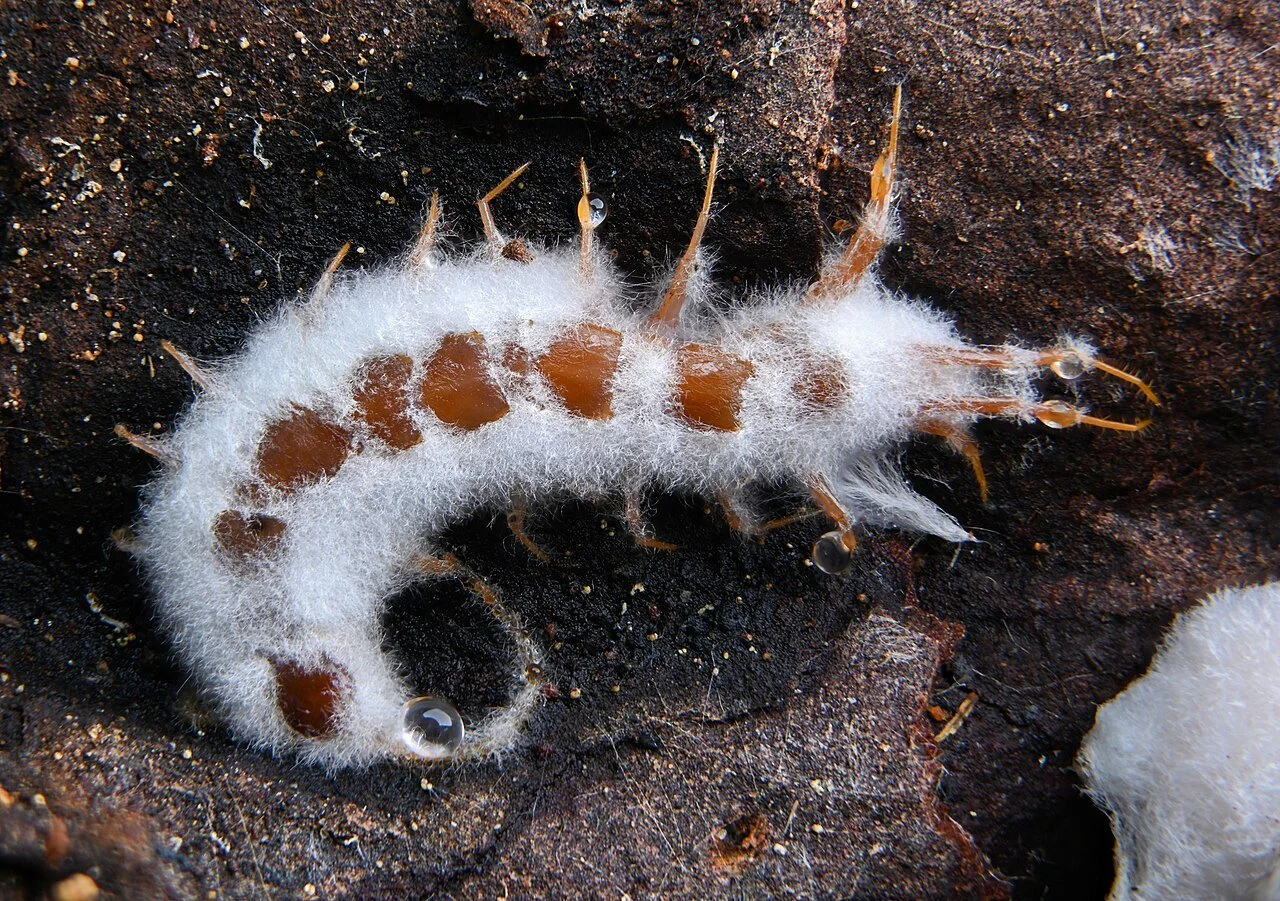
When spores of B. bassiana come in contact with a suitable insect host it produces a white mold that resembles frost, or frosting on a cake, giving it the name Icing Sugar Fungus. The white spore balls are made up of many conidia that are single-celled, haploid, and hydrophobic.
Microscopic identification: The short, ovoid conidiogenous cells that produce the conidia have a narrow apical extension called a rachis, which elongates into a long zig-zag extension.
Field identification: Insects that appear to be whimsically decorated with frosting but are actually dead and covered with mold.
A Gardner’s New Best Friend
Beauveria bassiana may be a menace to arthropods, but it’s a fantastic ally for gardeners. Researchers quickly recognized its potential for insect control, especially since it’s harmless to humans and other non-arthropods. When spores are applied to leaves, soil, or seeds, they remain active until encountering a susceptible insect host.
The spores germinate and produce hyphae that penetrate the insect’s cuticle and invade its body. Inside, the fungus multiplies and kills the host. B. bassiana is highly valued in agriculture for its versatility and is being studied as a biological insecticide against termites, whiteflies, and other pests, as well as for controlling malaria-transmitting mosquitoes.