
What is the Orange Stuff on Mushroom Blocks?
Neurospora crassa, commonly known as orange bread mold, has several potential benefits for soil health, including:
Neurospora crassa, commonly known as orange bread mold, has several potential benefits for soil health, including:

1. Decomposing Organic Matter – As a saprophytic fungus, it helps break down dead plant material, returning nutrients to the soil.
2. Nutrient Cycling – It plays a role in carbon and nitrogen cycling by decomposing organic compounds and making them available for plants and microbes.
3. Mycelial Network Formation – Though not a mycorrhizal fungus, its mycelium contributes to soil structure by improving aeration and water retention.
4. Bioremediation Potential – Some studies suggest Neurospora species can help degrade pollutants and contribute to soil detoxification.
5. Plant Growth Promotion – Certain fungal metabolites may interact with soil microbes, indirectly benefiting plant health.
While it's not as widely studied for soil health as other fungi like mycorrhizae or Trichoderma, Neurospora crassa has unique properties that can support ecological functions in soil ecosystems.

April Foraging Forecast
Learn wild, edible mushrooms fruiting in Central Texas after rain.
Learn wild, edible mushrooms fruiting in Central Texas after rain.
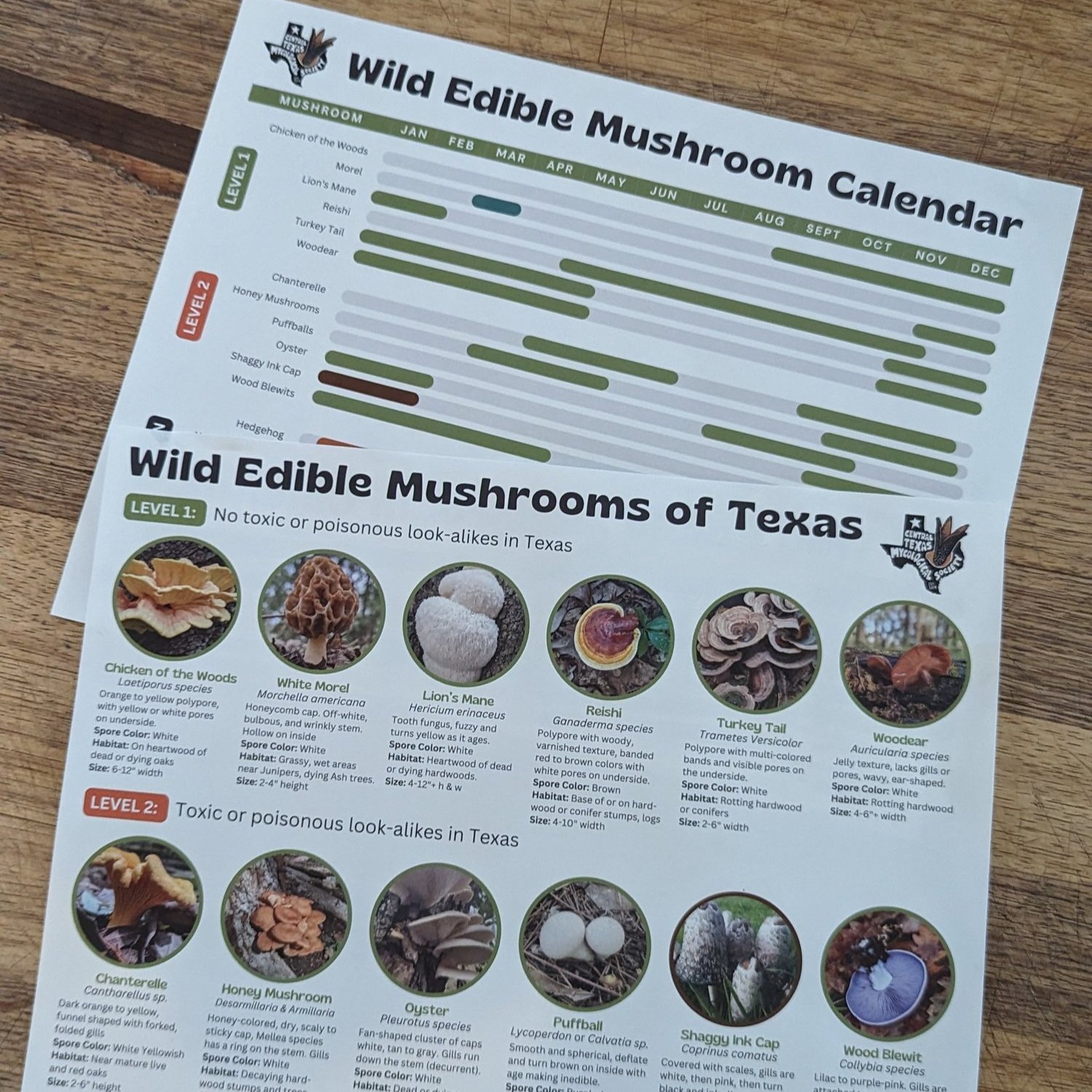
Comes with download of a Wild Edible Mushroom Calendar.

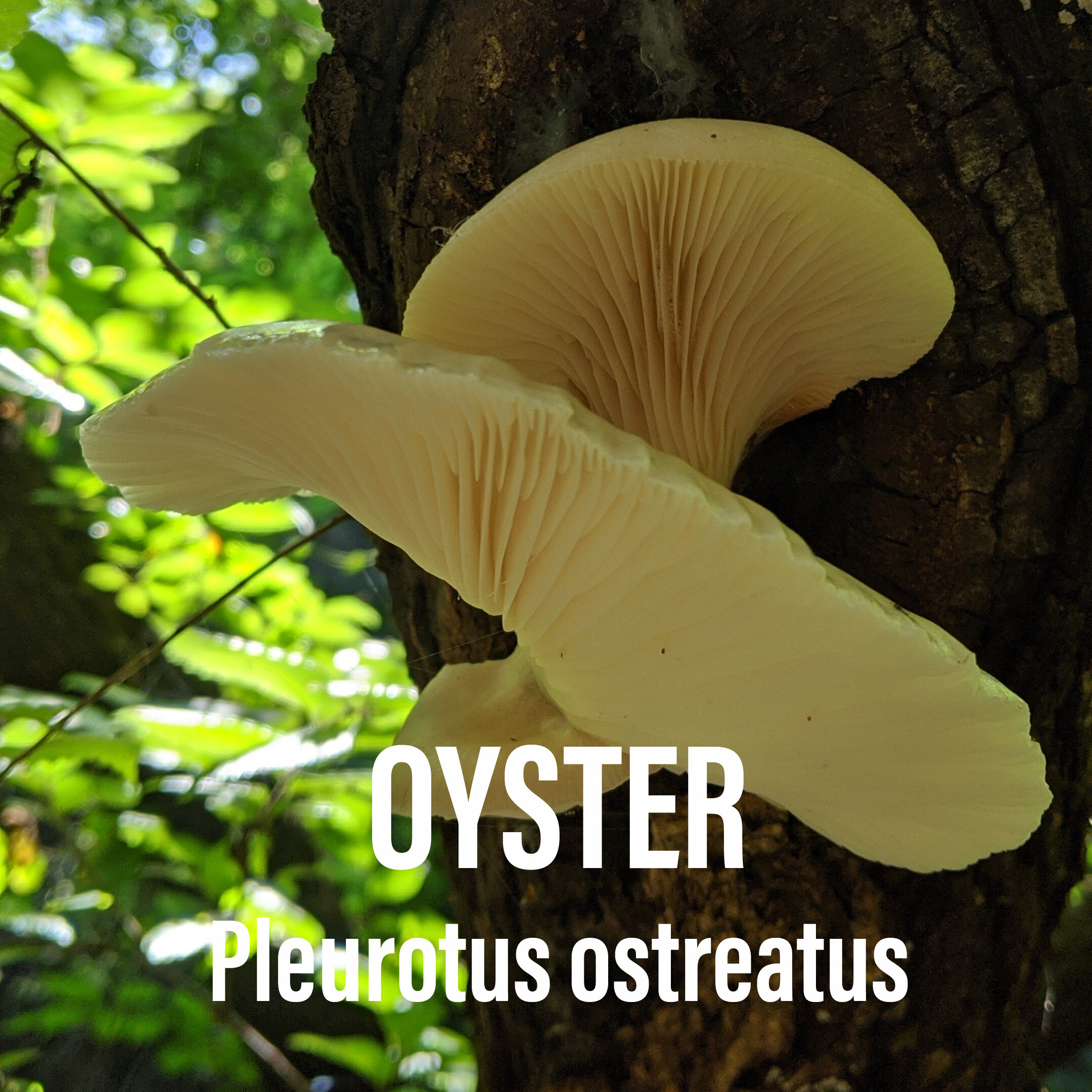
OYSTER Pleurotus ostreatus
Color can vary white, tan and gray
White to cream gills, run down stem
Cap fan shaped, 2"-8" across, white spores
Grows in clusters and decomposes hardwood
Delicious meat replacement in all types of cuisines
Look-alikes: Southern Jack-o-lantern, Omphalotus subilludens which is toxic and orange to brown in color.

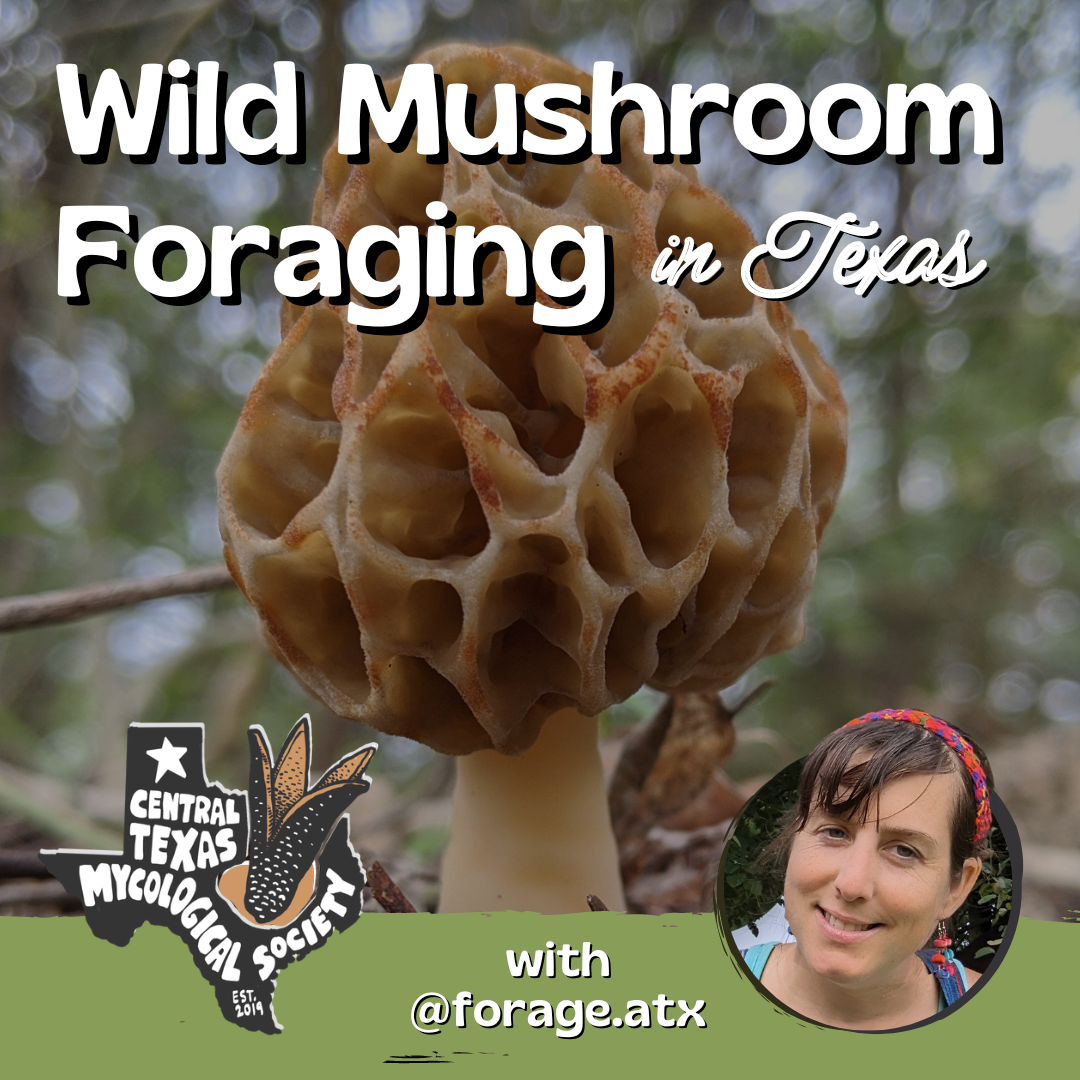
White Morel
Morchella americana
Honeycomb cap with a off-white, bulbous, wrinkly stem. Hollow on inside and 1–4" tall
Fruits after rain while soil temps are 45-50°
Found along creeks near cottonwoods, dying elms, and ash.
Edible when cooked and toxic when raw
As the dewberries blossom, the choice edible morel, starts to fruit in Central Texas. These distinctive fungi have a honeycomb appearance due to the network of ridges with pits composing their caps. I'm already thinking about how to preserve morels so I can pair them with dewberries.
I found my first morels in Texas in 2019 as the pandemic shut everything down. SXSW was canceled and in my new found free-time I wandered near creeks looking under junipers for the honeycombed, yellow mushrooms. Morels are found to be saprophytic, mycorrhizal and endophytes during different parts of their life. In Texas, I have found morels in riparian areas growing in limestone with grasses and duff near cedars or Juniperus ashei, hackberries, possomhaw, and cedar elms. They are illusive and require moisture from rain. The last few years have been really terrible for morels because of the severe droughts in Central Texas. There is a lot of hope for this morel season because they need at least six weeks of freezing temperatures to grow but obviously they have adapted to our shorter winters in Texas.
Look-alikes: Gyromitra, Verpa , Helvella genera have some toxic species. Get confirmation with expert before eating. Death by morels is real.

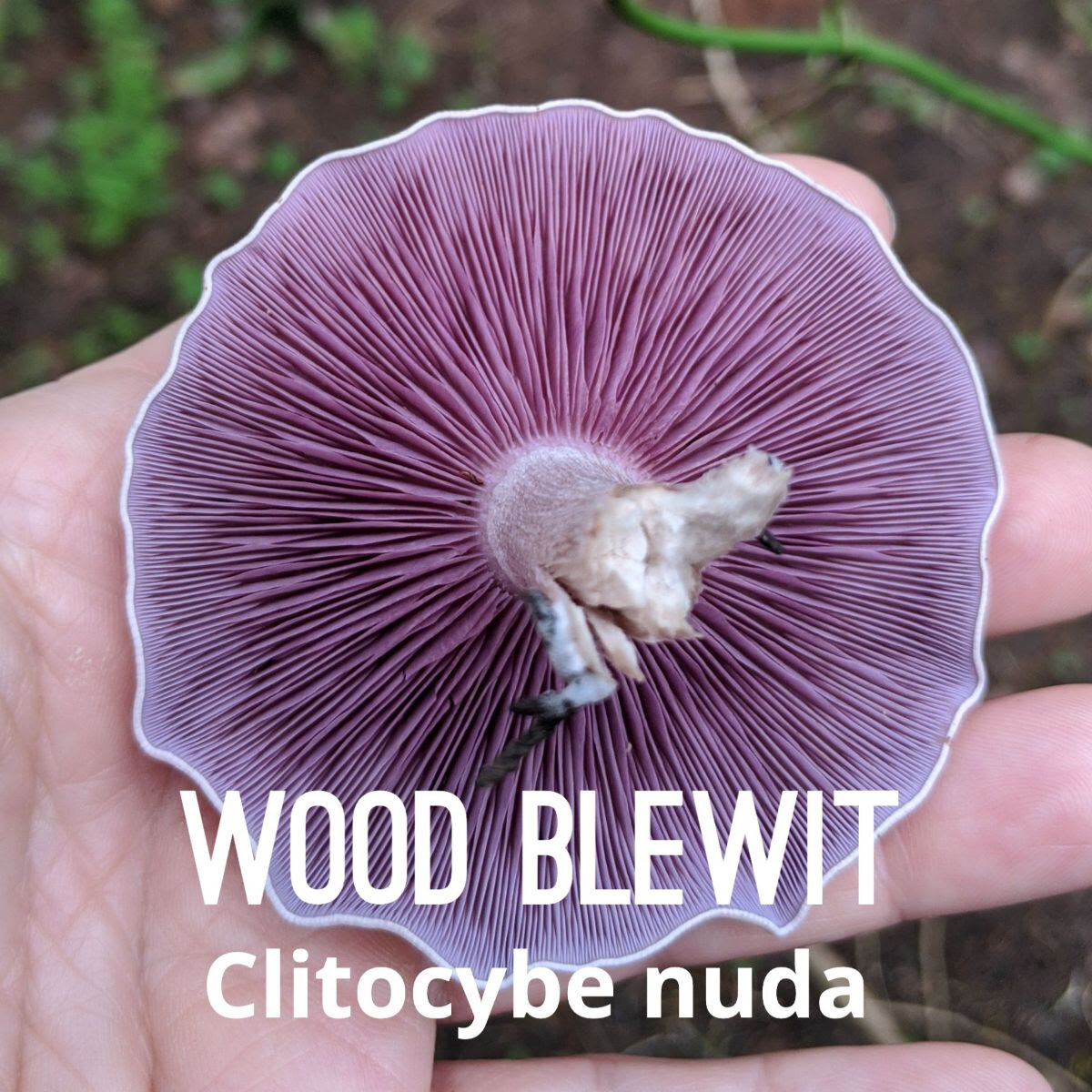
WOOD BLEWIT Collybia species, formerly Lepista, Clitocybe
Distinct lilac to purple-pink color
Grows in and decomposes leaf duff
Light pink to white spores
Great in breakfast tacos
As the weather stays cool, look out for the edible Wood Blewit, Collybia nuda or tarda species (formerly Lepista and Clitocybe.) This distinct lavender-colored mushroom is found from fall through spring and fruiting in hardwood leaf duff which is decomposes. Fresh wood blewits are great with eggs in breakfast tacos. As they get older they become more tan and iridescent colored on the cap and taste bitter. I throw the older wood blewits my compost leaf pile because they are such great decomposers and will colonize and grow in hardwood leaf litter.
Look-alikes: Be warned because there are deadly, poisonous look-alikes in the Cortinarius or webcap family that grow in similar conditions. It's important to do a spore print AND also confirm the ID with an expert. The spores of the wood blewit are light pink to white and the spores of Cortinarius mushrooms are rust colored. See our blog post with lots of photos and details to help you identify this mushroom.

WOOD EAR: Auricularia species
Grows in clusters on decaying hardwood after rain
Cap is wavy, ear-shaped to irregular, 1-4" and > 1/4" thick
Jelly texture and lacks gills or pores
Produces white spores
Absorbs flavors, great in soups, contains protein, iron, calcium and phosphorus
Edibility: Wood ear mushrooms are a popular ingredient in many Chinese dishes, such as hot and sour soup, and also used in Chinese medicine. It is also used in Ghana, as a blood tonic. Modern research into possible medical applications has variously concluded that wood ear has anti-tumor, hypoglycemic, anticoagulant and cholesterol-lowering properties.
Look-alikes: Amber Jelly, Exidia recisa which is also edible.

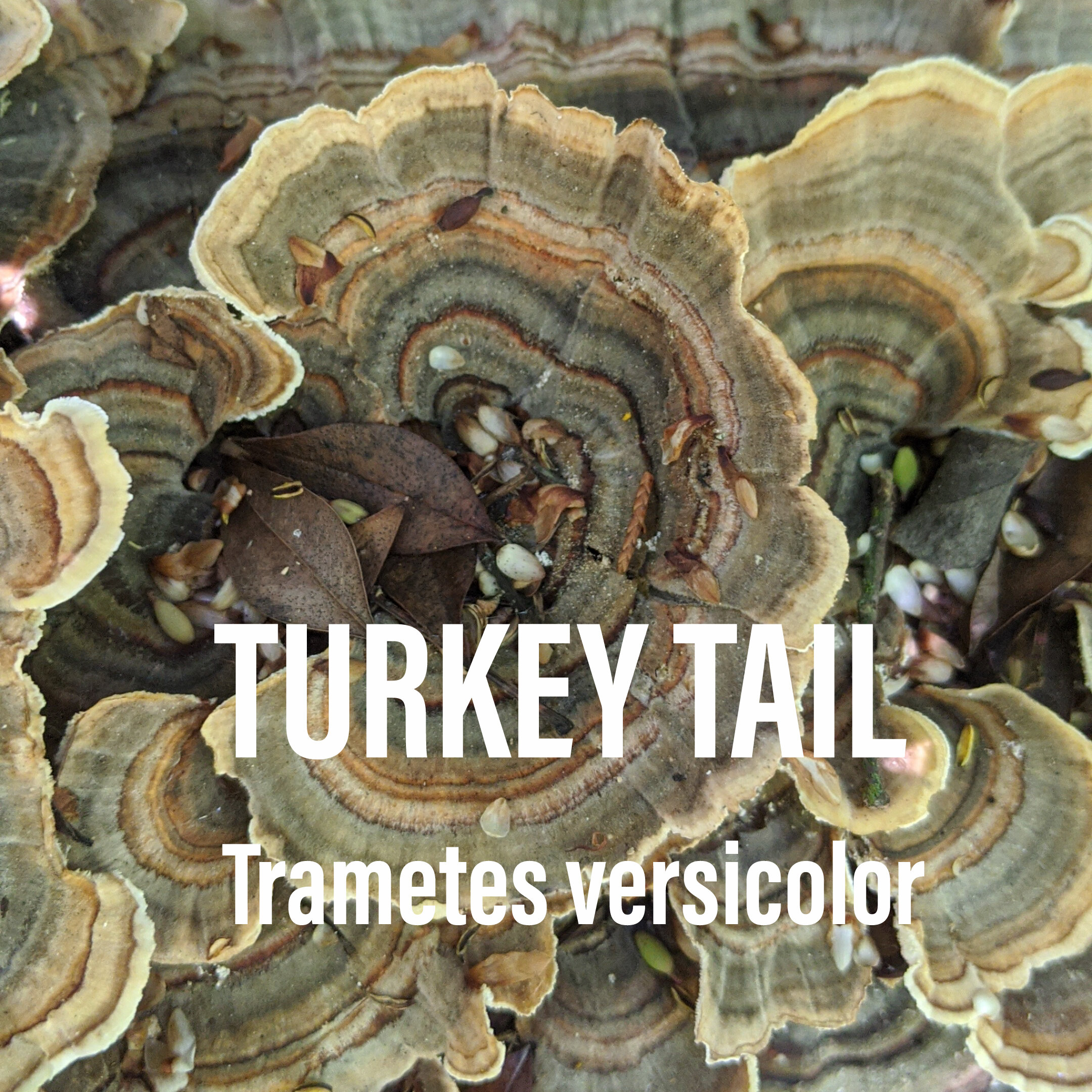
TURKEY TAIL Trametes versicolor
Variable coloration, distinct striping pattern
Grows in overlapping clusters on logs and stumps
No gills, pores are small and round, white to light brown
Tough, leathery flesh
Medicinal and can be brewed into a tea, broth, or extracted into a tincture.
Look-alikes: False turkey tail. or Stereum ostrea and is non-toxic. Mushroom Expert has a useful check list to determine if it is true medicinal turkey tail.
Become a member and learn more about wild mushroom foraging in Texas!
Membership benefits include early access and discounts to walks, workshops, and more. Your membership helps support the larger community! Tag us to get help with ID and add your observations to iNaturalist.org. If you are trying a new mushroom, confirm the ID with an expert, then try a small amount to make sure you don't have an allergic reaction. Texas Mushroom Identification Facebook group is great for quick responses and ID help. Also, don't forget to add your finds on the Mushrooms of Texas project on iNaturalist.
Follow my adventures @forage.atx.

April Mushroom of the Month: Apophysomyces trapeziformis
The April of the Month is Apophysomyces trapeziformis
🍄⭐The April mushroom of the month is Apophysomyces trapeziformis
🙌 to Toni for correctly identifying this mushroom and the newest member of the society.
You can also be a supporting member to stay dialed-in with events & discover next month’s mystery mushroom.
A Microscopic menace
Survivors of the Joplin tornado of 2011 thought the worst was behind them once the storm passed. After all, the EF5 tornado had destroyed 4,000 homes, damaged 8,000 buildings and taken 158 lives. However, the storm had awakened a microscopic menace, the parasitic fungi Apophysomyces trapeziformis. Commonly found in soil rich in decayed plant material, this fungus is typically harmless. However, in extreme situations when it is introduced directly into the bloodstream, it can be deadly.
Taxonomy & Ecology
Apophysomyces is a genus of filamentous fungi that are commonly found in soil and decaying vegetation. Species normally grow in tropical to subtropical regions. A. trapeziformis is characterized by trapezoid-shaped sporangiospores, distinguishing it from other species within the genus. Normally, no special precautions are needed with regard to this fungus. However, 2 species in this genus, A. elegans and A. trapeziformis, are able to cause mucormycosis, in humans, which is often fatal but very rare.
a Cautionary tale
Steven Weersing was sucked from his car by the Joplin tornado. He was one of 13 people who began suffering from a fungal infection suspected to be cutaneous necrotizing mucormycosis after sustaining traumatic injuries from the storm. All of those affected were in the direct path of the storm, and it is hypothesized that the injuries they sustained allowed the fungus to penetrate deeply into their bloodstream. With their bodies weakened, the infection as able to take hold. Global incidence of this kind of infection is low, with roughly 1,500 cases detected worldwide. Mortality rates range from 35% to 100% depending on underlying conditions. Steven survived but his body will forever bear the scars of the infection.
BECOME A SUPPORTING MEMBER & stay Dialed in with events & discover next month’s mystery mushroom


March Mushroom of the Month: False Earth Stars, Astraeus sp.
The March of the Month is the False Earth Star, Astraeus sp.
🍄⭐The March mushroom of the month is the False Earthstar, Astraeus sp.
🙌 to Ellen for correctly identifying this mushroom and the newest member of the society.
You can also be a supporting member to stay dialed-in with events & discover next month’s mystery mushroom.
the barometer earthstars
The species in the Astraeus genus are not true earth stars though they do look similar to puffballs when they are young. False earthstars have a unique adaptation that sets them apart - arms, or rays, open and close in response to moisture. During hot, dry periods, the arms close up to protect the spore sac. When it rains, or there is moisture in the air, the arms open up to receive it. This special function is called hygroscopy and is used by many plant and animal species to retain hydration.
Taxonomy & Ecology
False earth stars resemble true earth stars (Geastrum) with a spore sac surrounded by an outer shell that splits into star-like rays at maturity. These fungi are ectomycorrhizal, partnering with tree and shrub roots for nutrients. Their rays have an irregularly cracked surface, while the smooth, pale brown spore sac develops a slit at the top. Initially white, the gleba turns brown and powdery as spores mature. The spores are reddish-brown, roughly spherical, and covered in minute warts, measuring 7.5–11 µm in diameter.
are they useful?
False earth starts are not commonly foraged in North America though not poisonous, they are not considered edible. However, in southwest India, Astraeus hygrometricus is foraged a traditional delicacy during the monsoon season and biochemical studies have revealed that it is most nutritious when it is cooked. False earth stars can be dried and used in art projects or as seasonal decor!
BECOME A SUPPORTING MEMBER & stay Dialed in with events & discover next month’s mystery mushroom


March Foraging Forecast
Learn wild, edible mushrooms fruiting in Central Texas after rain.
Learn wild, edible mushrooms fruiting in Central Texas after rain.
Comes with download of a Wild Edible Mushroom Calendar.
White Morel
Morchella americana
Honeycomb cap with a off-white, bulbous, wrinkly stem. Hollow on inside and 1–4" tall
Fruits after rain while soil temps are 45-50°
Found along creeks near cottonwoods, dying elms, and ash.
Edible when cooked and toxic when raw
As the dewberries blossom, the choice edible morel, starts to fruit in Central Texas. These distinctive fungi have a honeycomb appearance due to the network of ridges with pits composing their caps. I'm already thinking about how to preserve morels so I can pair them with dewberries.
I found my first morels in Texas in 2019 as the pandemic shut everything down. SXSW was canceled and in my new found free-time I wandered near creeks looking under junipers for the honeycombed, yellow mushrooms. Morels are found to be saprophytic, mycorrhizal and endophytes during different parts of their life. In Texas, I have found morels in riparian areas growing in limestone with grasses and duff near cedars or Juniperus ashei, hackberries, possomhaw, and cedar elms. They are illusive and require moisture from rain. The last few years have been really terrible for morels because of the severe droughts in Central Texas. There is a lot of hope for this morel season because they need at least six weeks of freezing temperatures to grow but obviously they have adapted to our shorter winters in Texas.
Look-alikes: Gyromitra, Verpa , Helvella genera have some toxic species. Get confirmation with expert before eating. Death by morels is real.
WOOD BLEWIT Collybia species, formerly Lepista, Clitocybe
Distinct lilac to purple-pink color
Grows in and decomposes leaf duff
Light pink to white spores
Great in breakfast tacos
As the weather stays cool, look out for the edible Wood Blewit, Collybia nuda or tarda species (formerly Lepista and Clitocybe.) This distinct lavender-colored mushroom is found from fall through spring and fruiting in hardwood leaf duff which is decomposes. Fresh wood blewits are great with eggs in breakfast tacos. As they get older they become more tan and iridescent colored on the cap and taste bitter. I throw the older wood blewits my compost leaf pile because they are such great decomposers and will colonize and grow in hardwood leaf litter.
Look-alikes: Be warned because there are deadly, poisonous look-alikes in the Cortinarius or webcap family that grow in similar conditions. It's important to do a spore print AND also confirm the ID with an expert. The spores of the wood blewit are light pink to white and the spores of Cortinarius mushrooms are rust colored. See our blog post with lots of photos and details to help you identify this mushroom.
OYSTER Pleurotus ostreatus
Color can vary white, tan and gray
White to cream gills, run down stem
Cap fan shaped, 2"-8" across, white spores
Grows in clusters and decomposes hardwood
Delicious meat replacement in all types of cuisines
Look-alikes: Southern Jack-o-lantern, Omphalotus subilludens which is toxic and orange to brown in color.
WOOD EAR: Auricularia species
Grows in clusters on decaying hardwood after rain
Cap is wavy, ear-shaped to irregular, 1-4" and > 1/4" thick
Jelly texture and lacks gills or pores
Produces white spores
Absorbs flavors, great in soups, contains protein, iron, calcium and phosphorus
Edibility: Wood ear mushrooms are a popular ingredient in many Chinese dishes, such as hot and sour soup, and also used in Chinese medicine. It is also used in Ghana, as a blood tonic. Modern research into possible medical applications has variously concluded that wood ear has anti-tumor, hypoglycemic, anticoagulant and cholesterol-lowering properties.
Look-alikes: Amber Jelly, Exidia recisa which is also edible.
TURKEY TAIL Trametes versicolor
Variable coloration, distinct striping pattern
Grows in overlapping clusters on logs and stumps
No gills, pores are small and round, white to light brown
Tough, leathery flesh
Medicinal and can be brewed into a tea, broth, or extracted into a tincture.
Look-alikes: False turkey tail. or Stereum ostrea and is non-toxic. Mushroom Expert has a useful check list to determine if it is true medicinal turkey tail.
Become a member and learn more about wild mushroom foraging in Texas!
Membership benefits include early access and discounts to walks, workshops, and more. Your membership helps support the larger community! Tag us to get help with ID and add your observations to iNaturalist.org. If you are trying a new mushroom, confirm the ID with an expert, then try a small amount to make sure you don't have an allergic reaction. Texas Mushroom Identification Facebook group is great for quick responses and ID help. Also, don't forget to add your finds on the Mushrooms of Texas project on iNaturalist.
Follow my adventures @forage.atx.