

Myco Happy Hour at Jester King
Ok, myco happy hour this past Friday was the G.O.A.T. Farmer Peppy gave us the pep talk we needed to dunk 8,000 lbs of recycled mushroom blocks in the soil rather than the trash!
Ok, myco happy hour this past Friday was the G.O.A.T. Farmer Peppy gave us the pep talk we needed to dunk 8,000 lbs of recycled mushroom blocks in the soil rather than the trash! Ali @funkyfungifriends didn't realize her dunking moves are metaphorical.
With the help of the direct application of goat manure, the inaugural berm at Jester King is now inoculated, myceliating and breaking down carbon and sequestering it for fall crops!
We can't wait to do it again because 8,000 lbs is only a half weeks of mycelium waste from one mushroom farm! We need everyone to keep dunking recycling blocks in the soil rather than the waste stream.

Shoal Creek Fungi Tour
Thanks for coming out to the @shoalcreekconservancy Fungi Tour with us yesterday! The choice edible mushroom, Chicken of the Woods Laetiporus was roosting high in many of the heritage live oak trees that make Shoal Creek such a beautiful place.
Thanks for coming out to the @shoalcreekconservancy Fungi Tour with us yesterday! The choice edible mushroom, Chicken of the Woods Laetiporus was roosting high in many of the heritage live oak trees that make Shoal Creek such a beautiful place.
Since this mushroom is parasitic in Central Texas, we made sure to harvest it and knock it out of trees.
We observed several other decomposers including Favolus brasiliensis and Phellinus gilvus. Decomposer or Saprophytic fungi recycle nutrients back into the forest and are a huge part of the reason we all have a surface to walk on.
Learn more about Chicken-of-the-woods of Central Texas.

October Forage Forecast
As temps start to cool and trees start to loose their leaves, we start to look for the orange polypores known as Chicken-of the-Woods (COTW) Laetiporus sulphureus. Keep a look out on older Texas Live Oaks that have been trimmed and have their heartwood exposed. Spores are everywhere and carry a lot of genetic information that helps them find the right place to feast. COTW slowly eats the heartwood of Texas Live Oaks that are still alive. If you have ever seen a hollow tree, it is likely due to a fungus parasitizing a tree. Many times it’s not the fungi that is at fault. Human disruption, cutting down tree, and trimming of trees for roads and buildings, opens the tree up to the spores that are floating everywhere and waiting for the right opportunity to have dinner.
Chicken-of the-Woods, Laetiporus sulphureus
As temperatures are starting to cool and trees start to loose their leaves, keep a look out for the orange polypores known as Chicken-of the-Woods (COTW) Laetiporus sulphureus. They grow on older Texas Live Oaks that have been trimmed and have their heartwood exposed. Spores are everywhere and carry a lot of genetic information. Once a two matching spores land in the right place, the fungus will slowly colonizes and eat the heartwood of Texas Live Oaks or Quercus fusiformis. If you see a hollow Live Oak, it is likely due to a fungus parasitizing it. Once you see the fruiting mushroom, there is nothing that will save the tree from slowly decomposing and returning its nutrients back to the soil. Many times it’s not the fungi that is at fault. Human disruption, cutting down tree, and trimming trees for roads and buildings, opens the tree up to the spores that are floating everywhere and waiting for the right opportunity to have dinner. On the plus side, what they spit out is a delicious choice edible mushroom that contains, proteins, fat, fiber and tastes just like chicken!
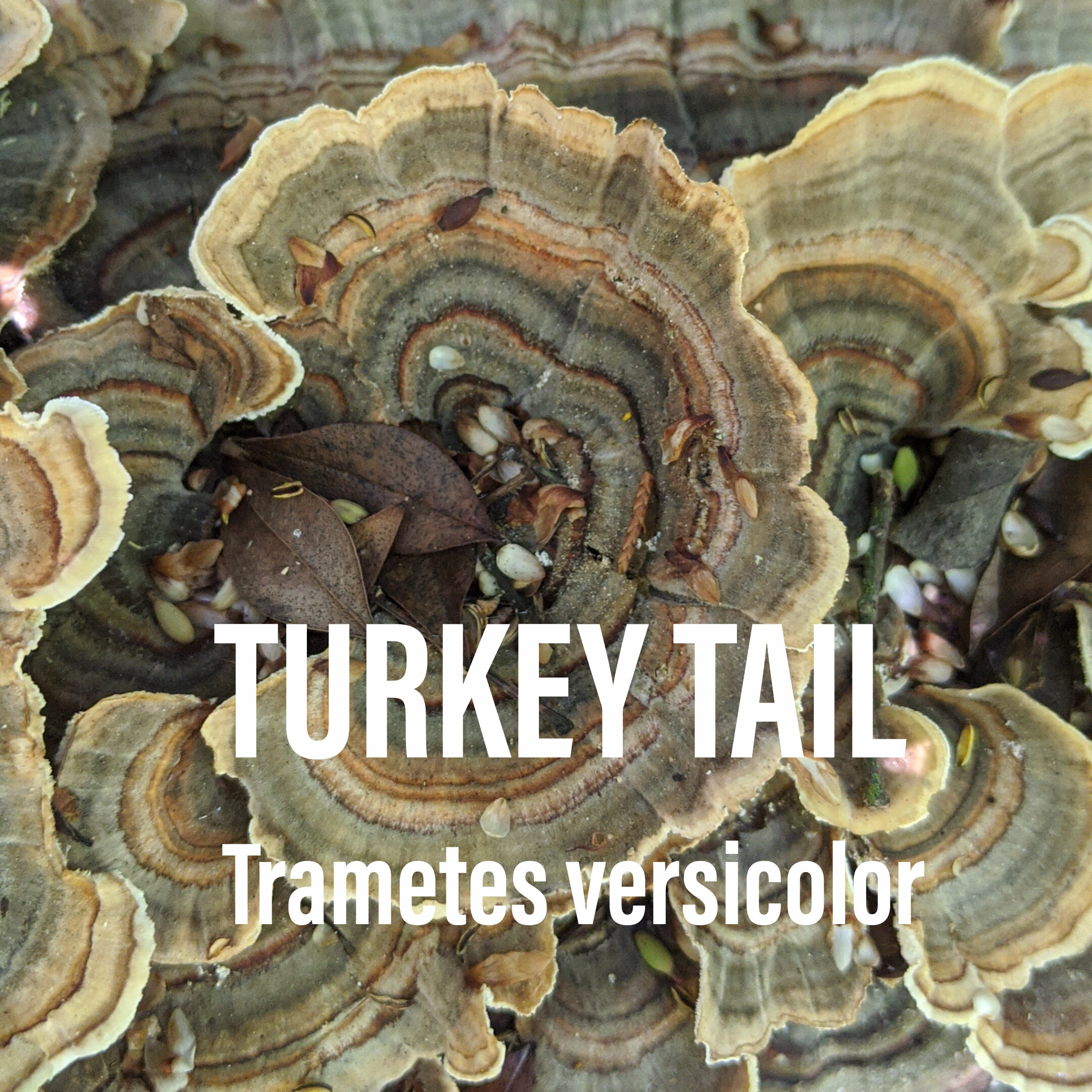
Turkey Tail, Trametes versicolor
The medicinal mushroom Turkey Tail, Trametes versicolor is also flushing after rain. Make sure the underside is white because it looks a lot like False turkey tail.

Oysters, Pleurotus ostreatus
We found some Oysters, Pleurotus ostreatus flushing on dead black willows as well so keep a look out for this choice edible

REISHI, Ganoderma Sessile
Look for Ganoderma, the "Mushroom of Immortality" on dying or dead hardwood trees or stumps. Golden Reishi grows with conifers like lobloli pines in central texas
If the top of the shelf looks red and varnished and the underside is still white, it is still good to harvest for medicinal purposes. The species shown above is more likely to be found in East Texas and in Bastrop area.

Wood Ear Mushroom, Auricularia
Auricularia or wood ear an edible jelly fungus pops up on downed hardwood limbs a few days after a good rain. Wood ear mushrooms are a popular ingredient in many Chinese dishes such as hot and sour soup, and are also used in Chinese medicine. It is also used in Ghana as a blood tonic. Modern research into possible medical applications has variously concluded that wood ear has anti-tumor, hypoglycemic, anticoagulant and cholesterol-lowering properties.

Ringless Honey Mushroom, Desarmillaria caespitosa
Ringless Honey Mushroom, Desarmillaria caespitosa have also been popping up all over Austin in large clusters at the bases of trees (when the clusters appear to be terrestrial they are actually growing from underground wood) in late summer and fall. This parasitic fungus is part of a genus that is the largest living organism ever found on this planet.
As always, if you are trying a new mushroom, confirm the ID with an expert, then try a small amount to make sure you don't have an allergic reaction. Texas Mushroom Identification Facebook group is great for quick responses and ID help. Also, don't forget to add your finds on the Mushrooms of Texas project on iNaturalist.
Follow my foraging adventures @forage.atx.

It's Chicken of the Woods Season
Forage.atx made this sizzle reel compiling clips from the last few COTW seasons in Central Texas.
Forage.atx made this sizzle reel compiling clips from the last few COTW seasons in Central Texas.
We will be doing more small mushroom ID walks this fall, so if you haven't already, sign-up to become a member and get first pick at ticket for our events. Members also get discounted tickets. If you are a student DM us for our membership discount code.
ABOUT COTW
As temperatures start to cool and trees start to drop their leaves, keep a look out for the orange polypores known as Chicken-of the-Woods (COTW) Laetiporus. They grow on older Texas Live Oaks that have been trimmed and have their heartwood exposed. Spores are everywhere and carry a lot of genetic information. Once two matching spores land in the right place, the fungus will slowly colonize and eat the heartwood of Texas Live Oaks or Quercus fusiformis. If you see a hollow Live Oak, it is likely due to a fungus parasitizing it. Unlike other parts of the country where COTW is a decomposer on dead hardwood, in Central Texas the fungus is a parasite because the trees are still living.
Once you see the fruiting mushroom, there is nothing that will save the tree from slowly decomposing and returning its nutrients back to the soil. Many times it’s not the fungi that is at fault. Human disruption, cutting down trees, and trimming trees for roads and buildings, opens the tree up to the spores that are floating everywhere and waiting for the right opportunity to find a home to feed.
On the plus side, what they spit out is a delicious edible mushroom that contains proteins, fat, fiber and tastes just like chicken! They are also medicinal and rich in antioxidant compounds like chlorogenic acid, caffeic acid, kaempferol, and quercetin. It's also packed with lanostanoids – potent anti-carcinogenic compounds.
Mycology Happy Hour at Live Oak Brewing


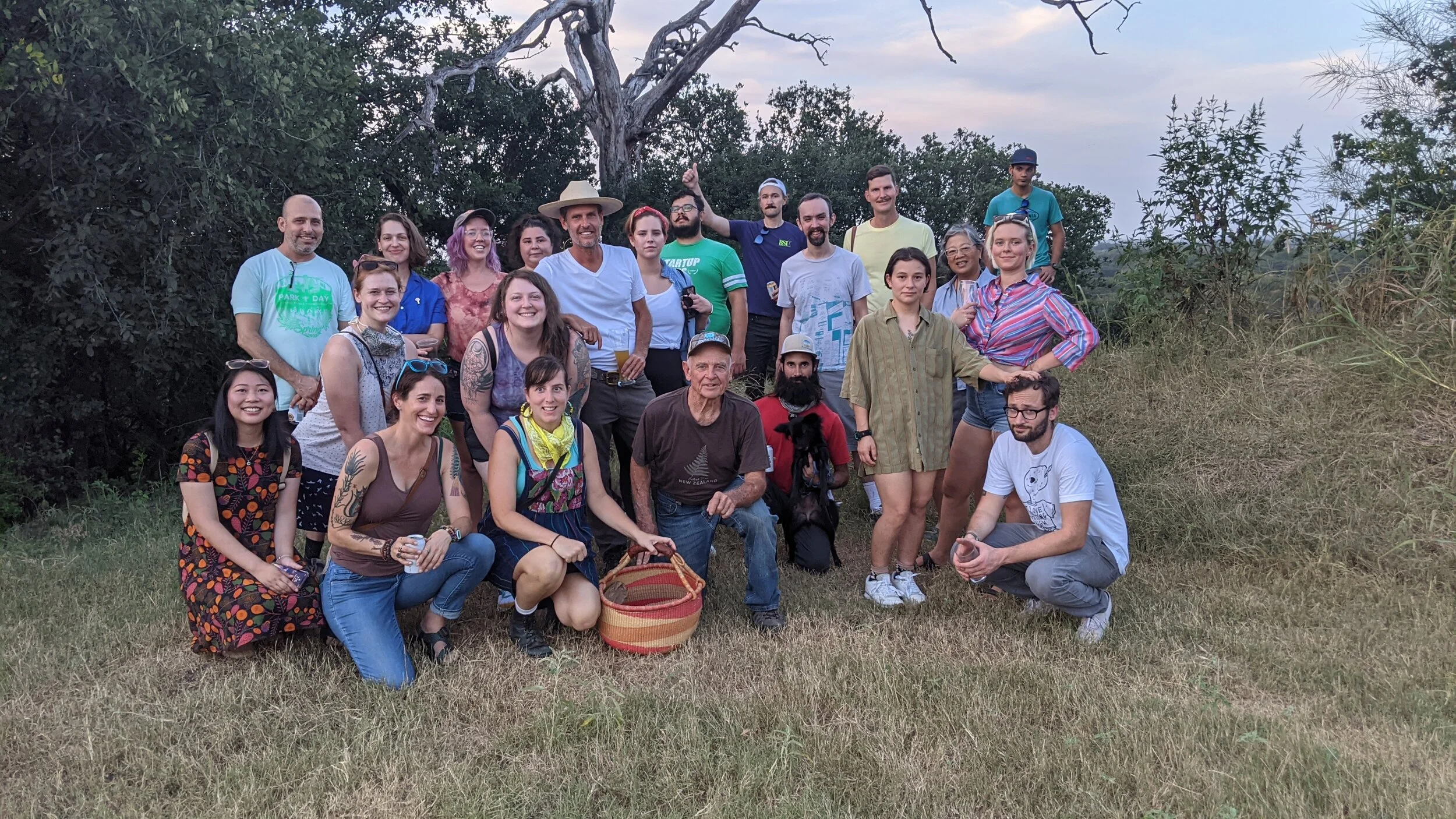

A few images from the Mycology Happy Hour at @liveoakbrewing. We are happy to report that there were no chicken-of-the-woods #Laetiporussulphureus found on any of the beautiful, heritage Live Oaks at the brewery. Thanks tree guy! @theymightbemonkeys and thanks @fredlabia for the tour and for going deep on sugar fungus knowledge!
Everyone had a chance to try a nugget of coconut chicken of the woods made by @forage.atx. Consensus... Tastes like chicken. 🐔
Of course, we did spot other fungal activity while running around the disc golf course... because we are fungi freaks of nature. A #sawgill #Lentinuscrinitus and maybe some old #Oakbracket. Whatever it was it smelled like petrol.
@swamppenwolf new to the leadership circle is fitting right into Austin in a hollowed out Eastern cedar... his subtle way of saying he misses Houston. His cute pup is even into fungus and was gnawing on some #hexagoniahydnoides.
Thanks @curlymyco for bringing all the recycled mushroom blocks for everyone to take home.
We are planning to do our October outdoor HH at @jesterkingbrewery because we want to try this new @txsakeco colab mushroom beer #LIGRA and also myceliate with @farmerpeppy and his goats.
🍄💗🍄💗🍄💗
September Forage Forecast
As temps start to cool and trees start to loose their leaves, we start to look for the orange polypores known as Chicken-of the-Woods (COTW) Laetiporus sulphureus. Keep a look out on older Texas Live Oaks that have been trimmed and have their heartwood exposed. Spores are everywhere and carry a lot of genetic information that helps them find the right place to feast. COTW slowly eats the heartwood of Texas Live Oaks that are still alive. If you have ever seen a hollow tree, it is likely due to a fungus parasitizing a tree. Many times it’s not the fungi that is at fault. Human disruption, cutting down tree, and trimming of trees for roads and buildings, opens the tree up to the spores that are floating everywhere and waiting for the right opportunity to have dinner.

ABOVE: COTW that was "car-vested" by @forage.atx. It was spotted as she was driving 80MPH on the interstate just South of San Antonio.
As temperatures start to cool, keep a look out for the orange polypores known as Chicken-of the-Woods (COTW) Laetiporus species. This brown-rot, polypore mushroom fruits on older Texas Live Oaks that have been trimmed and have their heartwood exposed. Spores are everywhere and carry a lot of genetic information. Once a two matching spores land in the right place, the fungus will slowly colonizes and eat the heartwood of Texas Live Oaks or Quercus fusiformis. If you see a hollow Live Oak, it is likely due to a fungus parasitizing it. Once you see the fruiting mushroom, there is nothing that will save the tree from slowly decomposing and returning its nutrients back to the soil. Many times it’s not the fungi that is at fault. Human disruption, cutting down tree, and trimming trees for roads and buildings, opens the tree up to the spores that are floating everywhere and waiting for the right opportunity to have dinner. On the plus side, what they spit out is a delicious choice edible mushroom that contains, proteins, fat, fiber and tastes just like chicken!
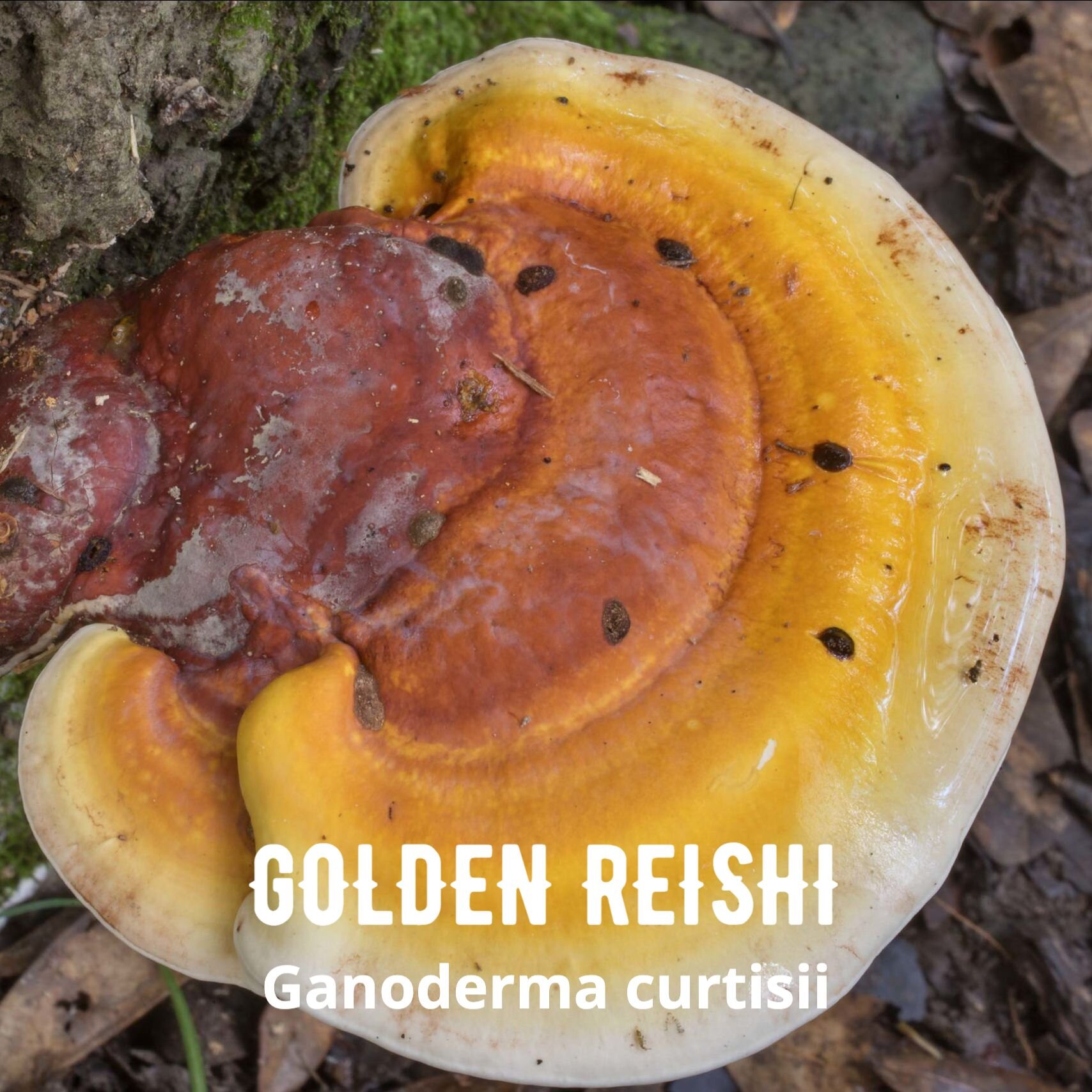
Look for Ganoderma, the "Mushroom of Immortality" on dying or dead Pecan trees or stumps. If the top of the shelf looks red and varnished and the underside is still white, it is still good to harvest for medicinal purposes. The species shown above is more likely to be found in East Texas and in Bastrop area.
Auricularia or wood ear an edible jelly fungus pops up on downed hardwood limbs a few days after a good rain. Wood ear mushrooms are a popular ingredient in many Chinese dishes such as hot and sour soup, and are also used in Chinese medicine. It is also used in Ghana as a blood tonic. Modern research into possible medical applications has variously concluded that wood ear has anti-tumor, hypoglycemic, anticoagulant and cholesterol-lowering properties.

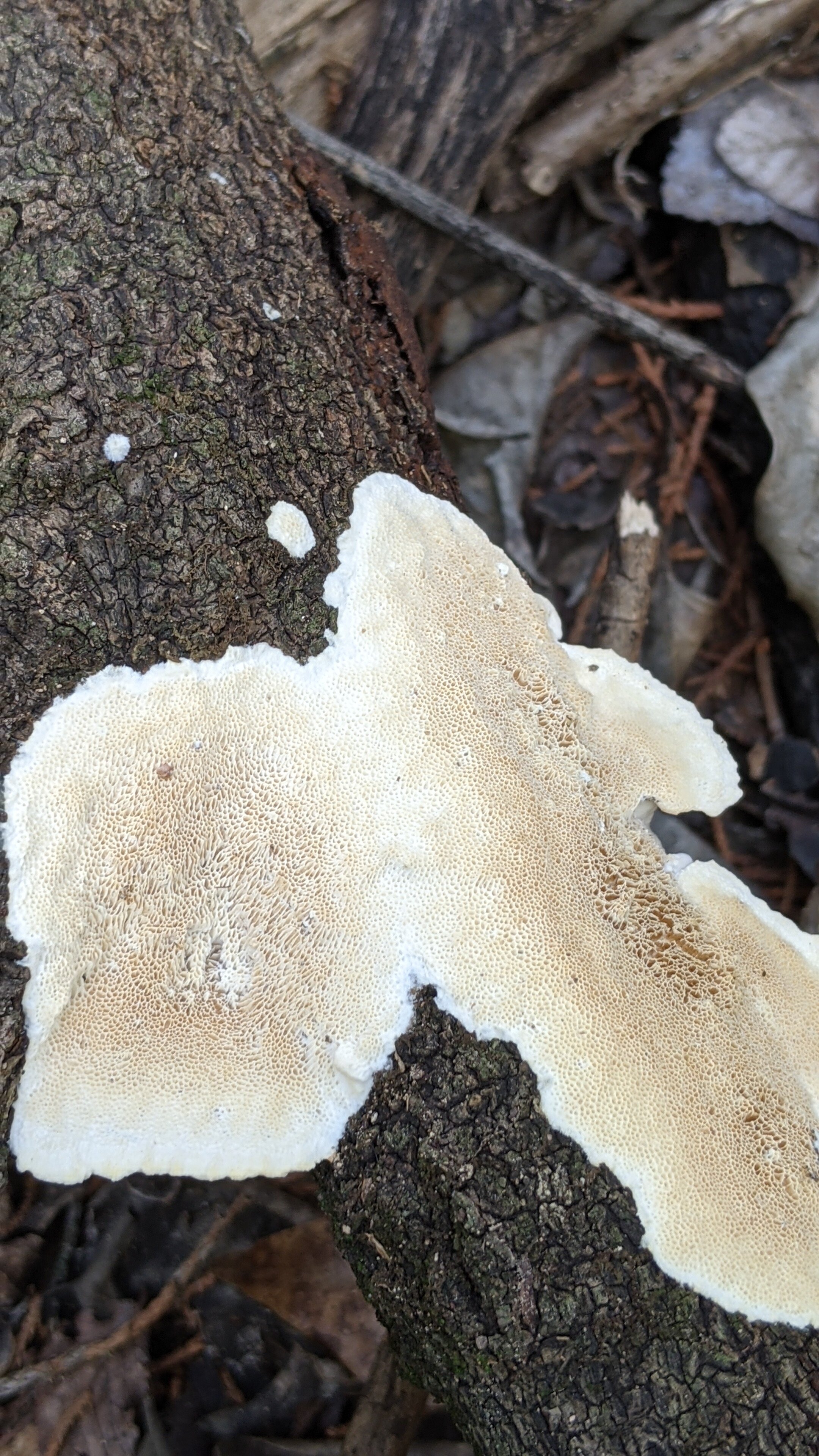
Favolus, or honeycomb fungus, is a genus of fungi in the family Polyporaceae. The fruit bodies of Favolus species are fleshy with radially arranged pores on the underside of the cap that are angular and deeply pitted, somewhat resembling a honeycomb. I tried a new recipe recently that has the taste and texture of chicharrones or pig's ears. I also discovered a new paper about its edibility. You can read more about it on our blog.
As always, if you are trying a new mushroom, confirm the ID with an expert, then try a small amount to make sure you don't have an allergic reaction. Texas Mushroom Identification Facebook group is great for quick responses and ID help. Also, don't forget to add your finds on the Mushrooms of Texas project on iNaturalist.
Follow my foraging adventures @forage.atx.
PHOTOS: Marysol Mushrooms Leo Birthday Bash


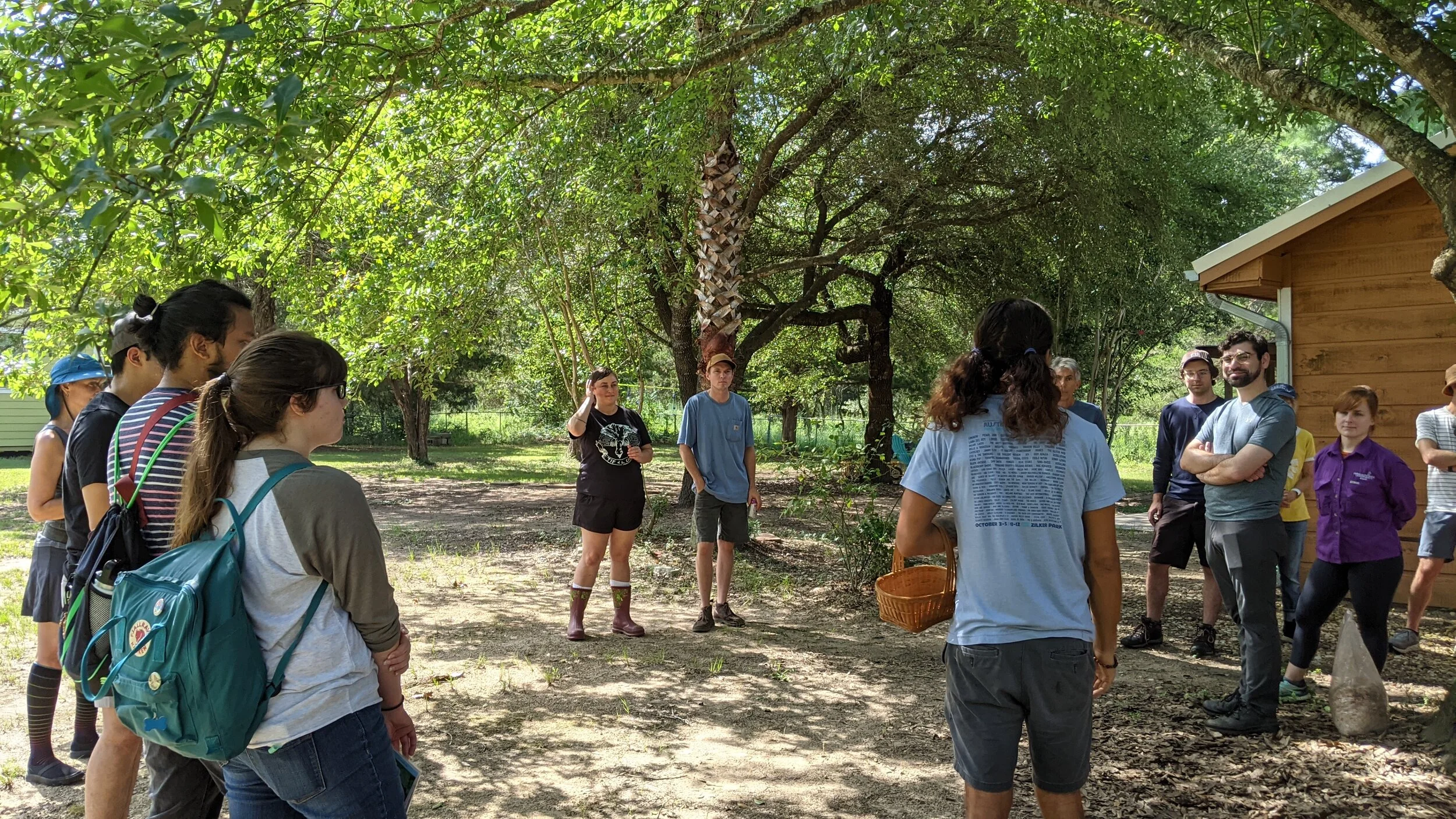


Marysol filled out mushroom lovin' hearts this weekend at the Leo Birthday Bash! Here are a few photos from the fungi-filled day in Bastrop. We were also joined by Erin from Shroomtownof Houston and Andrew @southtexasseasonals of San Antonio area! Members from the DFW area also joined! Texas hyphaes myceliating!
The day included a foray on the 5-acres behind the farm in the beautiful loblolly pines. Before we entered the forest we spotted several fruiting bodies popping up. #HONGOSTO!!
The walk was followed by a delicious lunch catered by Storehouse Market and Eatery in Bastrop. 😘
The main event was the tour of Marysol's new mushroom farm in a converted shed! You were so impressed by her and Jeff's hard work. Wow! You can pickup Marysols mushrooms at the @farmeredeneast and Boggy Creek farm stands in Austin and Bastrop.
Happy Birthday Marysol!

PHOTOS: Orchid & Mushroom Walk on July 31st
Sam the Fungi and I (Angel) had so much fun meeting everyone yesterday and looking for mushrooms and tuning into the beautiful orchid Hexalectris nitida or Glass Mountain Crested Coralroot

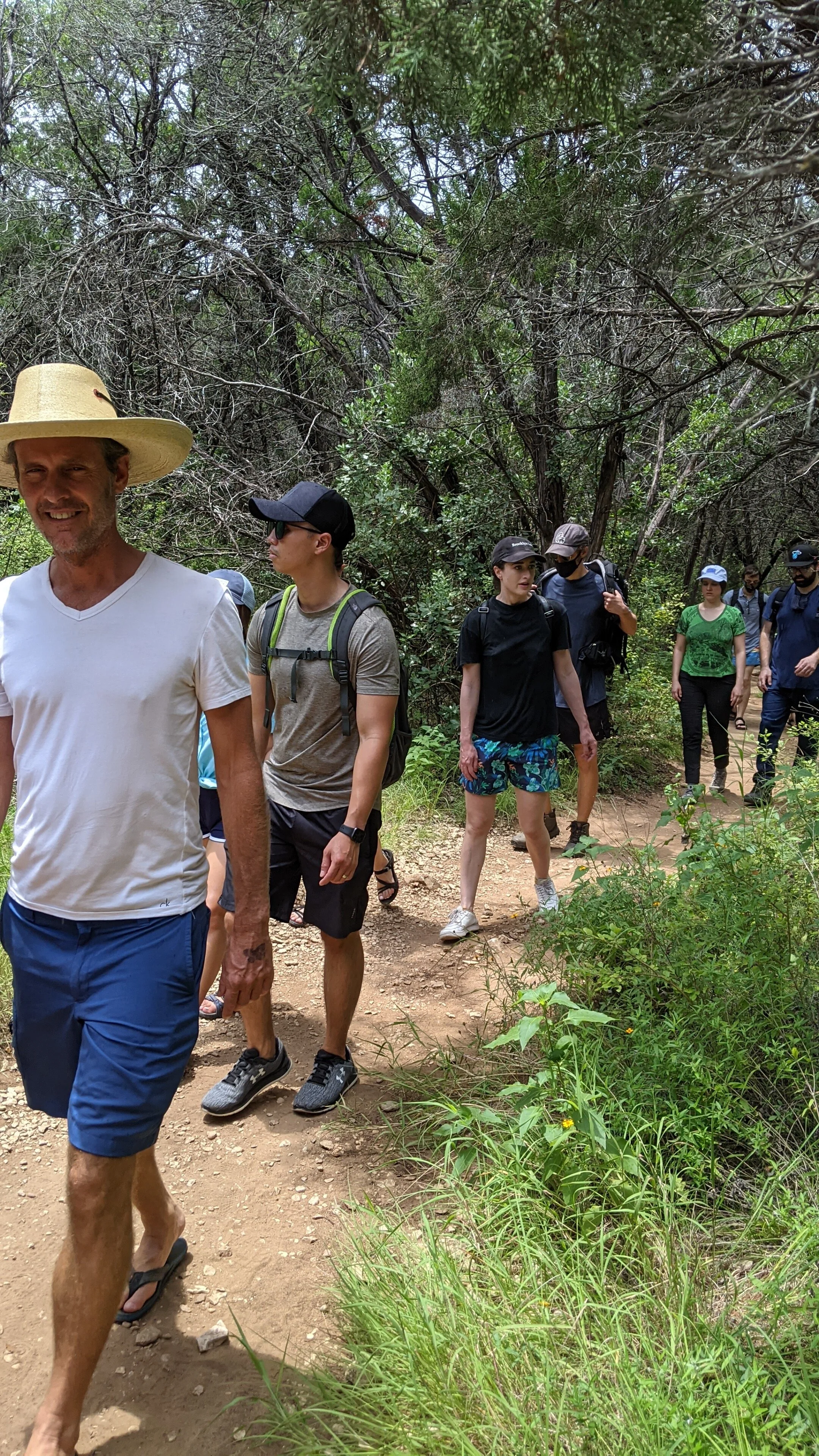

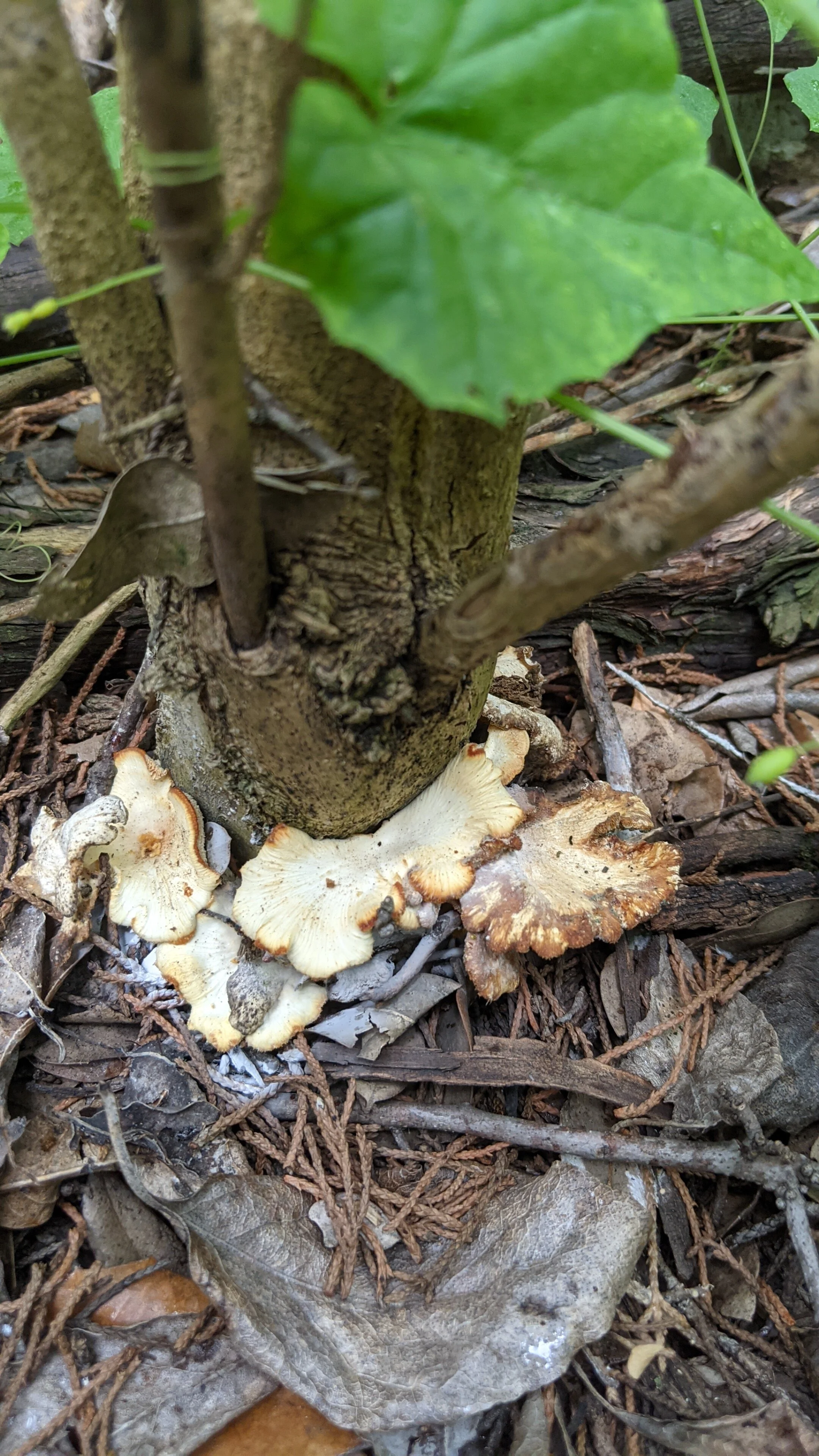


Sam the Fungi and I (Angel) had so much fun meeting everyone yesterday and looking for mushrooms and tuning into the beautiful orchid Hexalectris nitida or Glass Mountain Crested Coralroot. It was so exciting to see more popping up and I encourage everyone to do more hikes and try to observe the orchid while it is blooming. Here is one capture of the orchid blooming in Austin of 2019 and it is stunning.
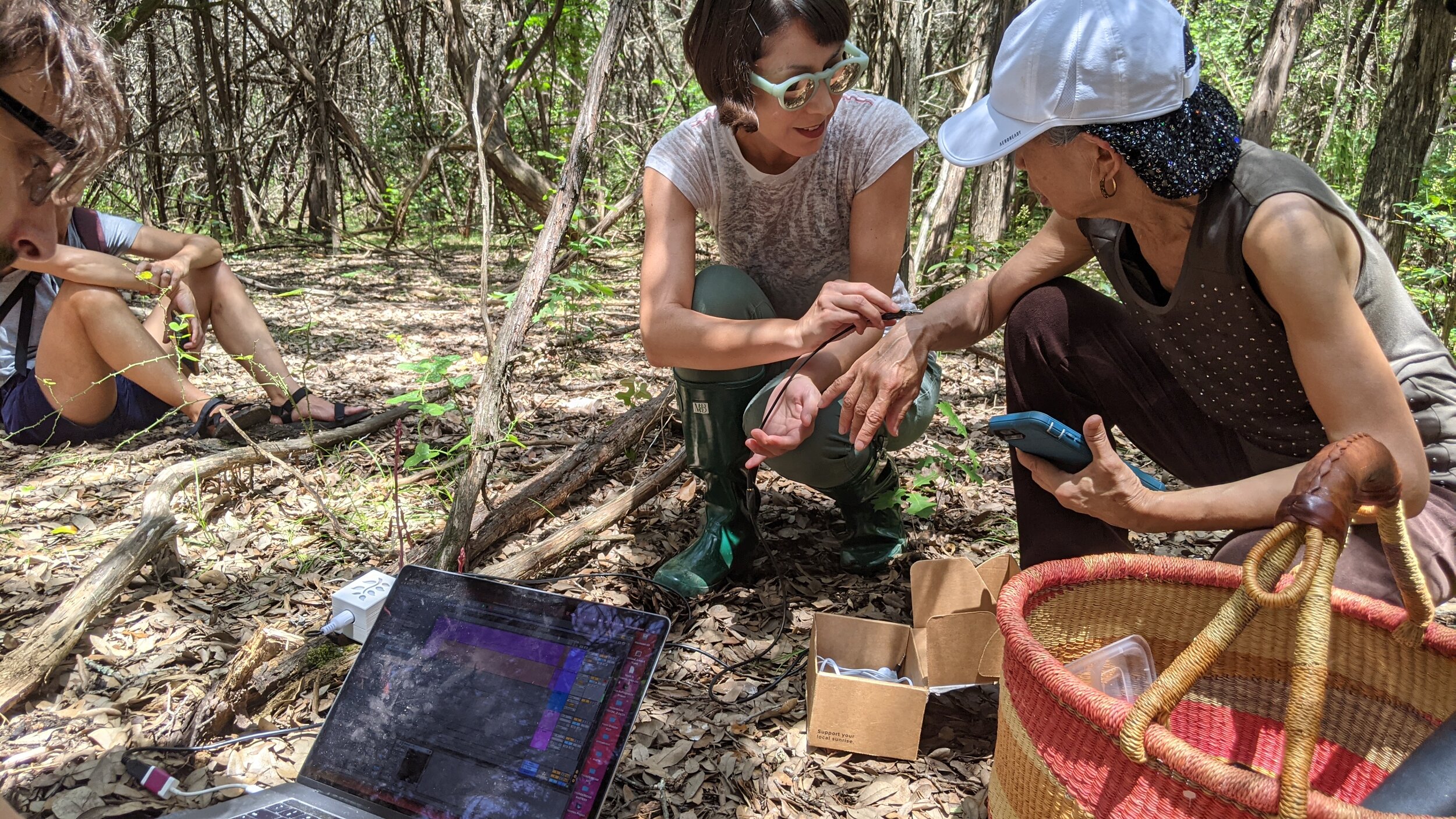
We hope you enjoyed hearing the biodata recording process and sounds of the orchid with Josh and Yvonne. You can see/hear the The Octopus Projects Mushroom Biodata recordings from the CTMS fundraiser in May here.
More About The Orchid
(From North American Orchid Conservation Center)
Hexalectris nitida, the Glass Mountain Coral Root, is widely scattered across Texas and crosses the north-south border into New Mexico. This leafless orchid has a relatively short inflorescence, usually 20 cm or less, that bears a dense cluster of waxy, rose-brown flowers. The flowers resemble those of H. revoluta, including the rolled-back tips of the sepals and petals but are smaller.
Who First Observed This Orchid
H. nitida was observed by Barton Warnock in 1940 while he was doing field work for his PhD dissertation at UT Austin on the vegetation of the Glass Mountains. This is why it has the common name of Glass Mountain Crested Coralroot. The Glass Mountains in West Texas extend from Cathedral Mountain in northern Brewster County to Monument Draw in southern Pecos County, roughly between Fort Stockton and Alpine.
Why This Orchid is Rare
1. Parasitic: The orchid is mycoheterotrophic. Mycoheterotrophy is the process in which the plant gets it's food from parasitism upon fungi rather than from photosynthesis. A myco-heterotroph is the parasitic plant partner in this relationship.
2. Weather Dependent: It only grows in summer seasons when we get a lot of rain and humidity to create a microclimate that is suitable. (like 2019 and 2021).
3. Geographically Rare: Hexalectris nitida is rare throughout its range and is considered vulnerable. Although it may be locally abundant in Texas and has been reported in Mexico, this orchid has not been observed in New Mexico since its discovery and may be extirpated in that state.
4. Flowers Rarely Display: This orchid is self-pollinating or cleistogamy and rarely displays flowers that are fully open. The short labellum, less than 1 cm long, also distinguishes this species from others in the genus. Hexalectris nitida grows on rocky canyon sides and bottoms in moderate to heavy shade from oaks and junipers.
More About The Hexalectris Genus of Orchids
Texas boasts more species of the genus Hexalectris than any other state. Here 5 of the world’s 8 species can be found (these numbers change to 6 and 9, depending on if you believe that Hexalectris spicata var. arizonica deserves species status). Hexalectris is a genus of myco-heterotrophic orchids that are generally found in areas with abundant shade and thick, rich leaf litter. In Texas there are three Hexalectris hotspots. One is the mountains of far West Texas, another the shaded canyons and oak/juniper woodlands of the Edward’s Plateau, and the last is the White Rock Escarpment of north-central Texas.
Reference Links
https://goorchids.northamericanorchidcenter.org/species/hexalectris/nitida/
https://mattbuckinghamphotography.com/category/hexalectris-nitida/

August Forage Forecast
Look for Ganoderma, the "Mushroom of Immortality" on dying or dead Pecan trees or stumps. If the top of the shelf looks red and varnished and the underside is still white, it is still good to harvest for medicinal purposes. The species shown above is more likely to be found in East Texas and in Bastrop area.
Look for Ganoderma, the "Mushroom of Immortality" on dying or dead Pecan trees or stumps. If the top of the shelf looks red and varnished and the underside is still white, it is still good to harvest for medicinal purposes. The species shown above is more likely to be found in East Texas and in Bastrop area.
Auricularia or wood ear an edible jelly fungus pops up on downed hardwood limbs a few days after a good rain. Wood ear mushrooms are a popular ingredient in many Chinese dishes such as hot and sour soup, and are also used in Chinese medicine. It is also used in Ghana as a blood tonic. Modern research into possible medical applications has variously concluded that wood ear has anti-tumor, hypoglycemic, anticoagulant and cholesterol-lowering properties.
Favolus, or honeycomb fungus, is a genus of fungi in the family Polyporaceae. The fruit bodies of Favolus species are fleshy with radially arranged pores on the underside of the cap that are angular and deeply pitted, somewhat resembling a honeycomb. I tried a new recipe recently that has the taste and texture of chicharrones or pig's ears. I also discovered a new paper about its edibility. You can read more about it on our blog.
As always, if you are trying a new mushroom, confirm the ID with an expert, then try a small amount to make sure you don't have an allergic reaction. Texas Mushroom Identification Facebook group is great for quick responses and ID help. Also, don't forget to add your finds on the Mushrooms of Texas project on iNaturalist.
Follow my foraging adventures @forage.atx.

PHOTOS: Orchid & Mushroom Walk
Sam the Fungi and I (Angel) had so much fun meeting everyone yesterday and looking for mushrooms and tuning into the beautiful orchid Hexalectris nitida or Glass Mountain Crested Coralroot
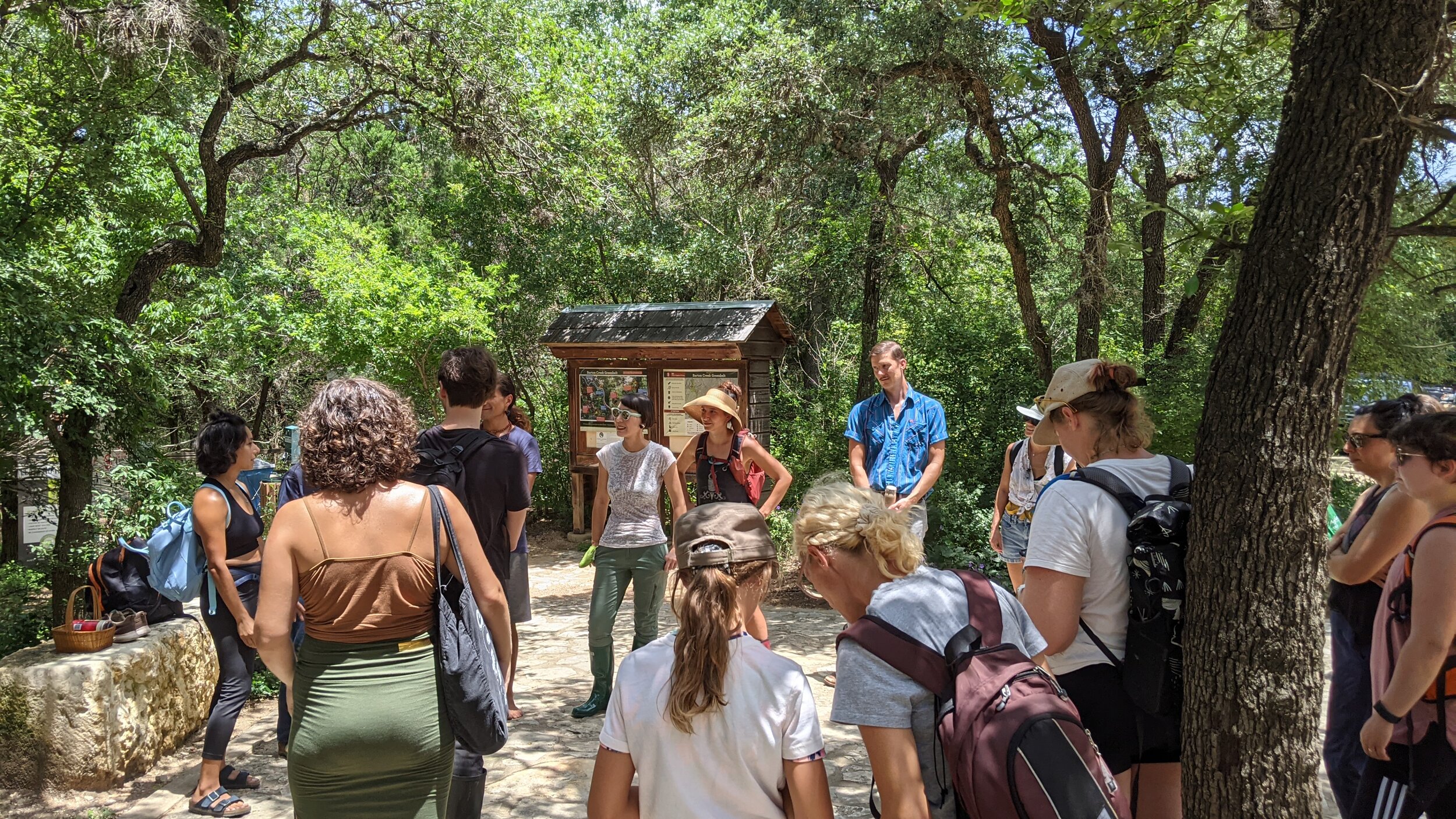
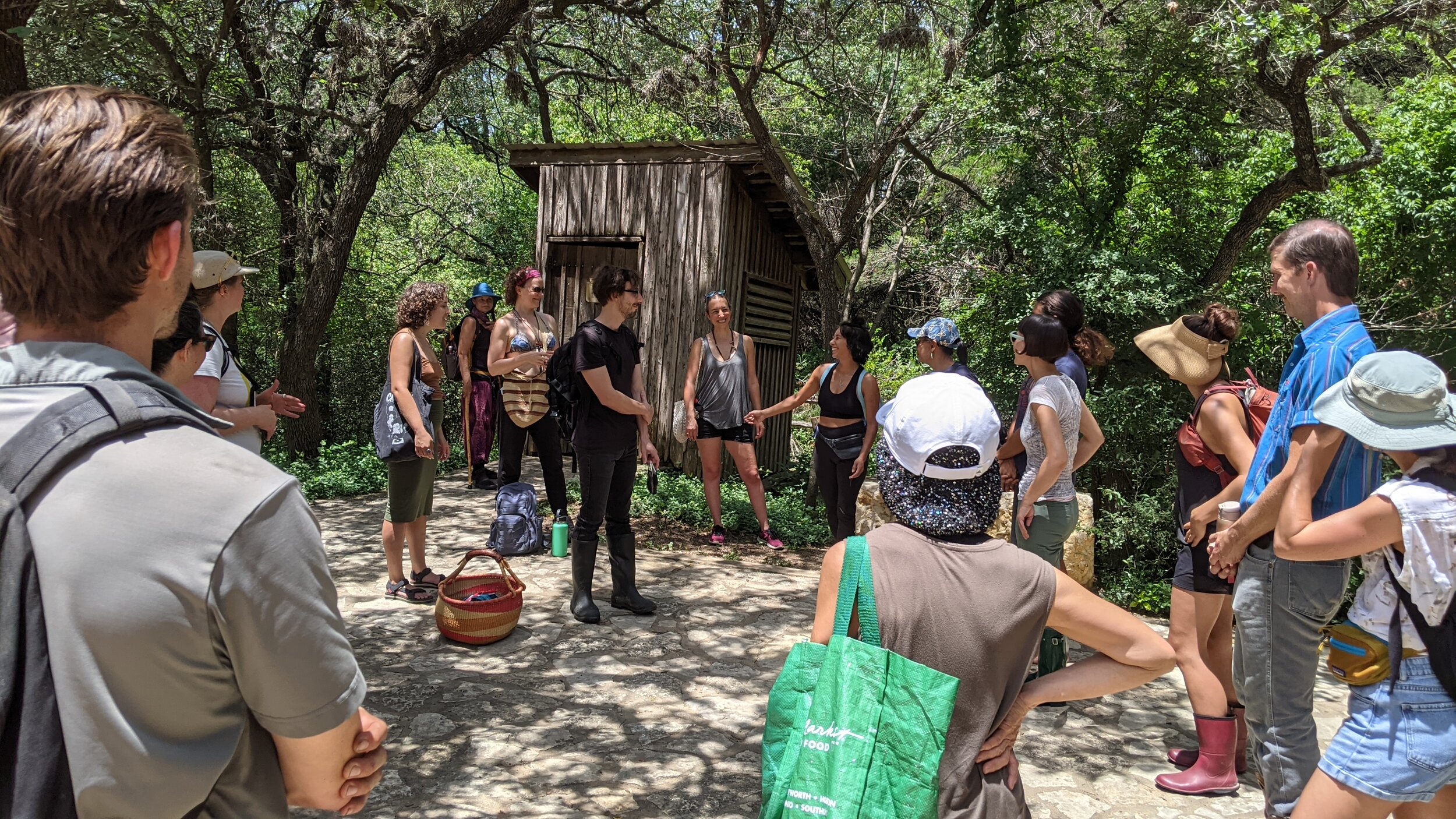
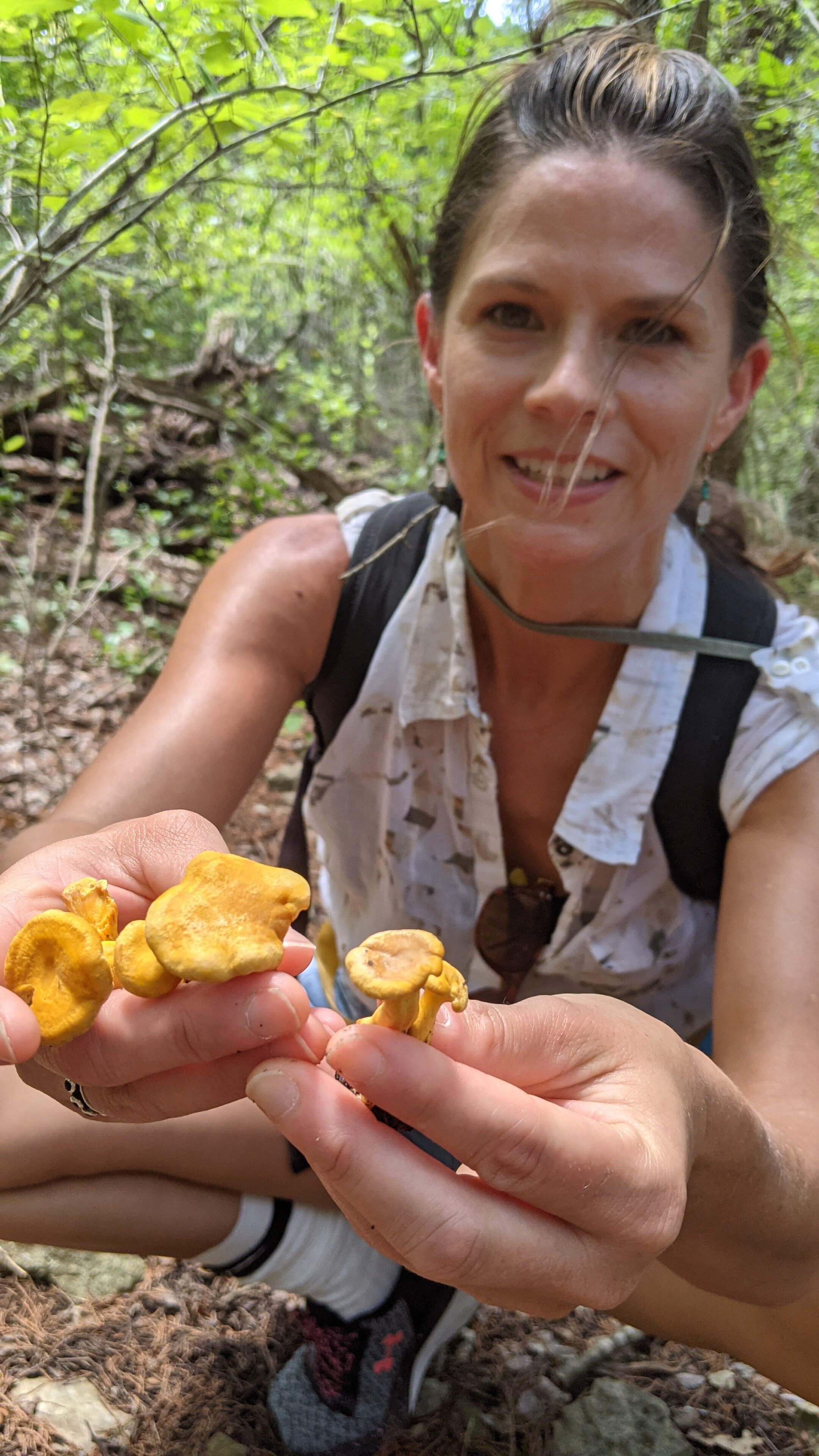
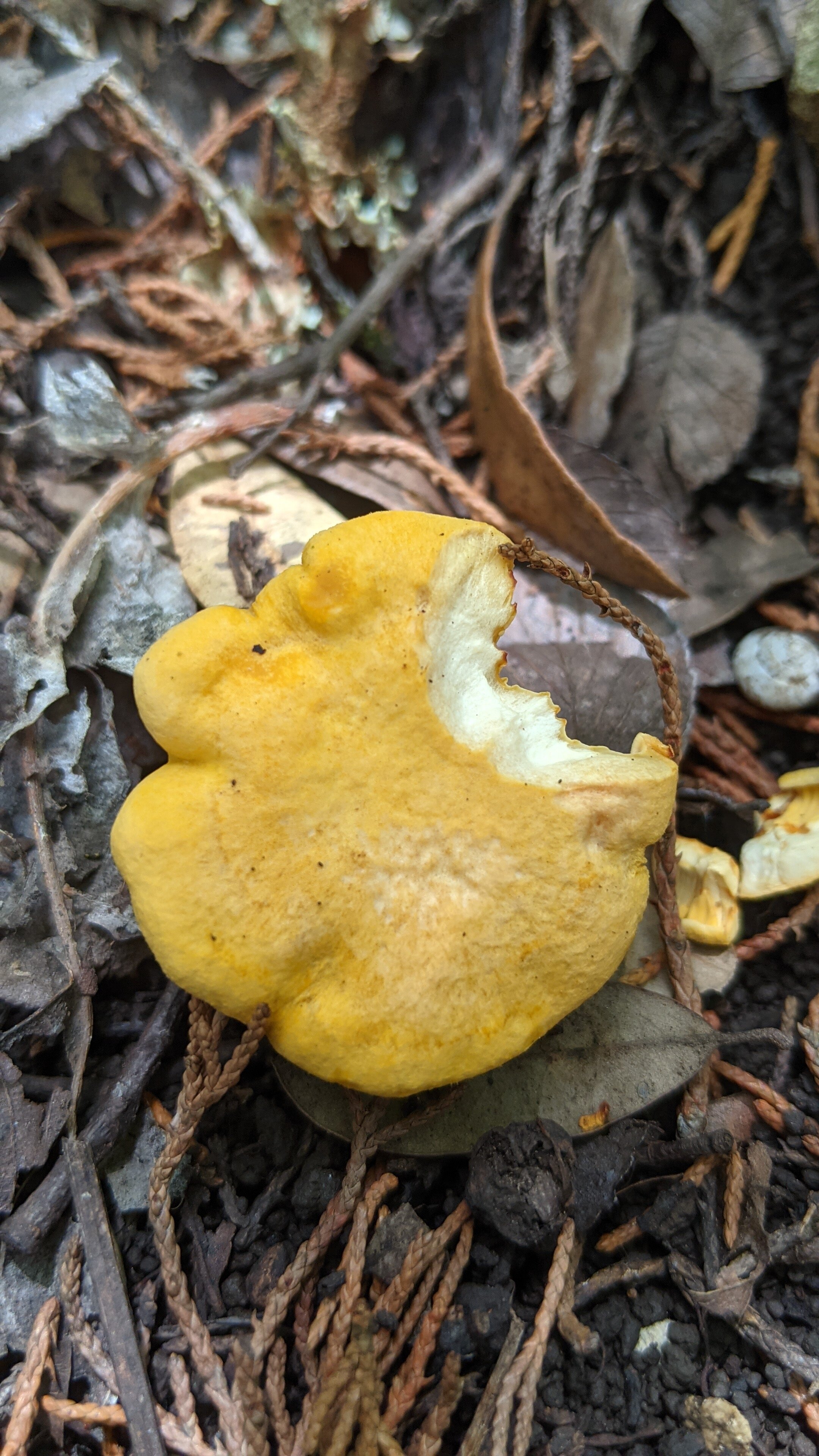
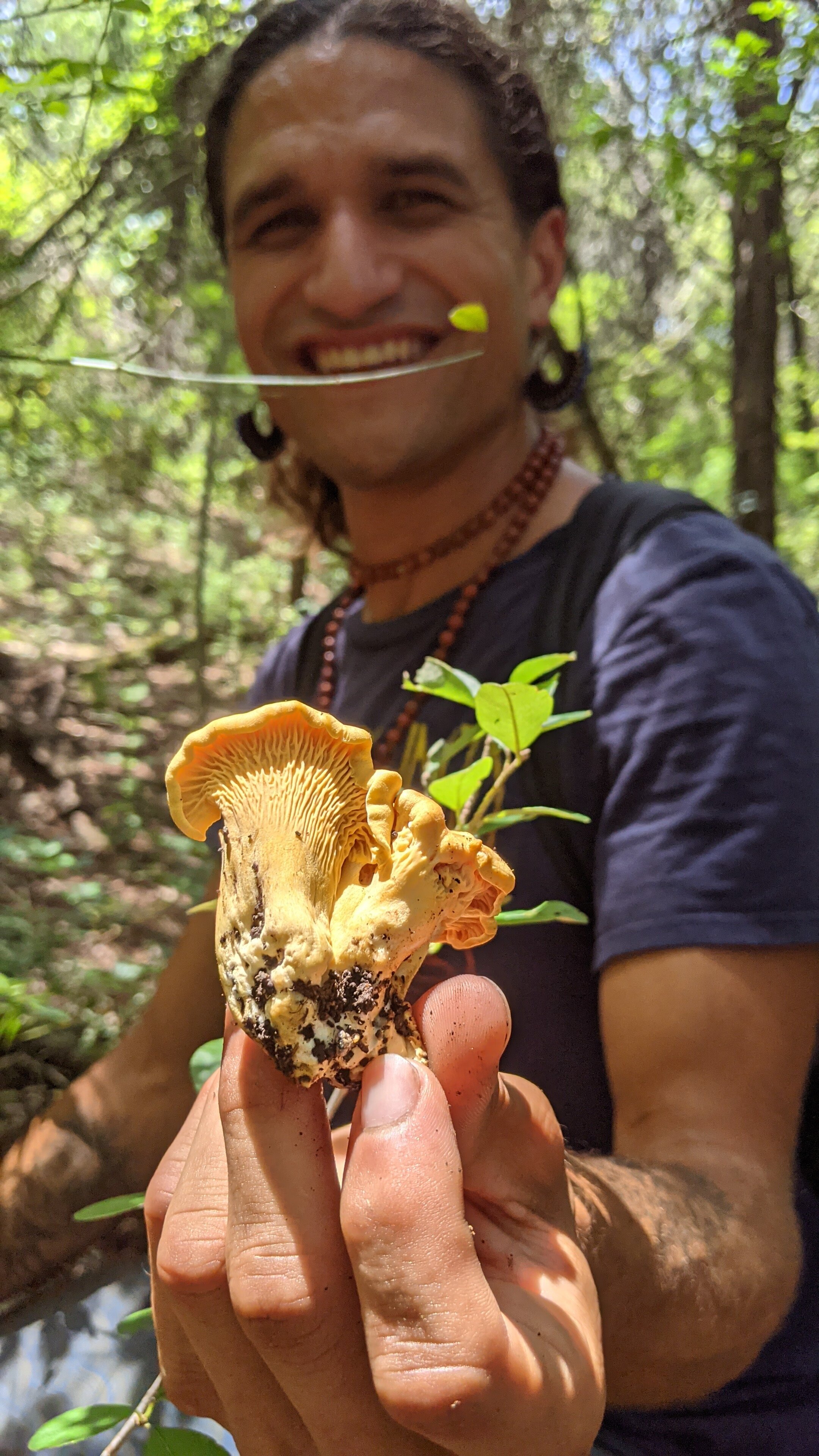
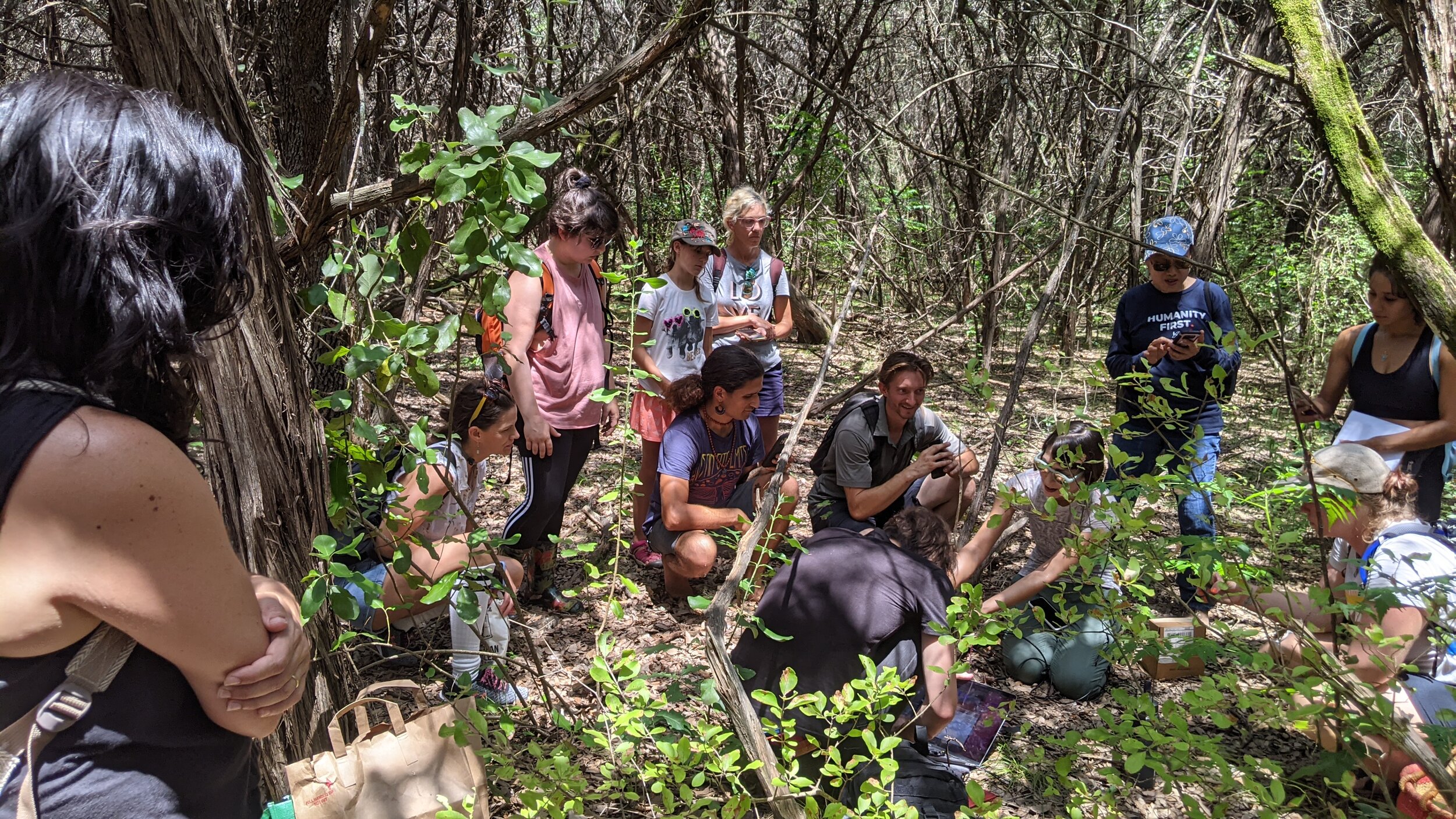
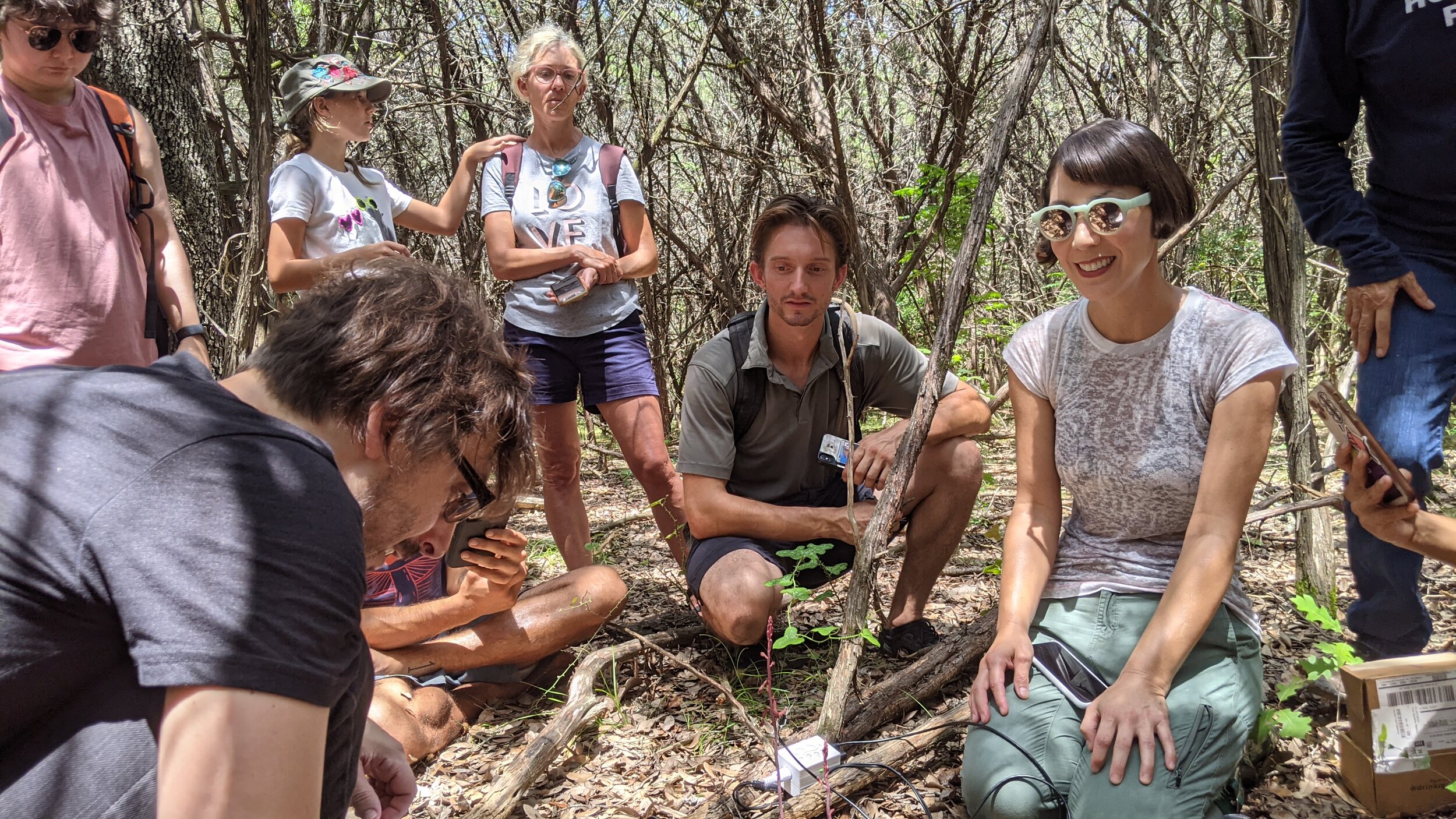
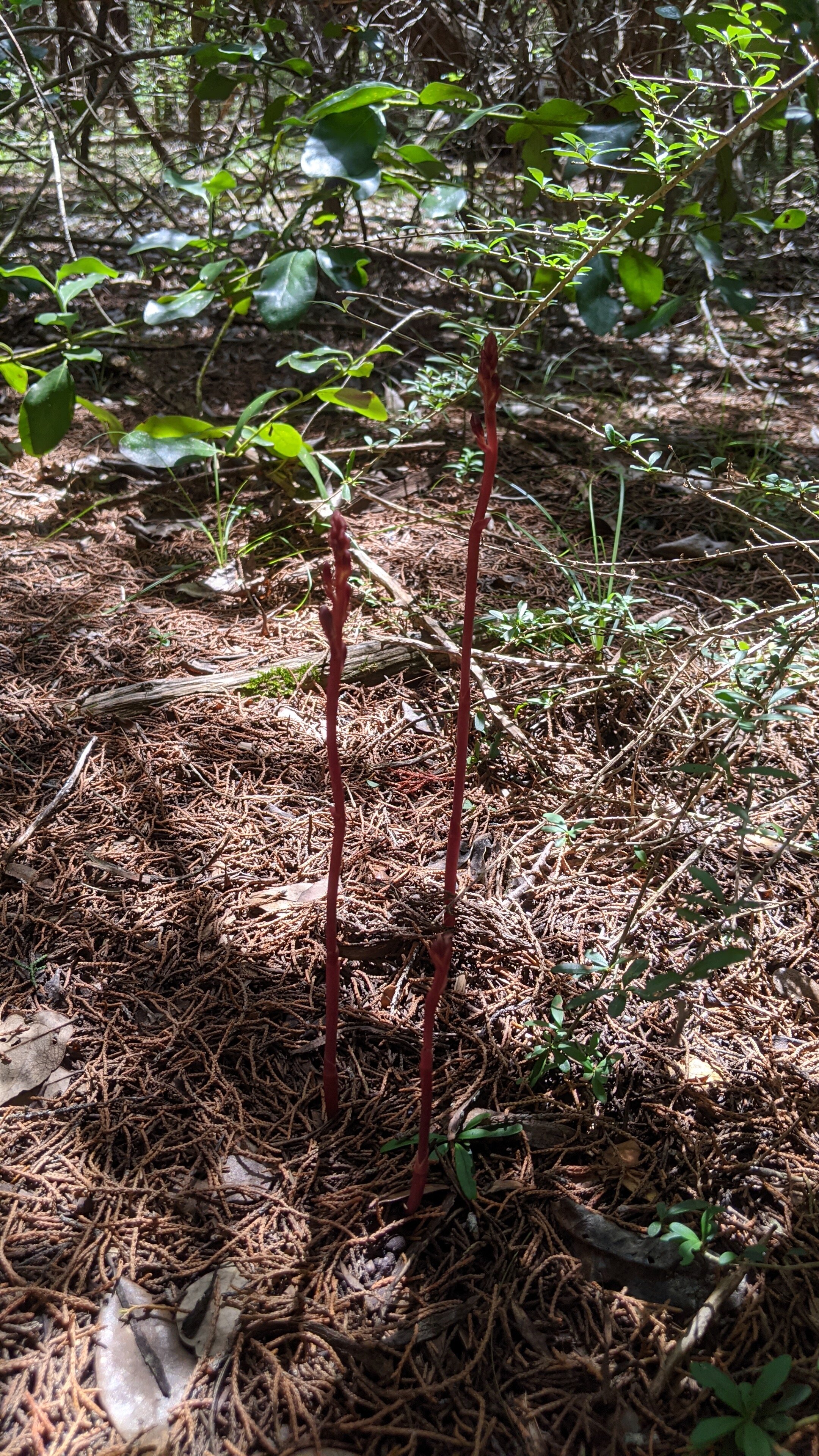
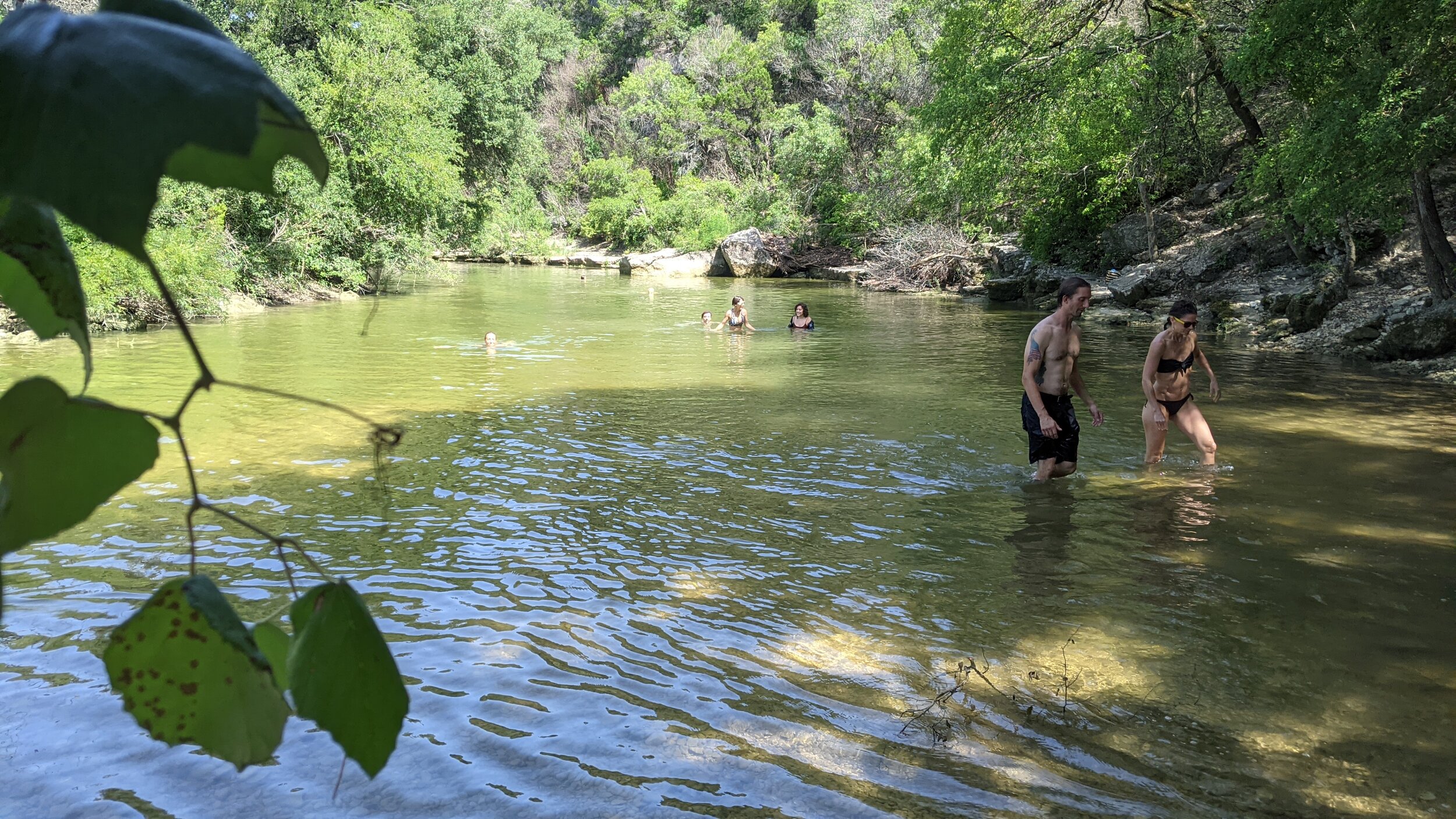
Sam the Fungi and I (Angel) had so much fun meeting everyone yesterday and looking for mushrooms and tuning into the beautiful orchid Hexalectris nitida or Glass Mountain Crested Coralroot. It was so exciting to see more popping up and I encourage everyone to do more hikes and try to observe the orchid while it is blooming. Here is one capture of the orchid blooming in Austin of 2019 and it is stunning.
We hope you enjoyed hearing the biodata recording process and sounds of the orchid with Josh and Yvonne. You can see/hear the The Octopus Projects Mushroom Biodata recordings from the CTMS fundraiser in May here.
More About The Orchid
(From North American Orchid Conservation Center)
Hexalectris nitida, the Glass Mountain Coral Root, is widely scattered across Texas and crosses the north-south border into New Mexico. This leafless orchid has a relatively short inflorescence, usually 20 cm or less, that bears a dense cluster of waxy, rose-brown flowers. The flowers resemble those of H. revoluta, including the rolled-back tips of the sepals and petals but are smaller.
Who First Observed This Orchid
H. nitida was observed by Barton Warnock in 1940 while he was doing field work for his PhD dissertation at UT Austin on the vegetation of the Glass Mountains. This is why it has the common name of Glass Mountain Crested Coralroot. The Glass Mountains in West Texas extend from Cathedral Mountain in northern Brewster County to Monument Draw in southern Pecos County, roughly between Fort Stockton and Alpine.
Why This Orchid is Rare
1. Parasitic: The orchid is mycoheterotrophic. Mycoheterotrophy is the process in which the plant gets it's food from parasitism upon fungi rather than from photosynthesis. A myco-heterotroph is the parasitic plant partner in this relationship.
2. Weather Dependent: It only grows in summer seasons when we get a lot of rain and humidity to create a microclimate that is suitable. (like 2019 and 2021).
3. Geographically Rare: Hexalectris nitida is rare throughout its range and is considered vulnerable. Although it may be locally abundant in Texas and has been reported in Mexico, this orchid has not been observed in New Mexico since its discovery and may be extirpated in that state.
4. Flowers Rarely Display: This orchid is self-pollinating or cleistogamy and rarely displays flowers that are fully open. The short labellum, less than 1 cm long, also distinguishes this species from others in the genus. Hexalectris nitida grows on rocky canyon sides and bottoms in moderate to heavy shade from oaks and junipers.
More About The Hexalectris Genus of Orchids
Texas boasts more species of the genus Hexalectris than any other state. Here 5 of the world’s 8 species can be found (these numbers change to 6 and 9, depending on if you believe that Hexalectris spicata var. arizonica deserves species status). Hexalectris is a genus of myco-heterotrophic orchids that are generally found in areas with abundant shade and thick, rich leaf litter. In Texas there are three Hexalectris hotspots. One is the mountains of far West Texas, another the shaded canyons and oak/juniper woodlands of the Edward’s Plateau, and the last is the White Rock Escarpment of north-central Texas.
Reference Links
https://goorchids.northamericanorchidcenter.org/species/hexalectris/nitida/
https://mattbuckinghamphotography.com/category/hexalectris-nitida/