

PHOTOS: Foray at Bull Creek
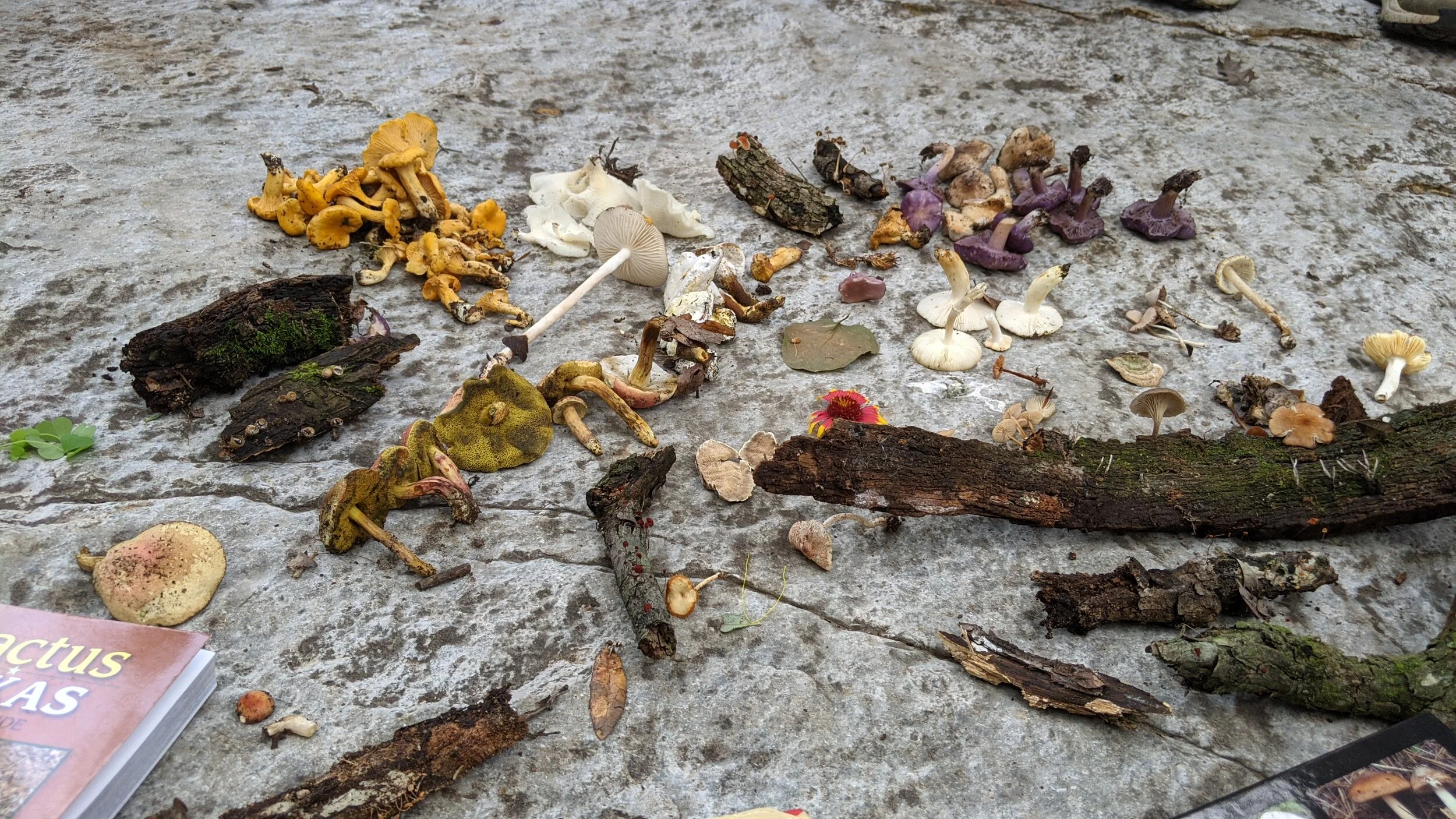
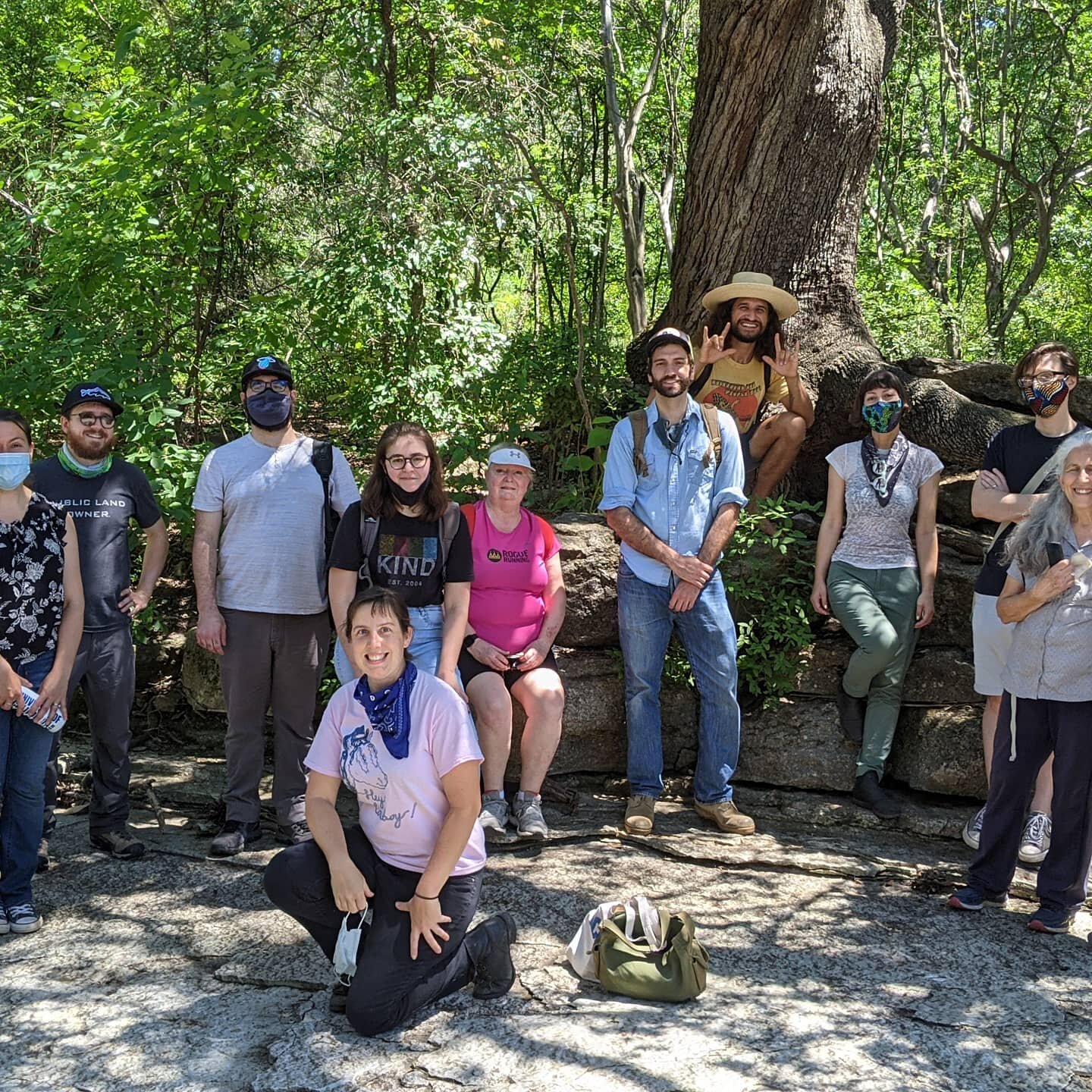
So many smiles at the foray at Bull Creek that I shared with Sam theFungi and Central Texas Mycology members. The Cantharellus, Favolus and Hortiboletus continue to make an appearance because of the rainy, tropical, sauna-like weather. We also observed some other interesting fruiting bodies that I had not seen before in Central Texas. View slideshow of mushrooms that we added to iNaturalist.
So many smiles at the foray at Bull Creek that I shared with Sam theFungi and Central Texas Mycology members. The cantharellus, favolus and hortiboletus continue to make an appearance because of the rainy, tropical, sauna-like weather. We also observed some other interesting fruiting bodies that I had not seen before in Central Texas. View slideshow of mushrooms that we added to iNaturalist.
Keep dancing for rain because there will be more forays... Also check out the next foray event for early August in Bastrop at Marysol Mushrooms new mushroom farm. We will be touring her farm and feasting on Lion's Mane because it's Leo season and it will be Marysol and Angel's birthday! A full day of fungal treasures!


July Forage Forecast
Look for Ganoderma, the "Mushroom of Immortality" on dying or dead Pecan trees or stumps. If the top of the shelf looks red and varnished and the underside is still white, it is still good to harvest for medicinal purposes. The species shown above is more likely to be found in East Texas and in Bastrop area.
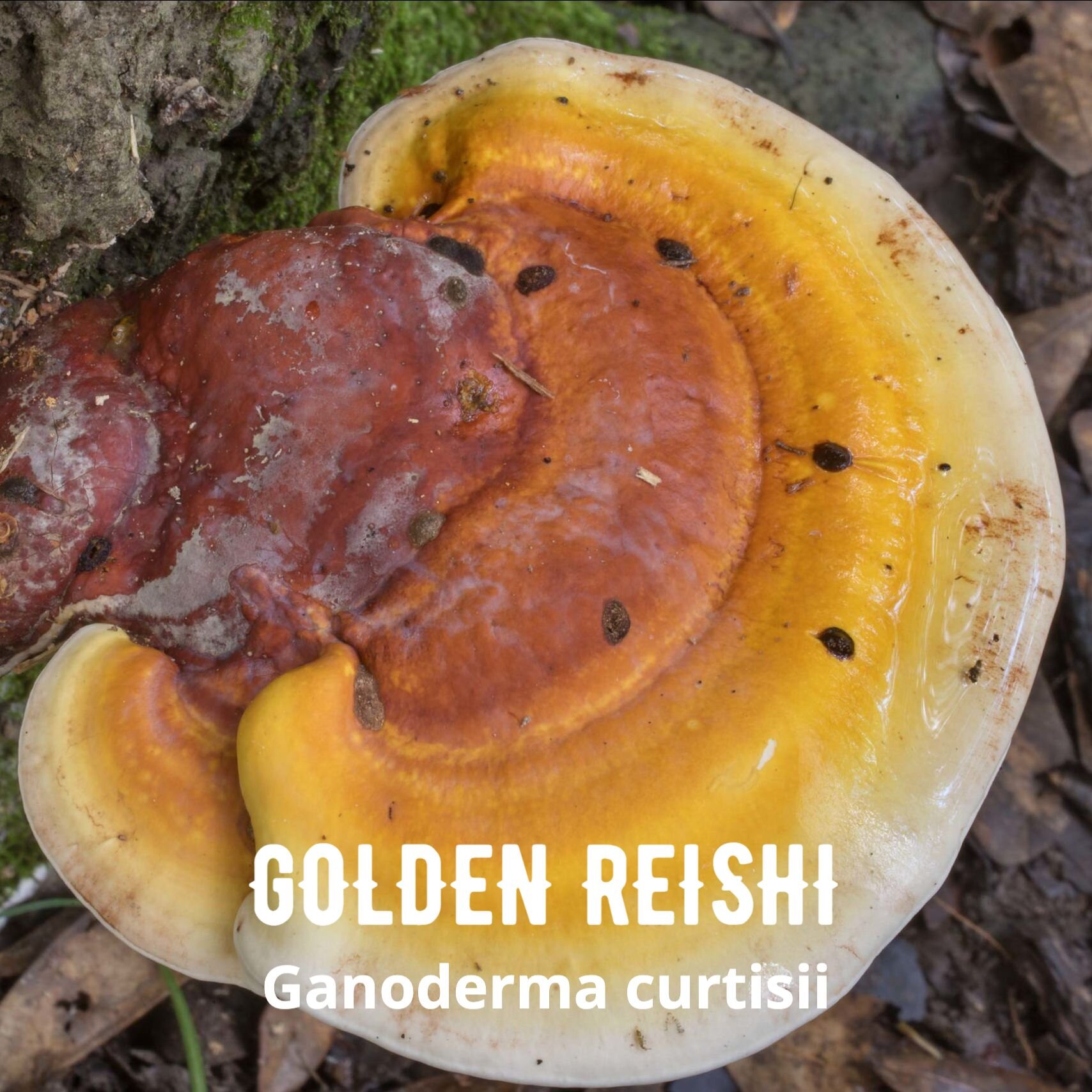
Look for Ganoderma, the "Mushroom of Immortality" on dying or dead Pecan trees or stumps. If the top of the shelf looks red and varnished and the underside is still white, it is still good to harvest for medicinal purposes. The species shown above is more likely to be found in East Texas and in Bastrop area.

Auricularia or wood ear an edible jelly fungus pops up on downed hardwood limbs a few days after a good rain. Wood ear mushrooms are a popular ingredient in many Chinese dishes such as hot and sour soup, and are also used in Chinese medicine. It is also used in Ghana as a blood tonic. Modern research into possible medical applications has variously concluded that wood ear has anti-tumor, hypoglycemic, anticoagulant and cholesterol-lowering properties.

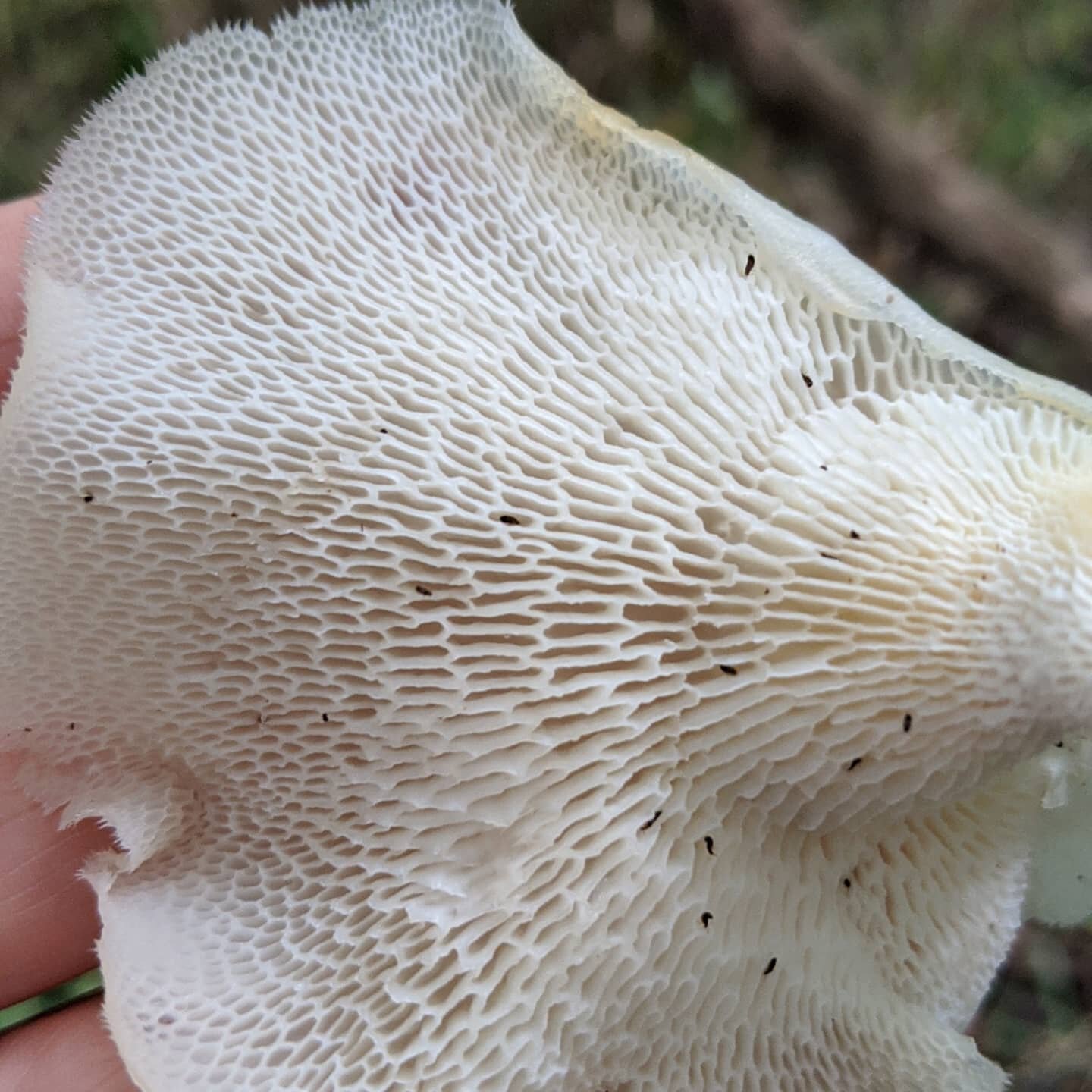
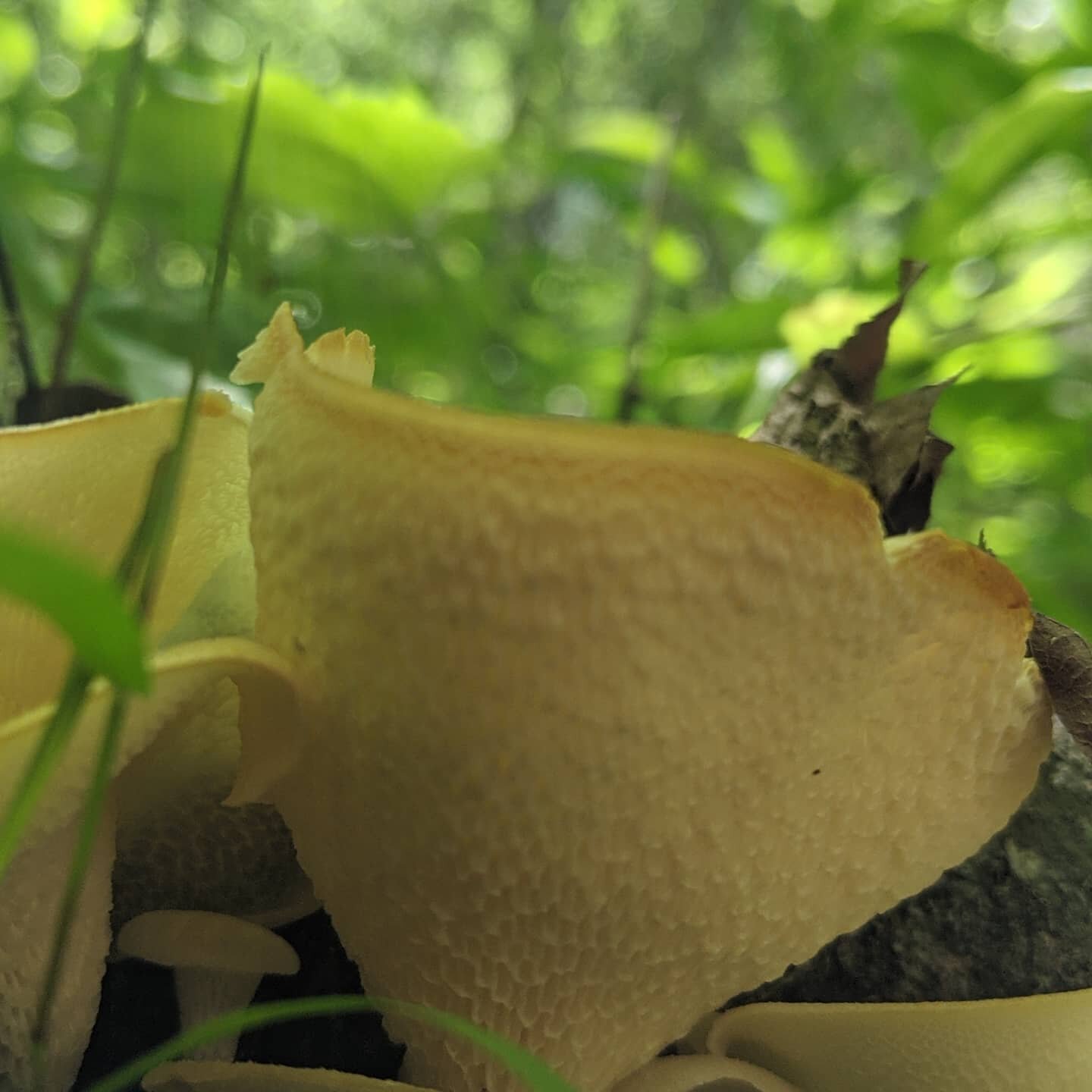
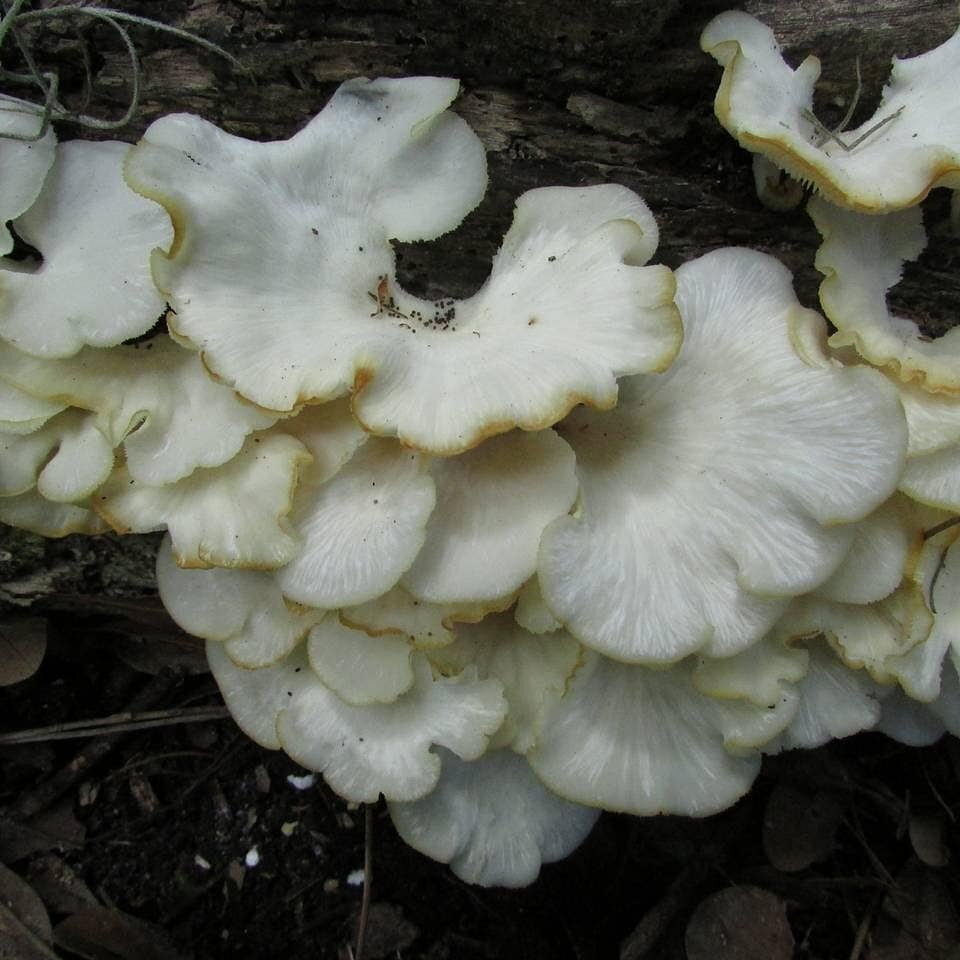
Favolus, or honeycomb fungus, is a genus of fungi in the family Polyporaceae. The fruit bodies of Favolus species are fleshy with radially arranged pores on the underside of the cap that are angular and deeply pitted, somewhat resembling a honeycomb. I tried a new recipe recently that has the taste and texture of chicharrones or pig's ears. I also discovered a new paper about its edibility. You can read more about it on our blog.

Old-Man-of-the-Woods, Strobilomyces strobilaceusttet is one of North America's most unusual edible wild mushroom. It is a dark, scurfy fungus that is gray-white with tufts of black hair on the cap and a fine layer of dark fur on the mushroom's stem. The species is in the Boletaceae family which means it has pores. They are small; angular; grayish, bruising reddish then black. The stalk is slightly narrower toward the cap usually with one or two ring zones. The partial veil is grayish and sometimes it leaves woolly ring zones on the stalk. It grows on the ground in mixed hardwood forests and on occasion under a conifer. It especially likes oaks.
Not a choice edible but the young fungi have a mellow, earthy flavour. Must be cooked.
As always, if you are trying a new mushroom, confirm the ID with an expert, then try a small amount to make sure you don't have an allergic reaction. Texas Mushroom Identification Facebook group is great for quick responses and ID help. Also, don't forget to add your finds on the Mushrooms of Texas project on iNaturalist.
Follow my foraging adventures @forage.atx.
PHOTOS: Myco-blitz at Balcones Canyonland Preserve


Thanks to Jeremy Hull @bluetip84 and everyone from Balcones Canyonland Preserve @bcp_traviscounty for having us out for our first Myco-blitz! We are so grateful for all of the volunteers that joined us and observed the cycle of mushroom life with us! Even though things are starting to get toasty we observed a lot of diversity of mushrooms and logged the photos on iNaturlist.org.
Here is a slideshow of a few of the observations. You can find more on iNaturalist.
1. Group photo of volunteers
2. #Dacrymycetaceae Jelly fungus
3. Huge cross section of #Xylaria #deadmansfingers. We spotted quite a few different species of this fungus in various stages of growth.
4. #Omphalotussubilludens #jackolanternmushroom This mushroom glows in the dark and you can check out @chungwei3wei beautiful photography of this bioluminescence mushroom.
5. We found several dried #Cantharellus Chanterelles next to different types of oaks including Live Oaks and maybe Post Oaks. Some were even growing under a tarp that was being used in a restoration project to remove an invasive ground cover.
6. #Sarcoscyphaaustriaca #scarletelfcup
7. #Pleurotusostreatus #oystermushroom
We can't wait to come back after the next good rain and continue to explore the biodiversity!
June Forage Forecast

As we continue to get rain, keep a look out for Chanterelles, the popular edible mushroom Cantharellus. In Central Texas, they are symbiotic with older Texas Live Oak trees that have a lot of leaf matter, making the ground spongy. Trees near creeks and where water is flowing is very important. Chanterelles need a lot of rain to fruit and they like the torrential Texas-style flash floods. They are orange, yellow or even white, meaty and funnel-shaped and can be found in clusters but most of the time they are found popping up as individual mushrooms as shown in the picture. On the lower surface, underneath the smooth cap, most species have rounded, forked folds that run almost all the way down the stipe, which tapers down seamlessly from the cap. Many species emit a fruity aroma, reminiscent of apricots, and often have a mildly peppery taste. The Jack-o-lantern, Omphalotus illudens is considered the false chanterelle in Texas so be sure to know the morphology and difference. They do sometimes grow around the same time of year but their habitat and morphology is different.
Auricularia or wood ear an edible jelly fungus pops up on downed hardwood limbs a few days after a good rain. Wood ear mushrooms are a popular ingredient in many Chinese dishes such as hot and sour soup, and are also used in Chinese medicine. It is also used in Ghana as a blood tonic. Modern research into possible medical applications has variously concluded that wood ear has anti-tumor, hypoglycemic, anticoagulant and cholesterol-lowering properties.
Favolus, or honeycomb fungus, is a genus of fungi in the family Polyporaceae. The fruit bodies of Favolus species are fleshy with radially arranged pores on the underside of the cap that are angular and deeply pitted, somewhat resembling a honeycomb. I tried a new recipe recently that has the taste and texture of chicharrones or pig's ears. I also discovered a new paper about its edibility. You can read more about it on our blog.

The Lobster mushroom, Hypomyces lactifluorum, contrary to its common name, is not a mushroom, but rather a parasitic ascomycete fungus that grows on certain species of mushrooms, turning them a reddish orange color that resembles the outer shell of a cooked lobster. H. lactifluorum specifically attacks members of the genera Lactarius and Lactifluus (milk-caps), and Russula (brittlegills), such as Russula brevipes and Lactifluus piperatus in North America. At maturity, H. lactifluorum thoroughly covers its host, rendering it unidentifiable. I spotted the Lobster shown in the photo on July 4, 2019 after we had consistent rain. Just yesterday, I spotted fresh Lactarius and Russula mushrooms. And if we continue to get rain, Hypomyces may be parasitizing these mushrooms. Several members of the community including Hi-Fi Myco have already seen them this year!
Lobster mushrooms are widely eaten and enjoyed fresh.They are commercially marketed and sometimes found in grocery stores. They have a seafood-like flavor and a firm, dense texture.

Old-Man-of-the-Woods, Strobilomyces strobilaceusttet is one of North America's most unusual edible wild mushroom. It is a dark, scurfy fungus that is gray-white with tufts of black hair on the cap and a fine layer of dark fur on the mushroom's stem. The species is in the Boletaceae family which means it has pores. They are small; angular; grayish, bruising reddish then black. The stalk is slightly narrower toward the cap usually with one or two ring zones. The partial veil is grayish and sometimes it leaves woolly ring zones on the stalk. It grows on the ground in mixed hardwood forests and on occasion under a conifer. It especially likes oaks.
Not a choice edible but the young fungi have a mellow, earthy flavour. Must be cooked.
As always, if you are trying a new mushroom, confirm the ID with an expert, then try a small amount to make sure you don't have an allergic reaction. Texas Mushroom Identification Facebook group is great for quick responses and ID help. Also, don't forget to add your finds on the Mushrooms of Texas project on iNaturalist.
Follow my foraging adventures @forage.atx.
PHOTOS: Zilker Mushroom Project: Chanterelle Dreams & Purple Mystery Mushroom
🌌🍄🌟 Cosmic!!! Magic!!! Here a some photos from the member foray at Zilker Park on Sunday May 30, 2021. The Zilker Park trails were TEAMING with mushrooms especially mycorrhizal fungi that surfaced with the continuous rain.
We observed 11 new species in the area of the Zilker Mushroom Project on iNaturalistt bringing the total number to 89 species observed.
We will be sending the purple speckled “cosmic” species off to get DNA analysis by Alan Rockefeller. We thought it was a #cortinarious species but the spore print is white (cortInarious has rust colored spores)! Jared McRay @jredeye311 gave us some tips and we think it is a mushroom from Africa in the Asproinocybe genus.
There were A LOT of chanterelles flushing and we will be sending a specimen to David Lewis for analysis and to store in the herbarium at Texas A&M.
With all the continuous rain, we hope to hold another member foray soon. If you're not yet a member, now is the time to jump on it!! As Sam the Fungi would say "LET'S GO!!!"




Foraging and Cooking the Honeycomb Fungus, Favolus
by @forage.atx
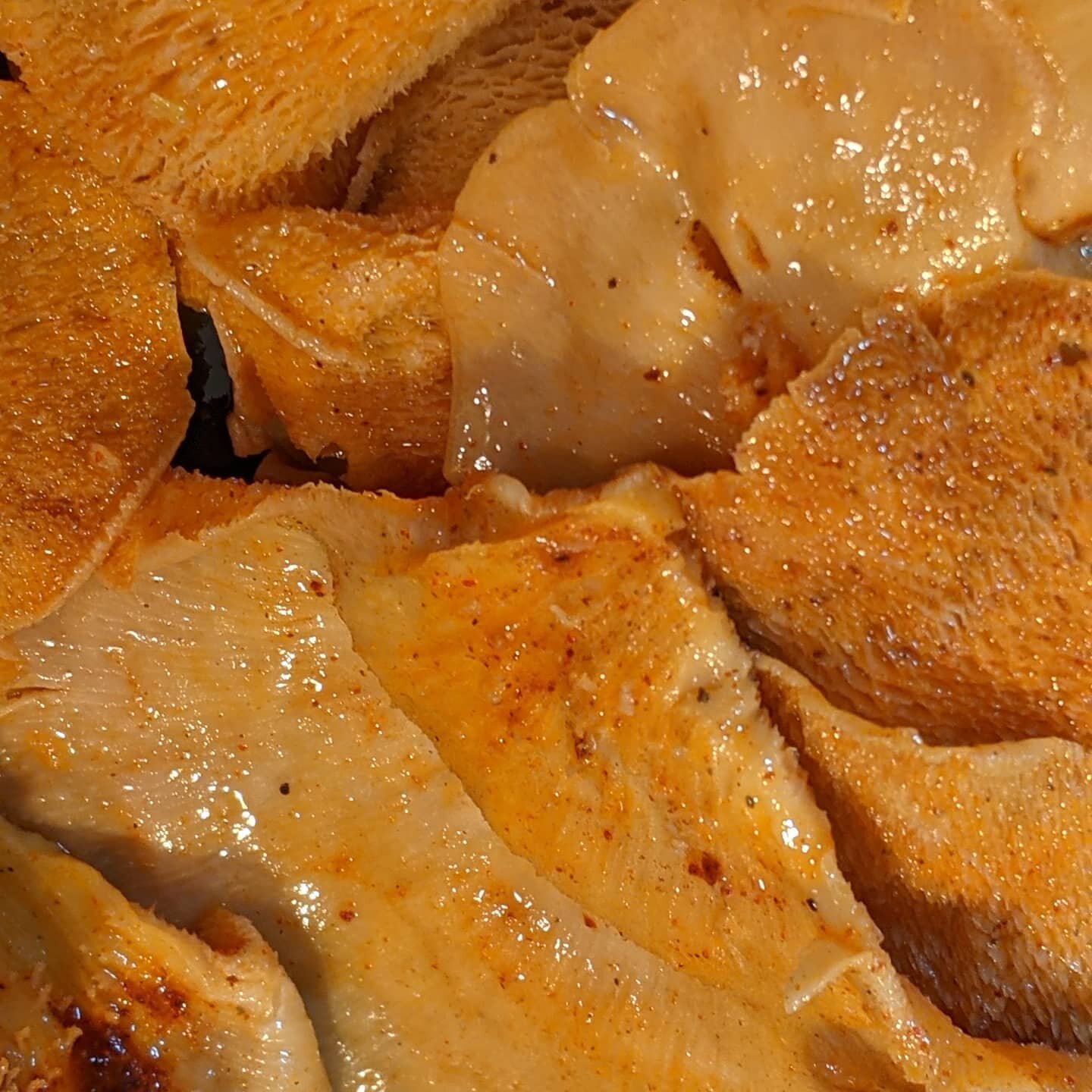
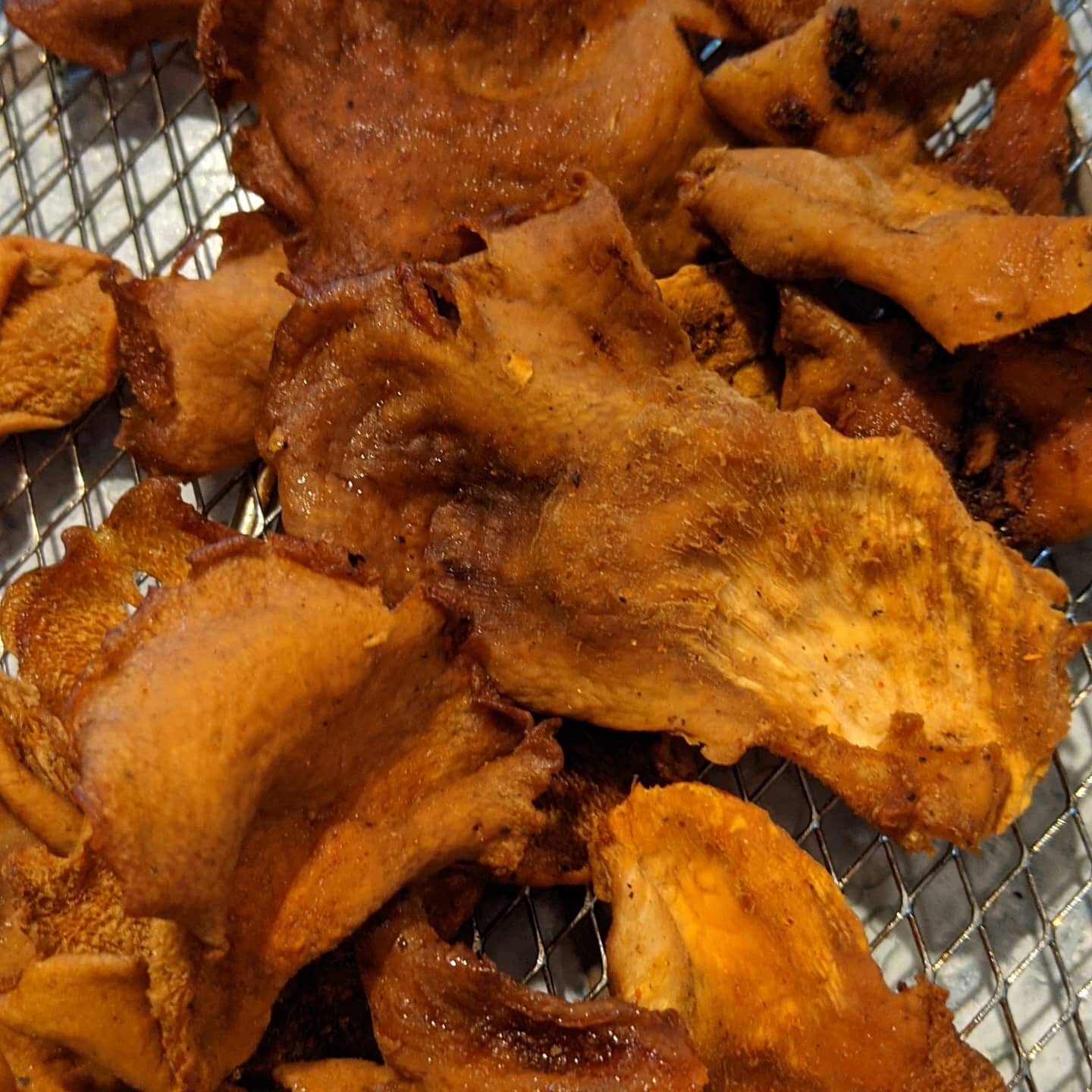
I tried a new recipe with a tropical honeycomb fungus or Favolus (teniculus or brasiliensis sp.?). As things start to heat up they flush after a good rain. We spotted a flush on what appeared to be a dying root on the last Centra lTexas Mycology foray but they were older, yellowing, and already being enjoyed by the bugs. Yvonne and Josh gifted me a large amount they spotted a few days prior. 🙏 It's not a choice edible mostly because of the texture and there is not much information on the edibility of this mushroom online. I've eaten them for several years and they take on a chip-like quality and absorb flavor really well because of the shape of their gills.
In 2020 a paper was published on the commercial cultivation, nutrition and food potential of this tropical mushroom in the Amazon where it is native and collected by the Yanomami people, who already sell more than 10 Amazon mushroom species. You can learn more about their mushroom culture in this film by @beatrizmaues.
"The mushrooms collected in the study present an average of 7.4% humidity, 27% crude protein, 1.5% ether extract, 17% crude fiber, and 1.7% mineral matter. Compared with other species of edible mushrooms, both wild and cultivated, the moisture content of F. brasiliensis (7.40%) is low for species of the genus Pleurotus. For example, the humidity varies from 87% to more than 90%, similar to that found in Lentinus crinitus, another mushroom native to Brazil and also consumed by the Yanomami people. Thus, F. brasiliensis has the potential to be used in human foods."
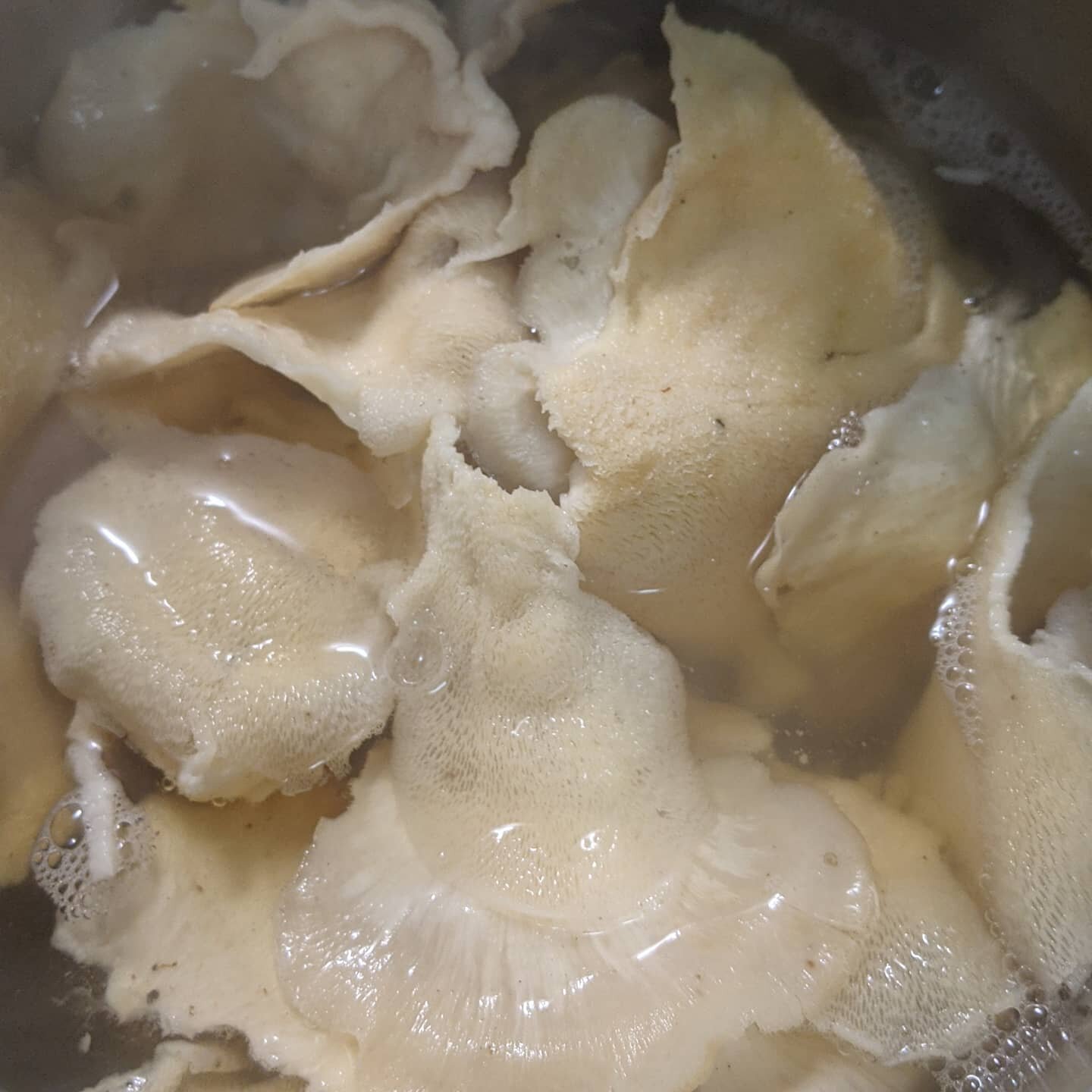
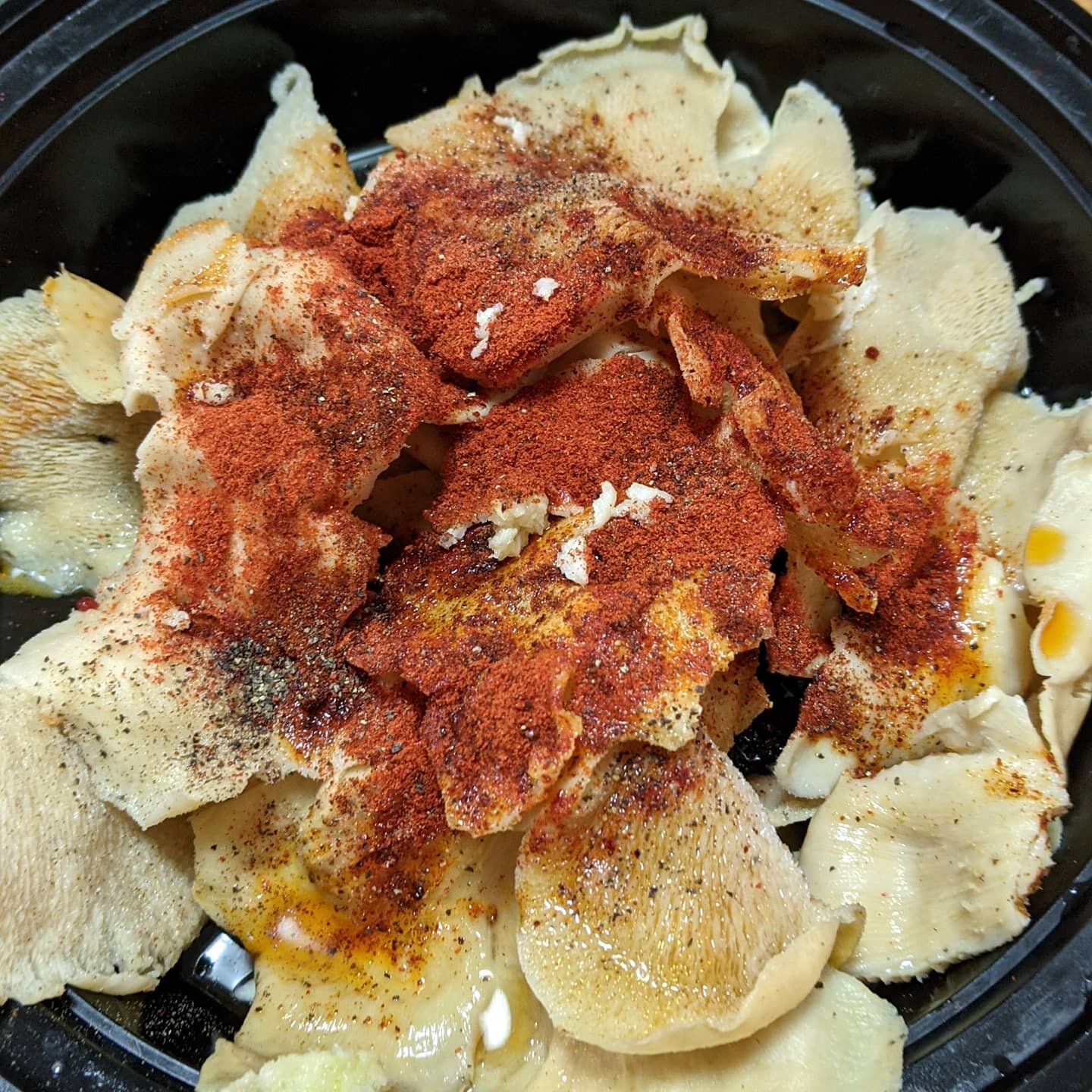
I tried a new tip I learned from Myers Mushrooms_eptx and I boiled them first. Andre does this for making oyster mushroom jerky. I then marinated in rice wine, smoked paprika, red pepper, black pepper, salt. I then air-fried at 140 for 6 hours. The result tasted has the texture of chicharrones or pigs ears! So many nutritional benefits and meat alternatives in mushrooms! 🪅
FAVOLUS! 🍄❣️

May Forage Forecast
There are a lot of different types of edible mushrooms poppin' off in May and after all the recent rain, the following are mushrooms to look out for in Central Texas. Click images to learn more and to see where to find them.


There are a lot of different types of edible mushrooms poppin' off in May and after all the recent rain, the following are mushrooms to look out for in Central Texas.
CHANTERELLE: Keep a look out for the popular edible mushroom Cantharellus. In Central Texas, they are symbiotic with older Texas Live Oaks trees that have a lot of leaf matter, making the ground spongy. Trees near creeks and where water is flowing is very important. Chanterelles need a lot of rain to fruit and they like the torrential Texas-style flash floods. They are orange, yellow or even white, meaty and funnel-shaped and can be found in clusters but most of the time they are found popping up as individual mushrooms as shown in the picture. On the lower surface, underneath the smooth cap, most species have rounded, forked folds that run almost all the way down the stipe, which tapers down seamlessly from the cap. Many species emit a fruity aroma, reminiscent of apricots, and often have a mildly peppery taste. The Jack-o-lantern, Omphalotus illudens is considered the false chanterelle in Texas so be sure to know the morphology and difference. They do sometimes grow around the same time of year but their habitat and morphology is different.
OYSTER: Continue to keep an eye out for Oyster Mushrooms, Pleurotus ostreatus grows on dead black willows and oaks along creeks and rivers.
WOOD EAR: In the Auricularia family and are an edible jelly fungus that pops up on downed hardwood limbs just a few days after a good rain. The fruiting body is distinguished by its noticeably ear-like shape and brown colouration which is because wood ears have more melanin which also helps protect them from harsh environments such as those found in areas of radiation exposure. All good things for taking a melfie.
A 2012 paper with the forbidding title Compton Scattering by Internal Shields Based on Melanin-Containing Mushrooms Provides Protection of Gastrointestinal Tract from Ionizing Radiation describes this work. The authors fed mice a wood ear mushrooms an hour before giving them a powerful 9 Gy dose with the beta emitter Cesium137. For perspective, anything over ~0.1 Gy is considered a dangerously high dose for humans. All the control mice died in 13 days while ~90% of the mushroom-fed ones survived. Mice fed a white mushroom (porcini) died almost as fast as the controls, but those fed white mushrooms supplemented with melanin also survived.
More recently, research from Northwestern University isolated the naturally occurring melanin from the fungal cells, etching biomaterials away and leaving a melanin-containing shell - "fungal ghosts" for their hollow, ghost-like quality.
Wood ears are grown commercially (not in Texas yet???) and are a popular ingredient in many Chinese dishes. I had them recently in a congee with 5 different foraged mushrooms.
They are also used in Chinese medicine. A soup containing the species is used medicinally for dealing with colds and fevers by reducing the heat of the body It is also used in Ghana as a blood tonic. Modern research into possible medical applications has variously concluded that wood ear has anti-tumor, hypoglycemic, anticoagulant and cholesterol-lowering properties.
RINGLESS HONEY MUSHROOMS: Desarmillaria tabescens pop up in the spring and fall in large clusters at the bases of dead or dying trees (when the clusters appear to be terrestrial they are actually growing from underground wood). This parasitic fungus is part of a genus that is the largest living organism ever found on this planet.
JACKSON'S SLENDER CAESAR Amanita jacksonii, or Jackson's Slender Caesar, is an edible mushroom found in oak and pine forests. They are more common in East Texas but they can be found in Central Texas. It is easy to spot with its brilliant red cap that fades from the outer edge to the center with age. The stem of the mushroom is yellow with orange fibrils. The cap of the mushroom can grow to 4 inches; oval at first, then becoming convex with a central bump. the gills are crowded, orange-yellow, and free from the stem. The flavor is of hazelnuts and chestnuts.
As always, if you are trying a new mushroom, confirm the ID with an expert, then try a small amount to make sure you don't have an allergic reaction. Texas Mushroom Identification Facebook group is great for quick responses and ID help. Also, don't forget to add your finds on the Mushrooms of Texas project on iNaturalist.
Follow my foraging adventures @forage.atx.

May Member Giveaway
Grow-your-own Lion’s Mane Kit from Hi-Fi-Myco
Hi-Fi Myco is Austin’s first urban mushroom farm. This month's member mushroom giveaway is the Blue Oyster, Pleurotus Ostreatus. The blue oyster mushroom grows in large clusters and takes on the typical shelf-like shape of the Pleurotus species. The size and shape can vary immensely depending on the growing conditions. All you need to do is spritz with water and the mushroom clusters start out with deep blue coloring and eventually turn grey as they age. The fruit is usually thick and meaty and very versatile for culinary uses. Oyster mushrooms also contain a plethora of valuable constituents like proteins, amino acids, antioxidants, vitamins and minerals. They are rich in vitamin B and vitamin D. Iron and potassium are also present in these mushrooms.
Kits and fresh mushrooms are available for purchase on their website for pick-up at the following Farmers Market's: Lakeline, Sunset Valley, Downtown, New Braunfels, and Mueller.
Become a member of CTMS and be entered in a win!
Winner will be announced in June.


PHOTOS: Zilker Mushroom Project, Spring Edition
Here are a few photos from spring foray in Zilker Park! We continued to observe and ID mushrooms for the Zilker Mushroom iNaturalist Project.
It was a humid day, perfect conditions for mushrooms and we didn't get out of the parking lot before seeing a Stalked Lattice Stinkhorn, Lysurusperi phragmoides. The only screams heard were from the stench and not a spontaneous orgasm.
Here are a few photos from spring foray in Zilker Park! We continued to observe and ID mushrooms for the Zilker Mushroom iNaturalist Project.
It was a humid day, perfect conditions for mushrooms and we didn't get out of the parking lot before seeing a Stalked Lattice Stinkhorn, Lysurusperi phragmoides. The only screams heard were from the stench and not a spontaneous orgasm.


FROM COLORADO.EDU:
"Flies are attracted to the cap of the mushroom by stinky compounds emanating from a thick slime that flies and other insects drink. But the slime is also a dense suspension of spores, which are single cells that serve the same function as seeds. Bees and beetles also eat the cap or gleba and inadvertently swallow spores. To insure spore dispersal, the slime has a potent laxative that induces flies to dribble tarry feces rich in spores, usually in close proximity to the stinkhorn."
Not only did we witness flies and beetles collecting spores, it was a treat to hear the biodata from the stinkhorn collected by @winkwinketc and @ornate_coleman for the upcoming Octopus Project audio-visual performance on May 1st. Tickets go on sale on April 15.

April Foraging Forecast
Shoehorn Oyster Mushrooms, Hohenbuehelia petaloides is distinctively shaped; its "petaloid" habit often makes it look like a shoehorn with gills, or a rolled-up funnel.
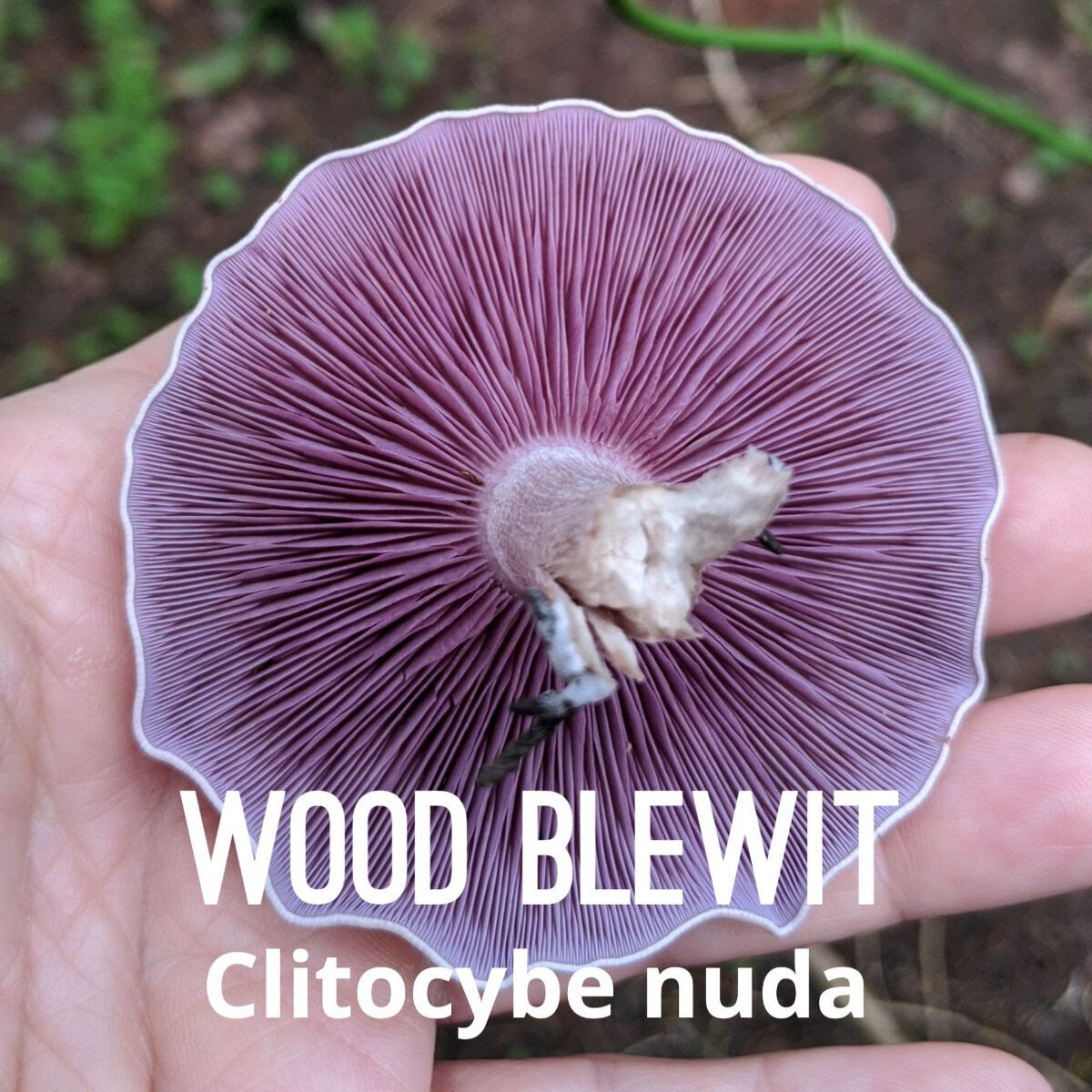


WOOD BLEWIT: Keep a look out for the edible Wood Blewit, Clitocybe Nuda. They also fruit after a freeze. This distinct lavender-colored mushroom is found in hardwood leaf litter and is a great decomposer. Be warned because there are deadly, poisonous look-alikes in the Cortinarius family that grow in similar conditions. It's important to do a spore print AND also confirm the ID with an expert. The spores of the wood blewit are light pink to white and the spores of Cortinarius mushrooms are rust colored. I wrote up a blog post with lots of photos and details to help you identify this mushroom.
Fresh wood blewits are great with eggs in breakfast tacos. As they get older they become more tan and iridescent colored on the cap and taste bitter. I throw the older wood blewits my compost leaf pile because they are such great decomposers and will colonize and grow in hardwood leaf litter.
SHOEHORN OYSTER: Shoehorn Oyster Mushrooms, Hohenbuehelia petaloides is distinctively shaped; its "petaloid" habit often makes it look like a shoehorn with gills, or a rolled-up funnel. Other identifying features include its fairly crowded whitish gills, a white spore print, mealy odor and taste—and, under the microscope, gorgeous "metuloids" (thick-walled pleurocystidia). It often appears in clusters in urban, semi-urban, or even household settings, and is frequently associated with woody debris (though it does not usually grow directly from dead wood) or cultivated soil. However, it can be found in woodland settings, too, where it tends to grow alone or in small groups.
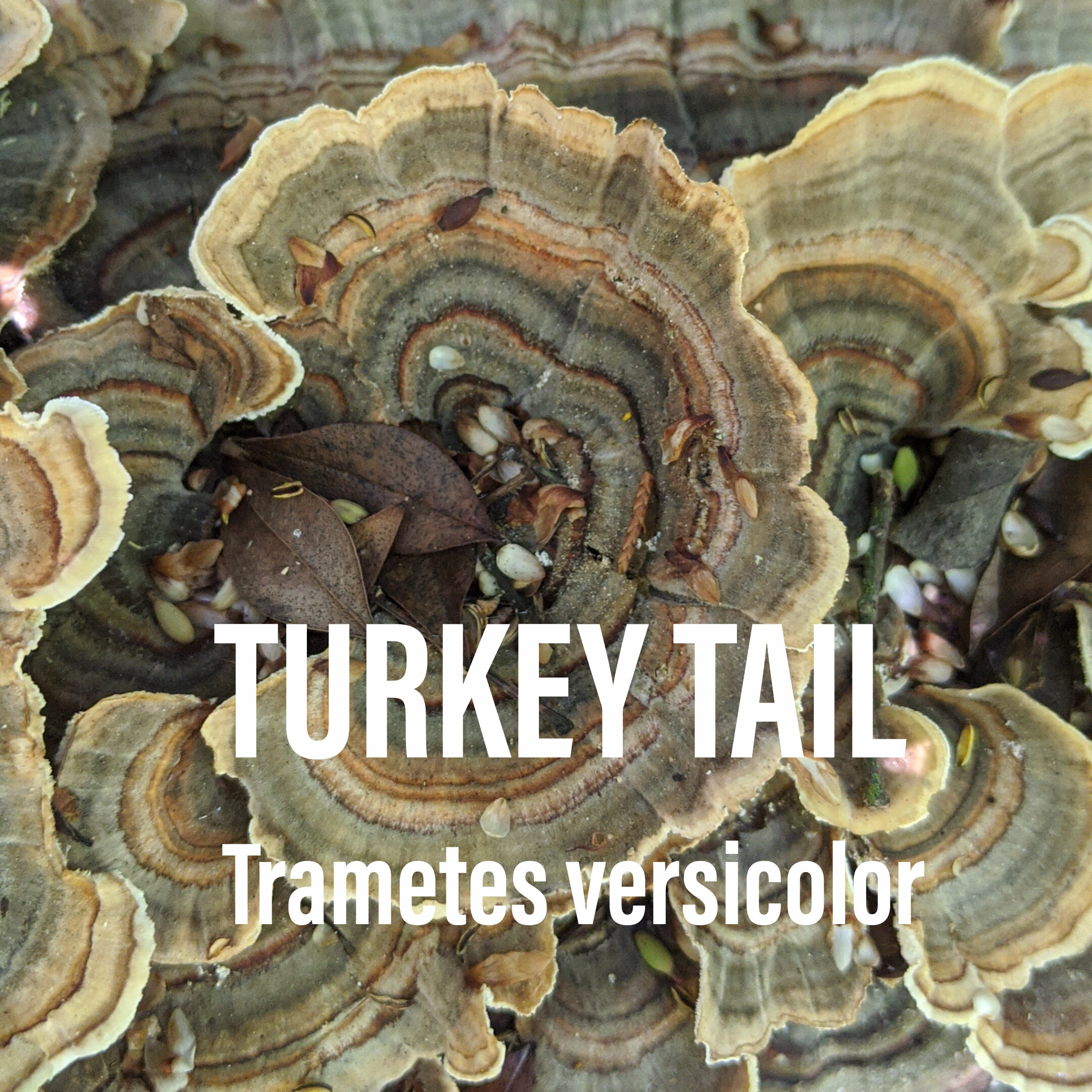
TURKEY TAIL: The medicinal mushroom Turkey Tail, Trametes versicolor will also flush after rain on downed hardwood logs, stumps and, occasionally, on conifer wood. Make sure the underside is porous and white because it can look a lot like False turkey tail. Mushroom Expert has a useful check list to determine if it is true medicinal turkey tail.
WOOD EAR: Auricularia americana, an edible jelly fungus pops up on downed hardwood limbs a few days after a good rain. Wood ear mushrooms are a popular ingredient in many Chinese dishes such as hot and sour soup, and is also used in Chinese medicine. It is also used in Ghana as a blood tonic. Modern research into possible medical applications has variously concluded that wood ear has anti-tumor, hypoglycemic, anticoagulant and cholesterol-lowering properties.
As always, if you are trying a new mushroom, confirm the ID with an expert, then try a small amount to make sure you don't have an allergic reaction. Texas Mushroom Identification Facebook group is great for quick responses and ID help. Also, don't forget to add your finds on the Mushrooms of Texas project on iNaturalist.
Follow my foraging adventures @forage.atx.