

PHOTOS: Zilker Mushroom Project, Spring Edition
Here are a few photos from spring foray in Zilker Park! We continued to observe and ID mushrooms for the Zilker Mushroom iNaturalist Project.
It was a humid day, perfect conditions for mushrooms and we didn't get out of the parking lot before seeing a Stalked Lattice Stinkhorn, Lysurusperi phragmoides. The only screams heard were from the stench and not a spontaneous orgasm.
Here are a few photos from spring foray in Zilker Park! We continued to observe and ID mushrooms for the Zilker Mushroom iNaturalist Project.
It was a humid day, perfect conditions for mushrooms and we didn't get out of the parking lot before seeing a Stalked Lattice Stinkhorn, Lysurusperi phragmoides. The only screams heard were from the stench and not a spontaneous orgasm.


FROM COLORADO.EDU:
"Flies are attracted to the cap of the mushroom by stinky compounds emanating from a thick slime that flies and other insects drink. But the slime is also a dense suspension of spores, which are single cells that serve the same function as seeds. Bees and beetles also eat the cap or gleba and inadvertently swallow spores. To insure spore dispersal, the slime has a potent laxative that induces flies to dribble tarry feces rich in spores, usually in close proximity to the stinkhorn."
Not only did we witness flies and beetles collecting spores, it was a treat to hear the biodata from the stinkhorn collected by @winkwinketc and @ornate_coleman for the upcoming Octopus Project audio-visual performance on May 1st. Tickets go on sale on April 15.

April Foraging Forecast
Shoehorn Oyster Mushrooms, Hohenbuehelia petaloides is distinctively shaped; its "petaloid" habit often makes it look like a shoehorn with gills, or a rolled-up funnel.
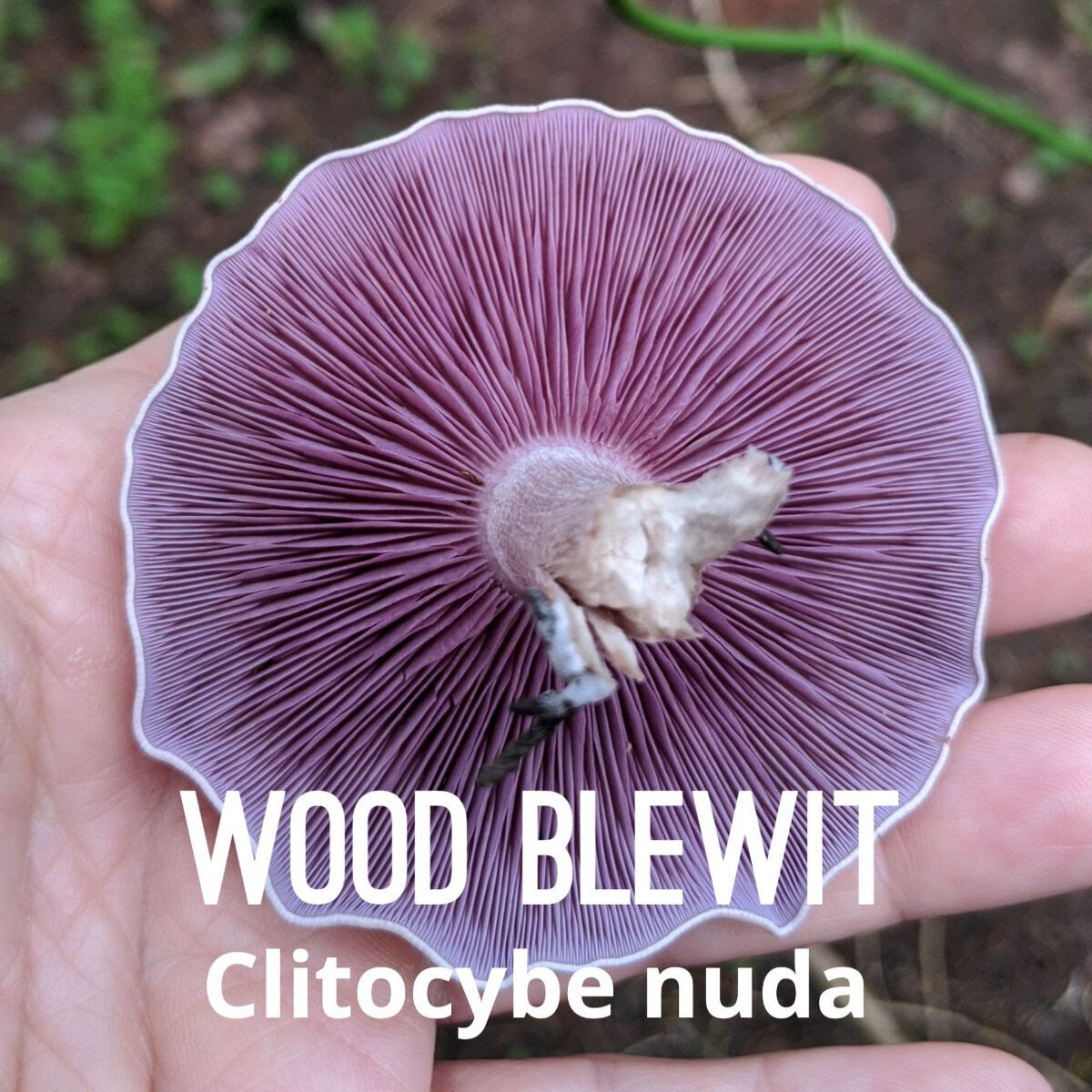


WOOD BLEWIT: Keep a look out for the edible Wood Blewit, Clitocybe Nuda. They also fruit after a freeze. This distinct lavender-colored mushroom is found in hardwood leaf litter and is a great decomposer. Be warned because there are deadly, poisonous look-alikes in the Cortinarius family that grow in similar conditions. It's important to do a spore print AND also confirm the ID with an expert. The spores of the wood blewit are light pink to white and the spores of Cortinarius mushrooms are rust colored. I wrote up a blog post with lots of photos and details to help you identify this mushroom.
Fresh wood blewits are great with eggs in breakfast tacos. As they get older they become more tan and iridescent colored on the cap and taste bitter. I throw the older wood blewits my compost leaf pile because they are such great decomposers and will colonize and grow in hardwood leaf litter.
SHOEHORN OYSTER: Shoehorn Oyster Mushrooms, Hohenbuehelia petaloides is distinctively shaped; its "petaloid" habit often makes it look like a shoehorn with gills, or a rolled-up funnel. Other identifying features include its fairly crowded whitish gills, a white spore print, mealy odor and taste—and, under the microscope, gorgeous "metuloids" (thick-walled pleurocystidia). It often appears in clusters in urban, semi-urban, or even household settings, and is frequently associated with woody debris (though it does not usually grow directly from dead wood) or cultivated soil. However, it can be found in woodland settings, too, where it tends to grow alone or in small groups.
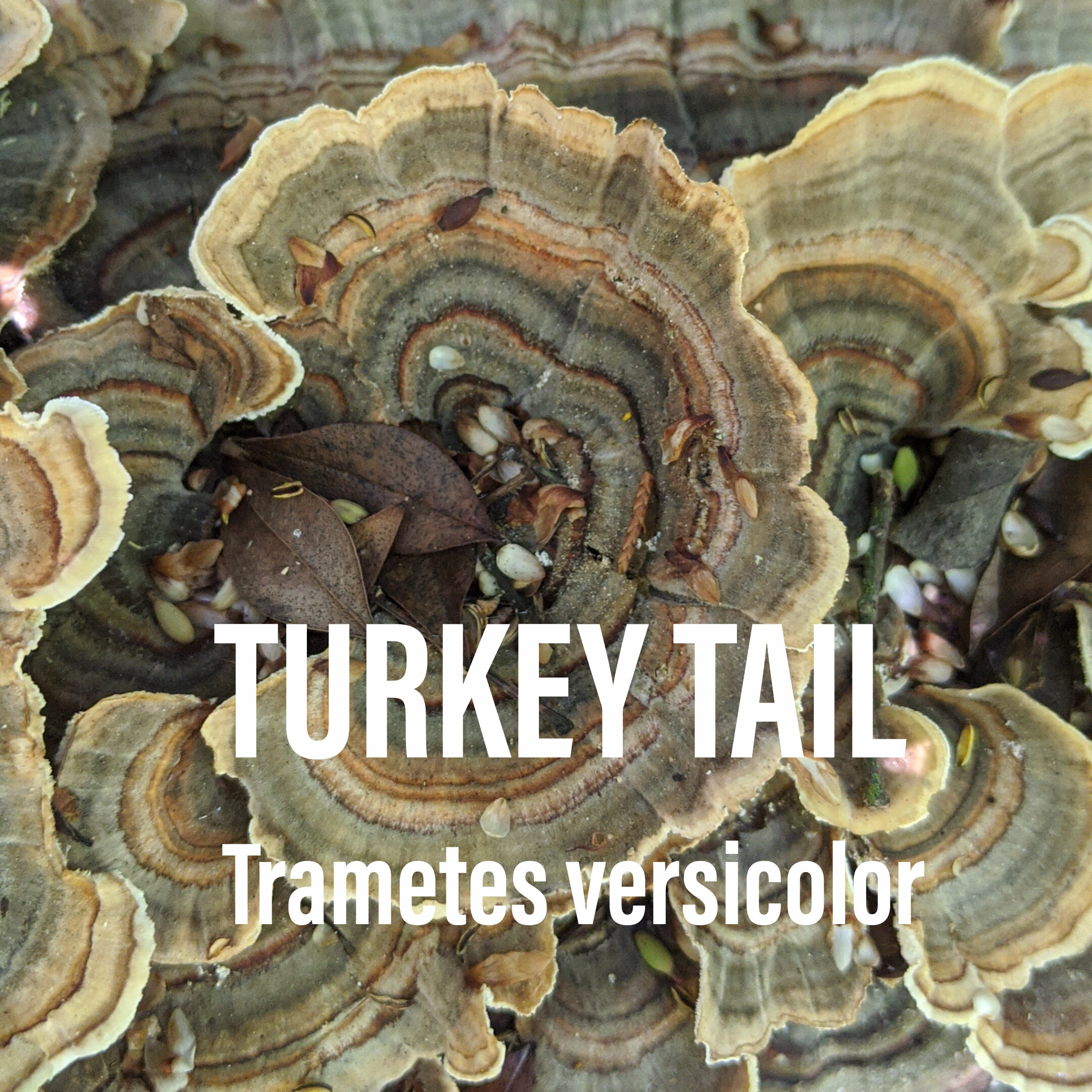
TURKEY TAIL: The medicinal mushroom Turkey Tail, Trametes versicolor will also flush after rain on downed hardwood logs, stumps and, occasionally, on conifer wood. Make sure the underside is porous and white because it can look a lot like False turkey tail. Mushroom Expert has a useful check list to determine if it is true medicinal turkey tail.
WOOD EAR: Auricularia americana, an edible jelly fungus pops up on downed hardwood limbs a few days after a good rain. Wood ear mushrooms are a popular ingredient in many Chinese dishes such as hot and sour soup, and is also used in Chinese medicine. It is also used in Ghana as a blood tonic. Modern research into possible medical applications has variously concluded that wood ear has anti-tumor, hypoglycemic, anticoagulant and cholesterol-lowering properties.
As always, if you are trying a new mushroom, confirm the ID with an expert, then try a small amount to make sure you don't have an allergic reaction. Texas Mushroom Identification Facebook group is great for quick responses and ID help. Also, don't forget to add your finds on the Mushrooms of Texas project on iNaturalist.
Follow my foraging adventures @forage.atx.

April Member Giveaway
This month's member mushroom giveaway is the Blue Oyster, Pleurotus Ostreatus. The blue oyster mushroom grows in large clusters and takes on the typical shelf-like shape of the Pleurotus species.
Grow-your-own Lion’s Mane Kit from Hi-Fi-Myco
Hi-Fi Myco is Austin’s first urban mushroom farm. This month's member mushroom giveaway is the Blue Oyster, Pleurotus Ostreatus. The blue oyster mushroom grows in large clusters and takes on the typical shelf-like shape of the Pleurotus species. The size and shape can vary immensely depending on the growing conditions. All you need to do is spritz with water and the mushroom clusters start out with deep blue coloring and eventually turn grey as they age. The fruit is usually thick and meaty and very versatile for culinary uses. Oyster mushrooms also contain a plethora of valuable constituents like proteins, amino acids, antioxidants, vitamins and minerals. They are rich in vitamin B and vitamin D. Iron and potassium are also present in these mushrooms.
Kits and fresh mushrooms are available for purchase on their website for pick-up at the following Farmers Market's: Lakeline, Sunset Valley, Downtown, New Braunfels, and Mueller.
Become a member of CTMS and be entered in a win!
Winner will be announced in May.


PART 6: Grow Mushrooms Using Trench Composting Method
Mushroom blocks are made from sawdust and grains, and they are what many farms use to cultivate their mushrooms on. They will typically fruit about 4 times, but with increasingly longer wait times and smaller yields. For this reason, most farms restock after a harvest or two, and will sell their spent blocks very cheaply to the public. Get in touch with your local mushroom farm! If you are in Austin, learn how how you can get recycled mushroom blocks for your garden.
In this video we show you how to grow culinary mushrooms in your garden using mushroom grow blocks from HiFiMyco. It's a great way to build your soil by adding organic matter. We are joined by Carter Humphrey from SmallHold and the Myco Research Station.
Mushroom blocks are made from sawdust and grains, and they are what many farms use to cultivate their mushrooms on. They will typically fruit about 4 times, but with increasingly longer wait times and smaller yields. For this reason, most farms restock after a harvest or two, and will sell their spent blocks very cheaply to the public.
If you are in Austin, you can sign up to get recycled mushroom blocks for your garden.
If you are not from Austin, find a mushroom farm in your area.
STEPS:
Pick a shady spot in your garden that has a lot of moisture or where you have run-off problems. They can be placed creatively in underutilized garden space. For example, a trench of blocks beside your garden pathways, or "interplanted" on the shady side of vegetables. In addition, there is evidence that King Stropharia mushrooms in the garden make for healthier root systems.
Dig an area out as deep as your blocks are tall, and place them in flush with the ground. You can also add other compostable materials like coffee grinds (rich in nitrogen) and leaves and straw (rich in carbon).
Then, top with a few inches of hardwood chips, soil and straw to keep it moist. Avoid cedar as it has anti-fungal properties.
Then just gently water like you would your other plants.
In 3-4 weeks you should see mushrooms fruiting. They will grow quickly so be sure to harvest before the spores drop and the mushroom edges curl upwards.. After 3-4 days, cut at the base and store in a brown paper bag in the fridge. They will fruit a few more times before decomposing and eventually becoming organic matter added to the soil.
RELATED videos in the series:
Part 1: How Fungi Benefits the Soil
Part 2: Grow Mushrooms on Wood Chips in The Garden
Part 3: Grow Mushrooms in a Straw Bale
Part 4: Grow Mushrooms in Containers
Part 5: Grow Mushrooms on Logs
Part 6: Grow Mushrooms using Trench Composting Method

March Member Giveaway
Become a member of CTMS and be entered in a win a Grow-At-Home Oyster Kit !
Hi-Fi Myco is Austin’s first urban mushroom farm. This month's feature mushroom giveaway is the Lion’s mane, Hericium erinaceus.
Hi-Fi Myco Oyster Mushrooms
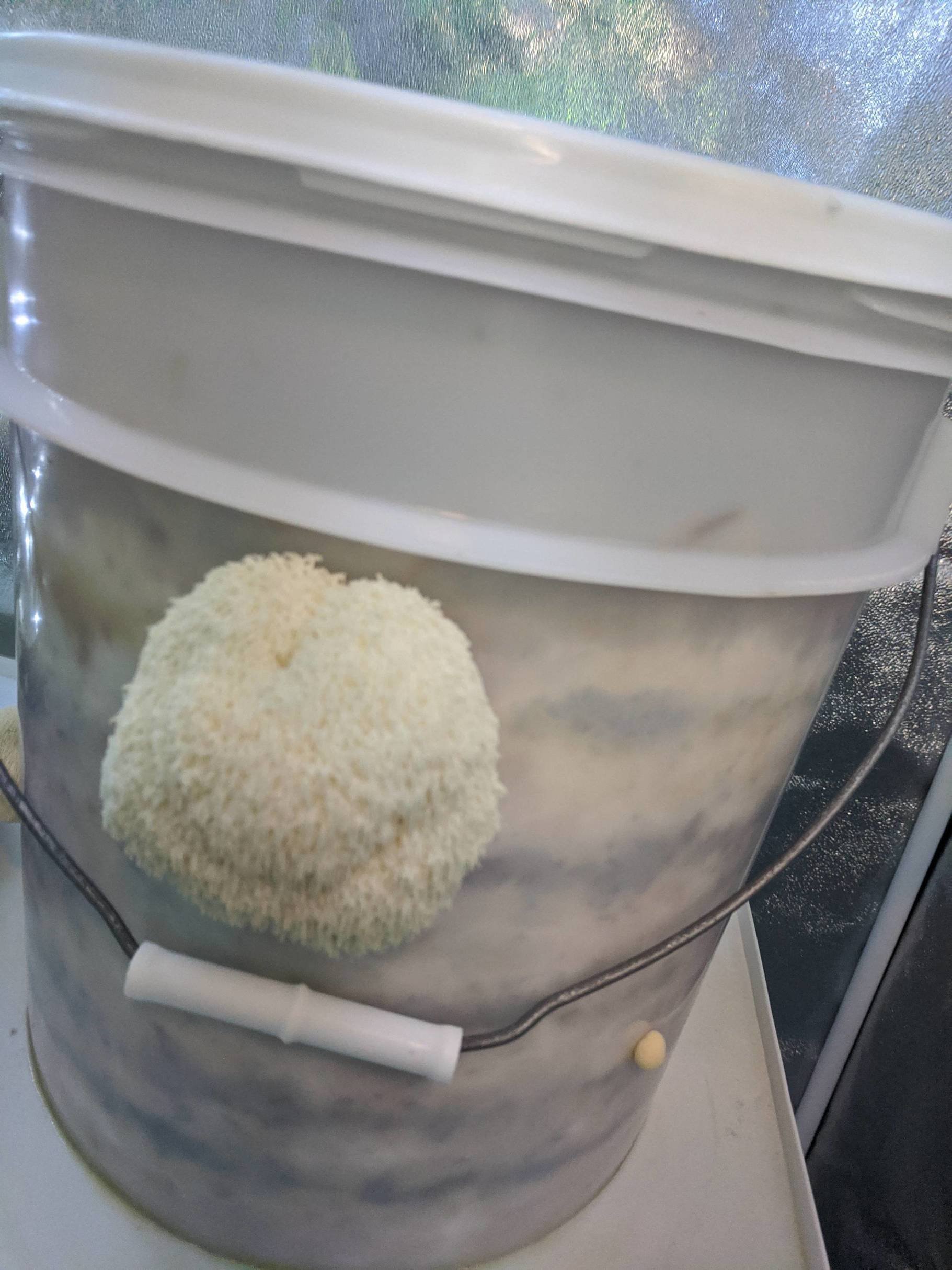
Grow-Your-Own Lion’s Mane Kit from Hi-Fi-Myco
Hi-Fi Myco is Austin’s first urban mushroom farm. This month's feature mushroom giveaway is the Lion’s mane, Hericium erinaceus. This mushroom grows in the wild in Central Texas on post oaks in the winter and is also cultivated. Here's a photo of one foraged by @forage.atx this past December. A small piece of this wild mushroom is hanging out in the fridge at Hi-Fi Myco successfully cloned! It can be identified by its long spines, occurrence on post oak hardwoods, and it is both culinary and medicinal. Its flavor may be compared to that of lobster with a scallop texture. It is great seared used in place of crab meat to make crab cakes. Lion’s mane has many of the nutritional benefits as other mushrooms, immune boosting, anti-carcinogen, much like the other adaptogens listed, this one really targets brain function. Lion’s mane can improve memory, boost cognition and focus, and protects against concussions and brain damage.
Lion’s mane mushrooms are available for purchase on their website for pick-up at the following Farmers Markets: Lakeline, Sunset Valley, Downtown, New Braunfels, and Mueller.
Become a member of CTMS and be entered in a win a Grow-At-Home Pink Oyster Kit ! (Winner will be announced in January.)

March Foraging Forecast
As the weather continues to cool, look out for the edible Wood Blewit, Clitocybe Nuda. This distinct lavender-colored mushroom is found in hardwood leaf litter and is a great decomposer.
MOREL: As the dewberries blossom, the choice edible morel, Morchella sp. starts to flush in Central Texas. These distinctive fungi have a honeycomb appearance due to the network of ridges with pits composing their caps. I'm already thinking about how to preserve morels so I can pair them with dewberries.
I found my first morels in Texas last year just as the pandemic shut everything down. SXSW was canceled and in my new found free-time I wandered near creeks looking under junipers for the honeycombed, yellow mushrooms. Morels have a mycorrhizal relationship with hardwood trees. In Texas, they are found near cedars or Juniperus ashei. They have a preference for soil with limestone and can be found near creeks but I have also observed them in boggy areas far away from creeks. They are illusive but do require moisture from rain. There is a lot of hope for this morel season because they need at least six weeks of freezing temperatures to grow but obviously they have adapted to our shorter winters in Texas. Be sure to tag us if you find any morels this season.
False Morels (Gyromitra carolina, Verpa species, Helvella species)
WOOD BLEWIT: As the weather continues to cool, look out for the edible Wood Blewit, Clitocybe Nuda. This distinct lavender-colored mushroom is found in hardwood leaf litter and is a great decomposer. Be warned because there are deadly, poisonous look-alikes in the Cortinarius family that grow in similar conditions. It's important to do a spore print AND also confirm the ID with an expert. The spores of the wood blewit are light pink to white and the spores of Cortinarius mushrooms are rust colored. I wrote up a blog post with lots of photos and details to help you identify this mushroom.
Fresh wood blewits are great with eggs in breakfast tacos. As they get older they become more tan and iridescent colored on the cap and taste bitter. I throw the older wood blewits my compost leaf pile because they are such great decomposers and will colonize and grow in hardwood leaf litter.
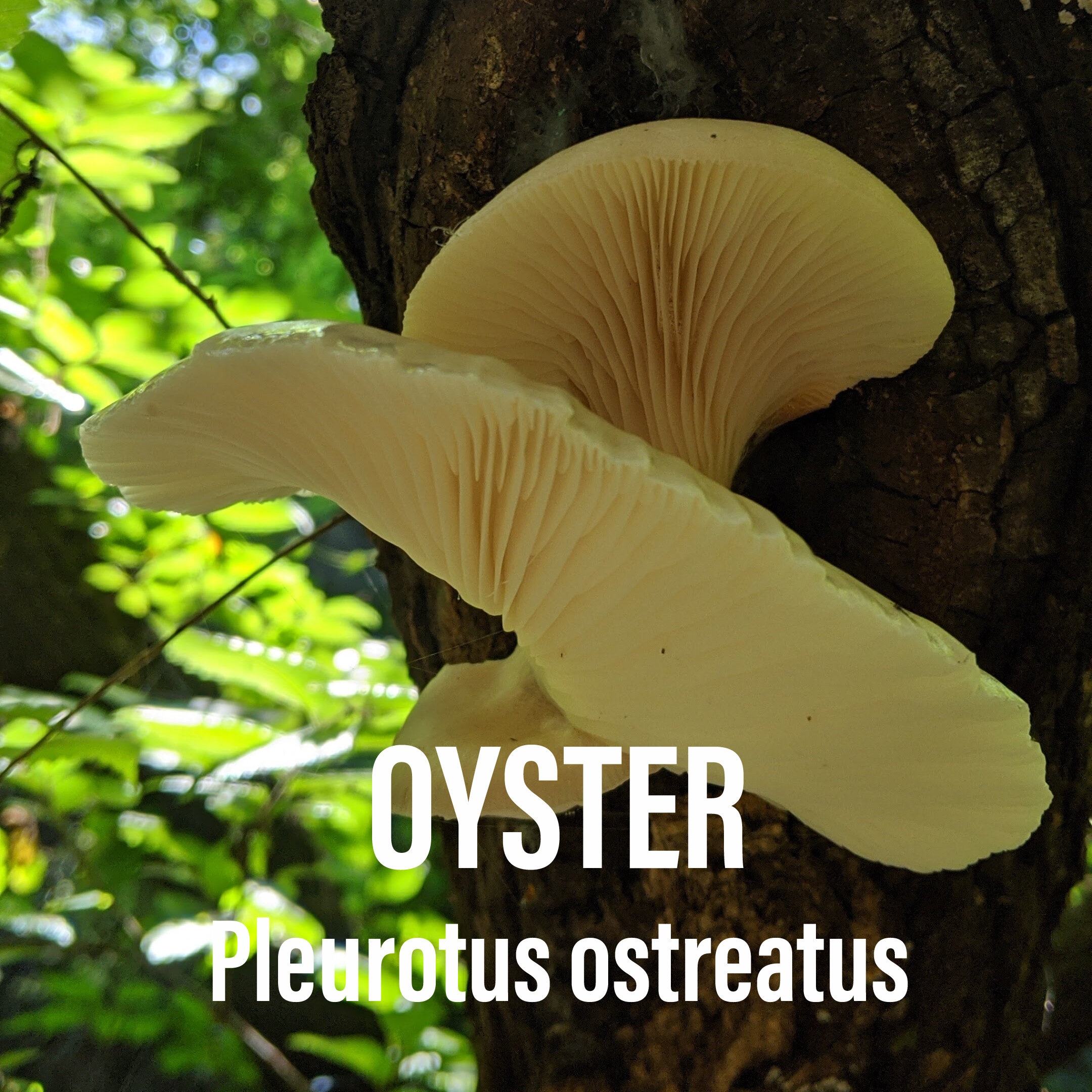
OYSTER: Continue to keep an eye out for Oyster Mushrooms, Pleurotus ostreatus grows on dead black willows and oaks. There have been several observed along creeks and rivers recently.
TURKEY TAIL: The medicinal mushroom Turkey Tail, Trametes versicolor will also flush after rain on downed hardwood logs, stumps and, occasionally, on conifer wood. Make sure the underside is porous and white because it can look a lot like False turkey tail. Mushroom Expert has a useful check list to determine if it is true medicinal turkey tail.
WOOD EAR: Auricularia americana, an edible jelly fungus pops up on downed hardwood limbs a few days after a good rain. Wood ear mushrooms are a popular ingredient in many Chinese dishes, such as hot and sour soup, and also used in Chinese medicine. It is also used in Ghana, as a blood tonic. Modern research into possible medical applications has variously concluded that wood ear has anti-tumor, hypoglycemic, anticoagulant and cholesterol-lowering properties.
As always, if you are trying a new mushroom, confirm the ID with an expert, then try a small amount to make sure you don't have an allergic reaction. Texas Mushroom Identification Facebook group is great for quick responses and ID help. Also, don't forget to add your finds on the Mushrooms of Texas project on iNaturalist.
Follow my adventures @forage.atx.


PART 5: Grow Mushrooms on Logs
Mushroom logs are a great way to incorporate fungi into your home scale or hobby enterprises. They can be placed around a garden bed or stacked in shady areas of the garden. Logs are a reliable and hardy way to grow wood eating species such as shiitakes and oysters, and are great for home-scale gardeners.
Mycology in the Garden
Mushroom logs are a great way to incorporate fungi into your home scale or hobby enterprises. They can be placed around a garden bed or stacked in shady areas of the garden. Logs are a reliable and hardy way to grow wood eating species such as shiitakes and oysters, and are great for home-scale gardeners.
In this video we show you how to inoculate logs with medicinal reishi mushrooms in your garden. It's a great way to decompose logs and add organic material to your ecosystem as well as grow medicinal mushrooms that have been used in Traditional Chinese Medicine for 4,000+ years. We are joined by Carter Humphrey from Central Texas Mycological Society and the Myco Research Station at Circle Acres.
STEPS TO GET STARTED
Besides the mushroom culture, the most important part is having the right wood. Find a hardwood log that is fresh - no more than a month old. This ensures it isn't already home to other fungi, and yours will have a clear shot at colonizing the log.
Purchase inoculated dowels for your logs - species that do well in Texas are shiitake, oyster, turkey tail, and reishi. Growing your own is quite doable, but takes setting up a clean environment at home. We recommend North Spore and Mushroom Mountain.
Once you have logs that are right for your project, cut them into lengths that are easy to handle: 2 to 4 feet with a diameter of 6 to 10 inches is ideal.
Drill holes about 1 to 1 ½ inches deep into the log in at regular intervals - about 4 to 6 inches apart in a diamond pattern, all around the log. Doing more will make it easier for the mushroom mycelium to spread through the wood and go faster.
Tap the plugs into each hole with a hammer until they are flush with the edge of the log. It's a bit like grafting a tree. Brush melted paraffin or beeswax over the hole to seal it up, which will keep it moist and protected for the first few weeks. If you do not have beeswax, you can make a seal from wet newspaper.
Some people also wax one end of the log to keep moisture in, leaving the other side unwaxed in order to allow for wicking.
Situate the logs under dappled shade, or on the shady side of a building where you can visit to check on them once a month. Near a water source is ideal - the logs should be kept moist. If they become light and dry, you'll need to wet the logs.
RELATED videos in the series:
Part 1: How Fungi Benefits the Soil
Part 2: Grow Mushrooms on Wood Chips in The Garden
Part 3: Grow Mushrooms in a Straw Bale
Part 4: Grow Mushrooms in Containers
Part 5: Grow Mushrooms on Logs
Part 6: Grow Mushrooms using Trench Composting Method

PART 4: Grow Mushrooms in Containers
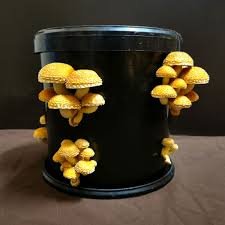
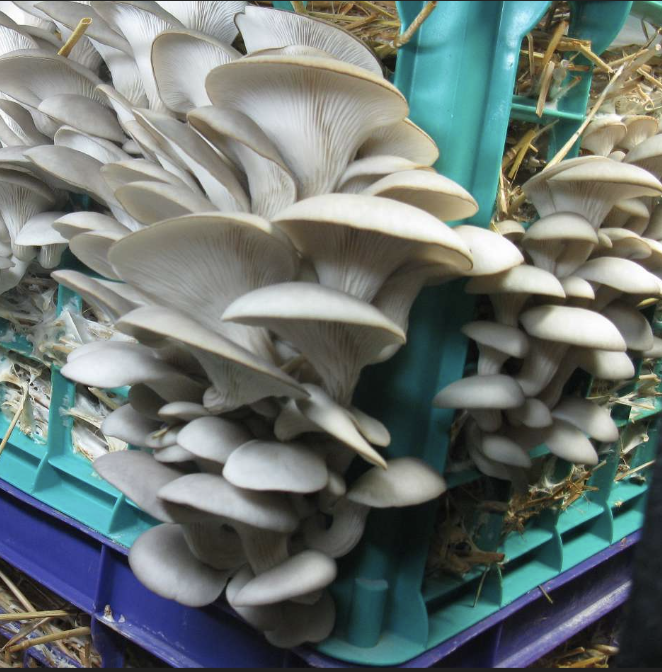
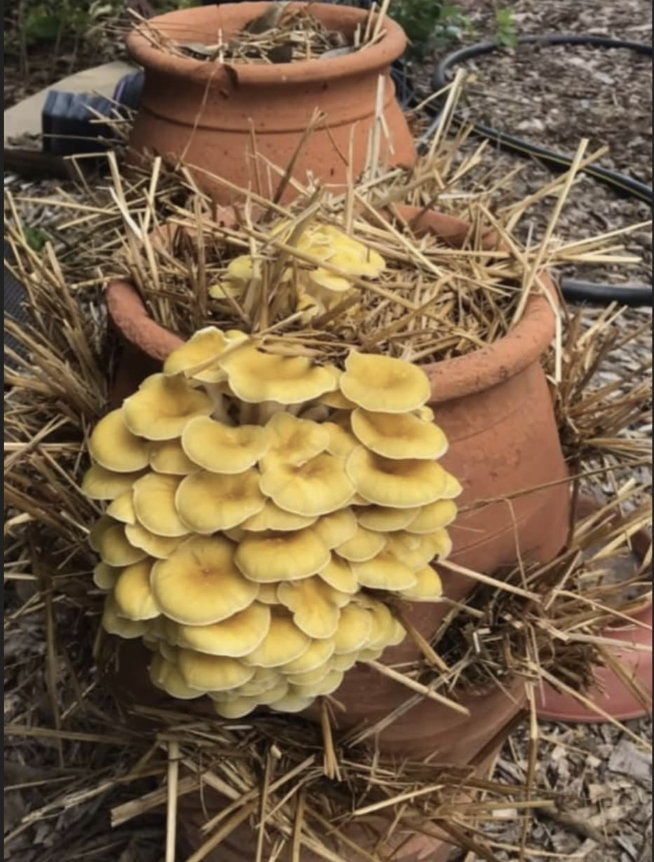
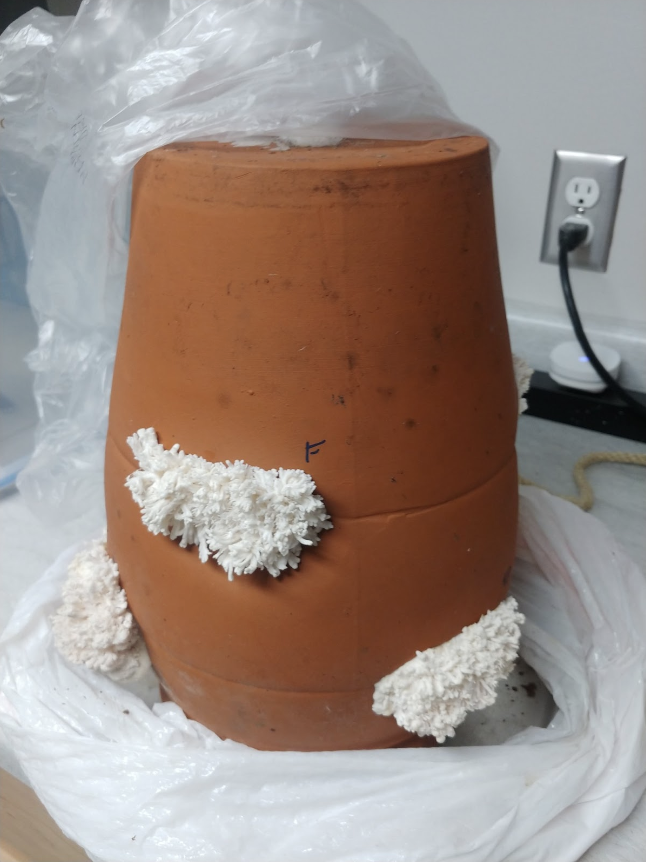
This video will show you how to grow oyster mushrooms on straw bale in containers. In this six part Mycology in the Garden video series, we will show you five low-cost and low-tech ways to grow edible mushrooms outdoors. These basic techniques require no special equipment or electricity, and can all be done outdoors using organic materials found such as straw, leaves, wood chips and logs which all make for great mushroom substrate.
This video will show you how to grow oyster mushrooms on straw bale in containers.
MATERIALS NEEDED:
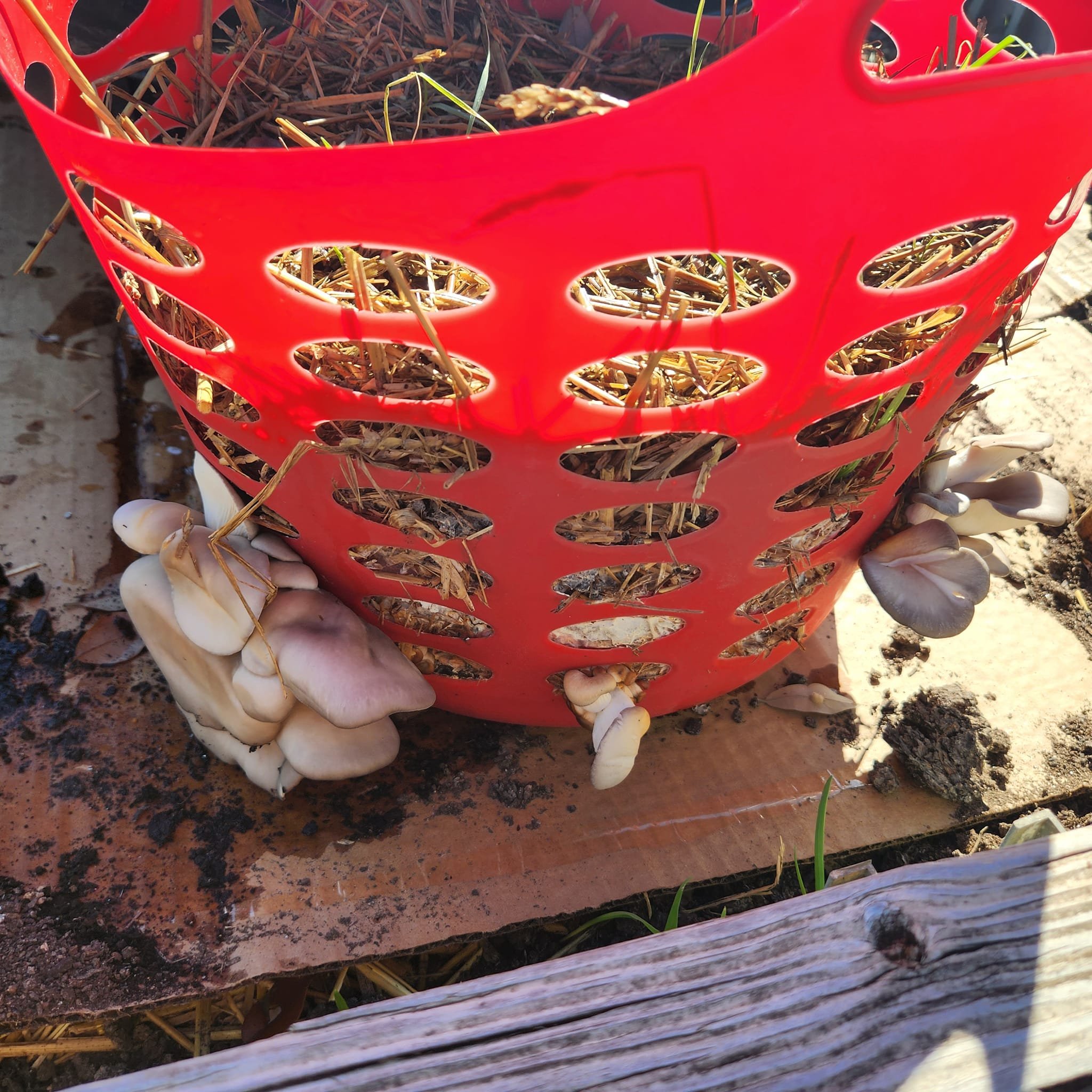
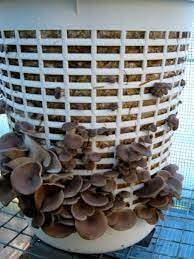
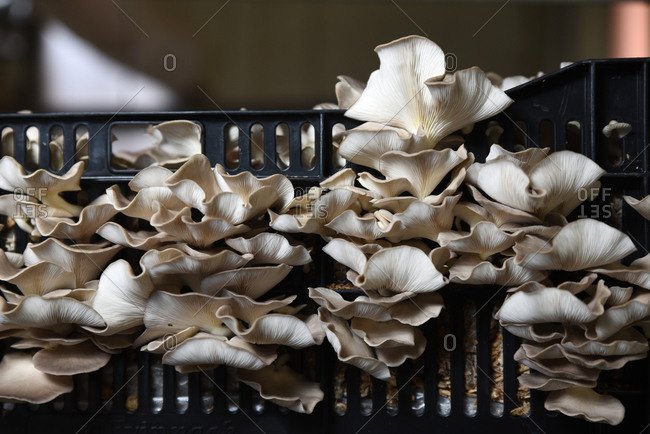

Substrate: Straw Bale
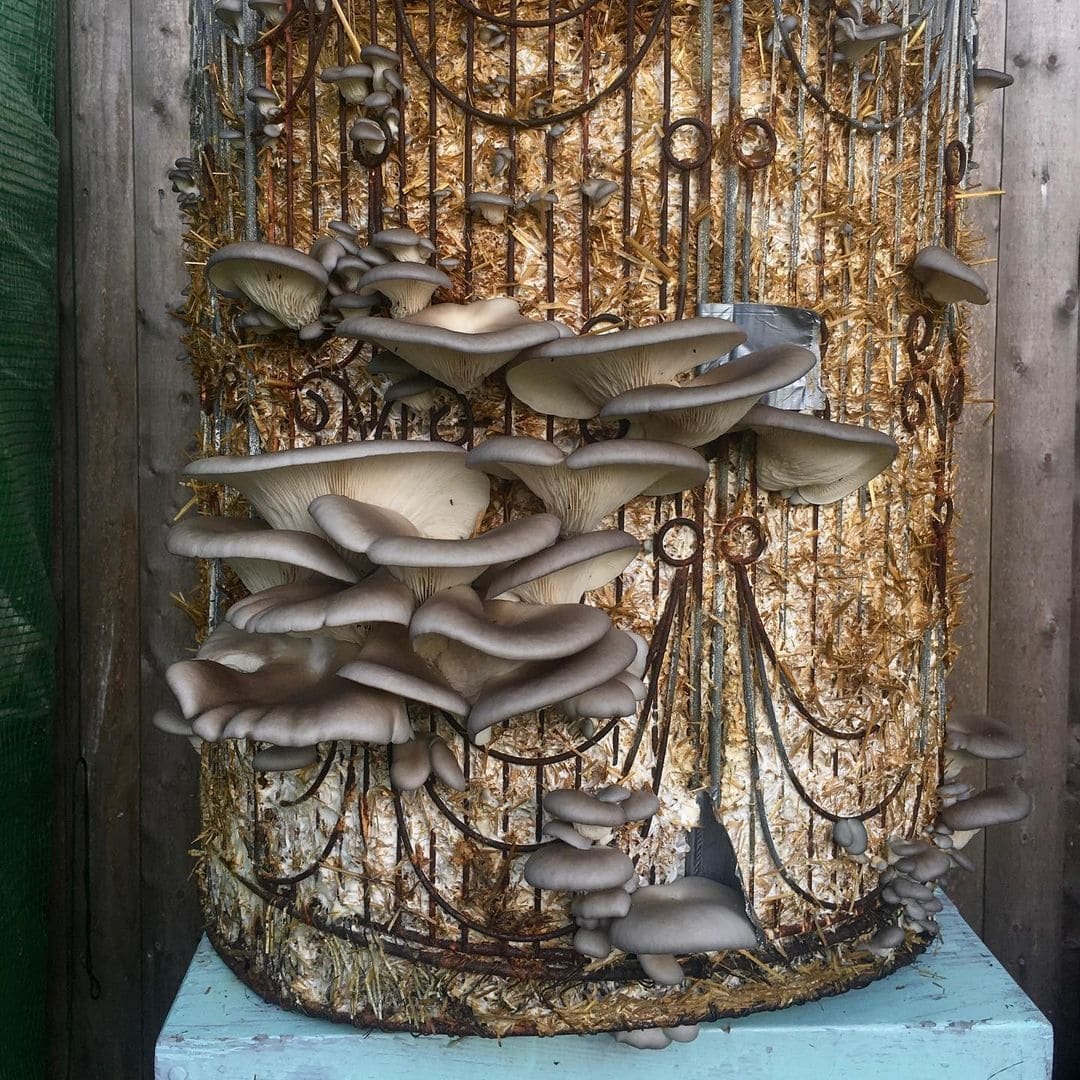
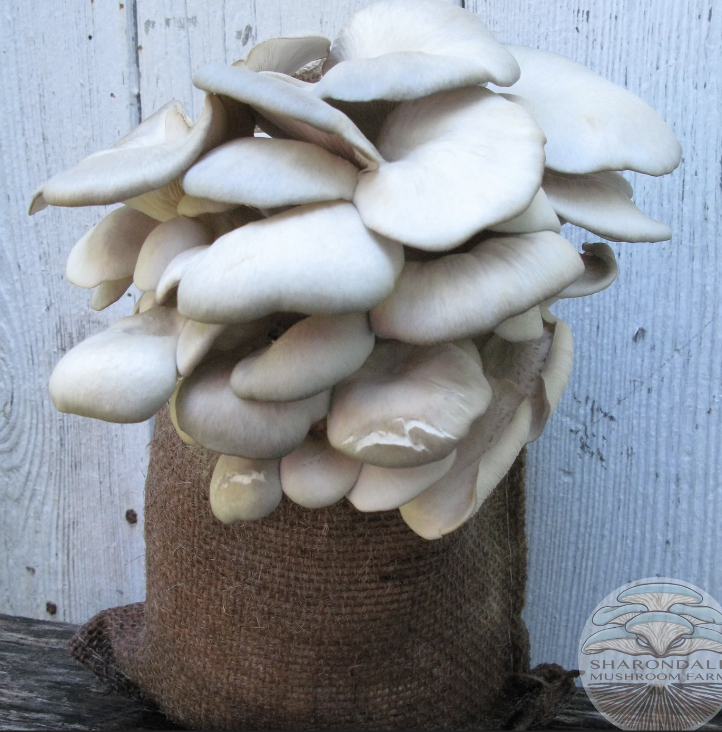
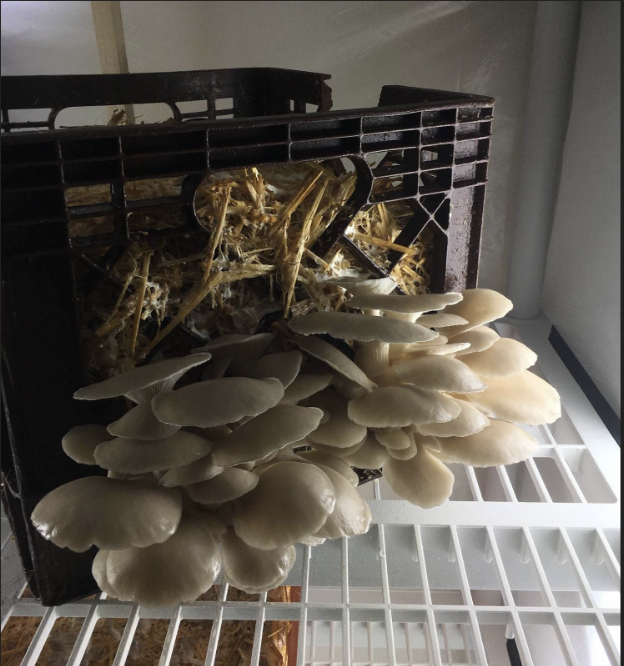
Container: 5 gallon bucket, planter pot, laundry basket, milk crate, or crate for vegetables, wire mesh container like a bird house, strawberry pot. Any container with holes in it will work. Do not buy anything new, there are many ways to recycle and use these materials.
Tools: Drill, Step drill bit, Alcohol, Soap & Water
Spawn: We recommend blue oysters spawn because it does best in a non-sterile environment.
Oysters (Pleurotus ostreatus): Oyster mushrooms grow well outdoors and readily outgrow competitors and potential contaminants. This mushroom grows in several bright colors such as pink, blue, and yellow. Blue tends to be the best for growing outdoors. The taste of oyster mushrooms is very mild, and some describe it as subtly woody or like seafood. Oysters grow in partial shade and prefer straw to denser woody substrates.
Get Mushroom Spawn
Many times mushroom farms have used sawdust blocks that have grown mushrooms once, and then end up getting tossed in the waste stream. Check with your local mushroom farm to see if you can help them reduce waste and use the spawn in your organic garden. If you are in Austin, we are collaborating with a new local mushroom farms to help keep used mushroom blocks out of the waste and help get them into gardens around Austin and building healthy soil!
The mushroom blocks are for free but you can also support our mission of helping the crew that is making sure they stay out of the waste by making a donation or becoming a member.
I’m NOT from Austin
I’m from Austin
GROWING STEPS
STEP 1: Soak substrate. Soak substrate for 2-5 hours so it becomes nice and hydrated, then drain. Oyster mushrooms are very robust and can do great on unpasteurized substrate regardless if it’s cleaned. Cold water lime pasteurization is recommended when temps are over 80 degrees.
STEP 2: Drill holes in your container. If your container doesn’t have holes in the side, make a few for drainage and for the mushrooms to emerge from. Drill in a diamond pattern about 6 inches apart. Do not drill holes in the bottom. Step drill bit of 1 or more inches is the best size.
STEP 3: Sterilize your container. Wash with soapy water and then with rubbing alcohol or hydrogen peroxide.
STEP 4: Mix the spawn and substrate. Mix spawn nicely with the substrate. 1 /4 spawn / substrate ratio is good but if you have an abundance 50/50 is good too. You can’t go wrong with more spawn.
STEP 5: Fill your Buckets. Make sure to leave a little breathing room for the oyster mushrooms, water.
STEP 6: Create Humidity Place a lid or piece of cardboard on top on to keep things moist. Cover the hole with micropore tape or simply put your bucket in a large cardboard box, plastic bag or an area where moisture is retained but air exchange can still happen.
STEP 7: Colonization During colonization you will want your container to be in a shady to dark place where moisture will be retained. For the next 3-4 weeks your bucket will colonize start to consume and eat the substrate.
STEP 8: Water once a week. Water as needed to keep the media from becoming dry and hard. Do the finger test and be sure you don’t overwater because this will cause mold to grow. If you see mold, scoop it out and spray area with hydrogen peroxide.
STEP 9: Pinning After 4-5 weeks you will start to see pins or baby mushrooms. At this point you want to make sure your container is getting as much oxygen as possible. Remove plastic bag or micropore tape. The bucket also needs light so it can absorb the UV and convert into Vitamin D. A dapple amount of light is enough.
STEP 10: Spritz Baby Mushrooms Spritz the mushroom as 2-3 times a day. The more the better. Mushrooms are 70% water just like humans so they need a lot of humidity.
STEP 10: Harvest After 4-5 days your mushroom will have grown to full size. Oyster mushrooms caps will start to uncurl and once they are fully uncurled you will want to harvest by twisting off at the whole or cutting with a clean knife. If you wait longer the mushrooms will spread their spores and they also get tough and woody texture. They can still be used in soups and stock at this point but they are the best texture after fruiting for 4-5 days.
Related videos in the series:
Part 1: How Fungi Benefits the Soil
Part 2: Grow Mushrooms on Wood Chips in The Garden
Part 3: Grow Mushrooms in a Straw Bale
Part 4: Grow Mushrooms in Containers
Part 5: Grow Mushrooms on Logs
Part 6: Grow Mushrooms using Trench Composting Method

PART 3: Grow Mushrooms in a Straw Bale
In traditional straw bale gardening, bales are “conditioned” by adding nitrogen-rich compost or manure to the bale to provide nutrients and initiate decomposition while growing veggies. You can use mushroom grain spawn in a similar way, and the fungi will facilitate the faster breakdown of the straw while growing mushrooms.
Mycology in the Garden
In traditional straw bale gardening, bales are “conditioned” by adding nitrogen-rich compost or manure to the bale to provide nutrients and initiate decomposition while growing veggies. You can use mushroom grain spawn in a similar way, and the fungi will facilitate the faster breakdown of the straw while growing mushrooms.
TIP: Be sure to use straw, not hay because the seeds will sprout and become weeds.
LOCATION
You'll want to place this in a shady spot that is protected from wind, and is within reach of your garden hose!
Materials Needed
Substrate: Straw Bale. Available in Austin at Callahan’s General Store for $12.
Spawn: Any Oyster Variety. This is the most important material you need for growing mushrooms is the spawn which is the equivalent of seeds. You can purchase bags of spawn from your local mushroom farm or buy it online for around $30. We Recommend: North Spore, Mushroom Mountain, and Field & Forest. Oysters (Pleurotus ostreatus): Oyster Mushrooms grow well outdoors and readily outgrow competitors and potential contaminants. This mushroom grows in several bright colors such as pink, blue, and yellow. Blue tends to be the best for growing outdoors. The taste of oyster mushrooms is very mild, and some describe it as subtly woody or like seafood. Oysters grow in partial shade and prefer straw to denser woody substrates.
Tools: Garden Fork, Spade, Pry Bar
GET MUSHROOM SPAWN FOR FREE
Many times mushroom farms have used sawdust blocks that have grown mushrooms once, and then end up getting tossed in the waste stream. Check with your local mushroom farm to see if you can help them reduce waste and use the spawn in your organic garden. If you are in Austin, we are collaborating with a new local mushroom farm Small Hold to help keep used mushroom blocks out of the waste and help get them into gardens around Austin and building more soil! Small Hold farms delicious, specialty mushrooms that are available for purchase at Central Market.
The mushroom blocks are for free but you can also support our mission of helping the crew that is making sure they stay out of the waste by making a donation or becoming a member.
I’m NOT from Austin
I’m from Austin
STEPS
Soak bale: Soak in water for a few hours. It will soak water up like a sponge. Use hot water if available to make for a cleaner substrate.
Inoculate Straw: After the straw has drained, disperse spawn evenly on all sides of the bale, getting as close to the center as possible. It’s helpful to use a spade, or garden fork to get deeper into the bale. We even used a pry bar to loosen it up. Use one 5 lb bag of spawn for one straw bale.
Watering: While the mycelium spreads, be sure to keep the bale hydrated, lightly watering when you water your vegetables. After 7-14 days you will start to see mycelium colonize the straw.
Keep the Bale Cool: Once temperatures exceed 80 degrees, the bale may get too hot for mycelial growth. Try placing in the shade or use shade cloth. You can also inoculate with more spawn to keep your mushrooms growing as temperatures rise.
Harvest and Enjoy: Time to harvest will likely be about 10-21 days depending on the oyster species.Try to harvest your oyster mushrooms right before they drop spores. You will know they are ready to drop spores when the caps start to curl upwards. Remove the mushroom cluster from your bale at the base of the cluster with a knife, or simply twist off with your hand.
Mulch Your Vegetables: After a year or less, the straw will be decomposed, great as worm food, compost, or as mulch for your vegetables.
RELATED videos in the series:
Part 1: How Fungi Benefits the Soil
Part 2: Grow Mushrooms on Wood Chips in The Garden
Part 3: Grow Mushrooms in a Straw Bale
Part 4: Grow Mushrooms in Containers
Part 5: Grow Mushrooms on Logs
Part 6: Grow Mushrooms using Trench Composting Method
February Member Giveaway
Become a member of CTMS and be entered in a win a Grow-At-Home Oyster Kit !
Hi-Fi Myco is Austin’s first urban mushroom farm. This month's feature mushroom giveaway is the Lion’s mane, Hericium erinaceus.
Hi-Fi Myco Oyster Mushrooms
Grow-Your-Own Lion’s Mane Kit from Hi-Fi-Myco
Hi-Fi Myco is Austin’s first urban mushroom farm. This month's feature mushroom giveaway is the Lion’s mane, Hericium erinaceus. This mushroom grows in the wild in Central Texas on post oaks in the winter and is also cultivated. Here's a photo of one foraged by @forage.atx this past December. A small piece of this wild mushroom is hanging out in the fridge at Hi-Fi Myco successfully cloned! It can be identified by its long spines, occurrence on post oak hardwoods, and it is both culinary and medicinal. Its flavor may be compared to that of lobster with a scallop texture. It is great seared used in place of crab meat to make crab cakes. Lion’s mane has many of the nutritional benefits as other mushrooms, immune boosting, anti-carcinogen, much like the other adaptogens listed, this one really targets brain function. Lion’s mane can improve memory, boost cognition and focus, and protects against concussions and brain damage.
Lion’s mane mushrooms are available for purchase on their website for pick-up at the following Farmers Markets: Lakeline, Sunset Valley, Downtown, New Braunfels, and Mueller.
Become a member of CTMS and be entered in a win a Grow-At-Home Pink Oyster Kit ! (Winner will be announced in January.)